21st Sep 2023
“Montrose has a reputation for making great wines in hot vintages,” says Château Montrose’s new CEO, Pierre Graffeuille. “But it also makes excellent wine in cooler years.”
Some Like It Hot
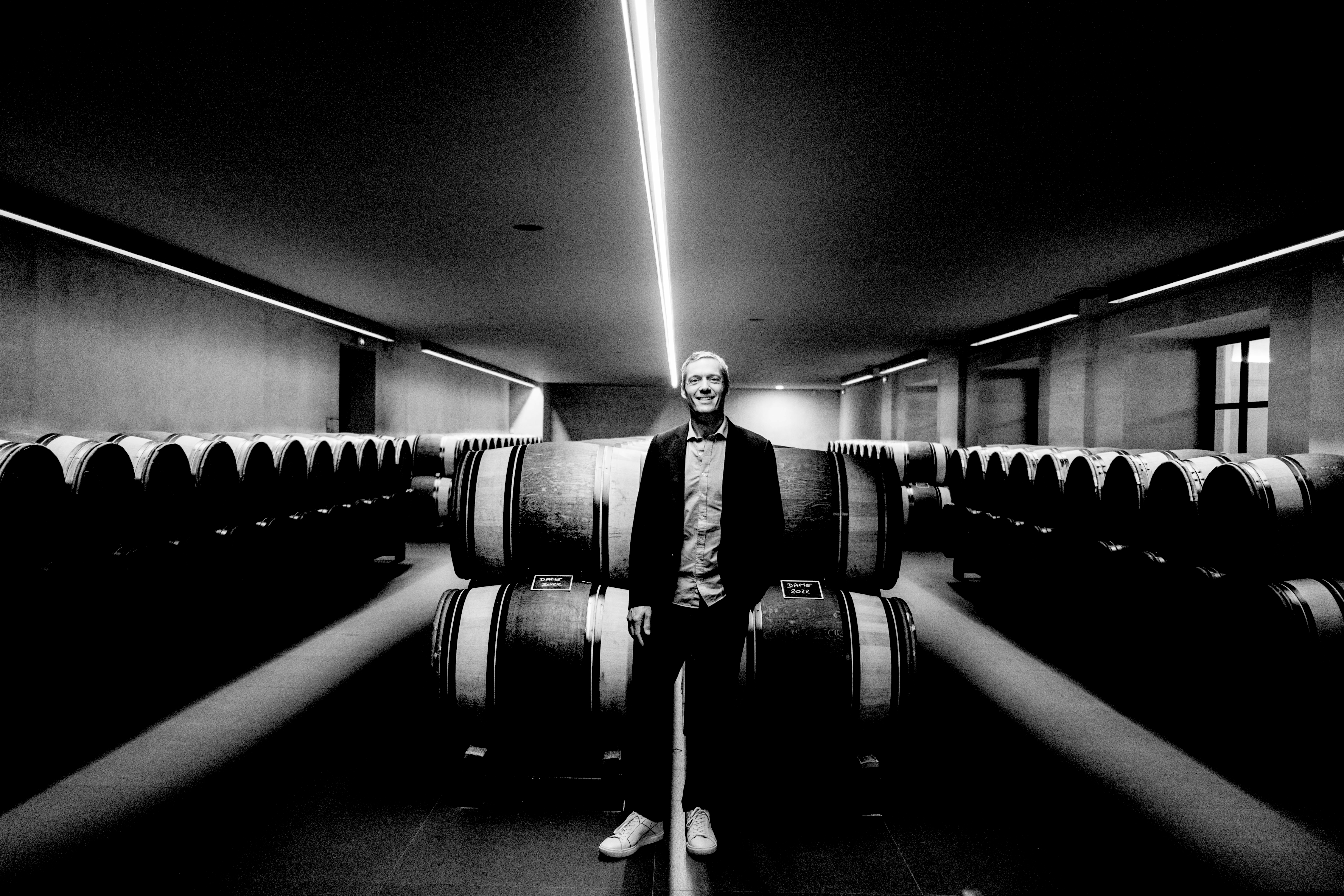
When I visited the Château in July this year, we tested the theory by tasting twenty-two vintages of Montrose going back to 1893, divided into two flights: the warm/dry years and the cool/wet years. Along with Pierre, I was joined by winemaker Vincent Decup and Charlotte Bouygues, the estate’s Strategy and Development Director and daughter of owners Melissa and Martin Bouygues.
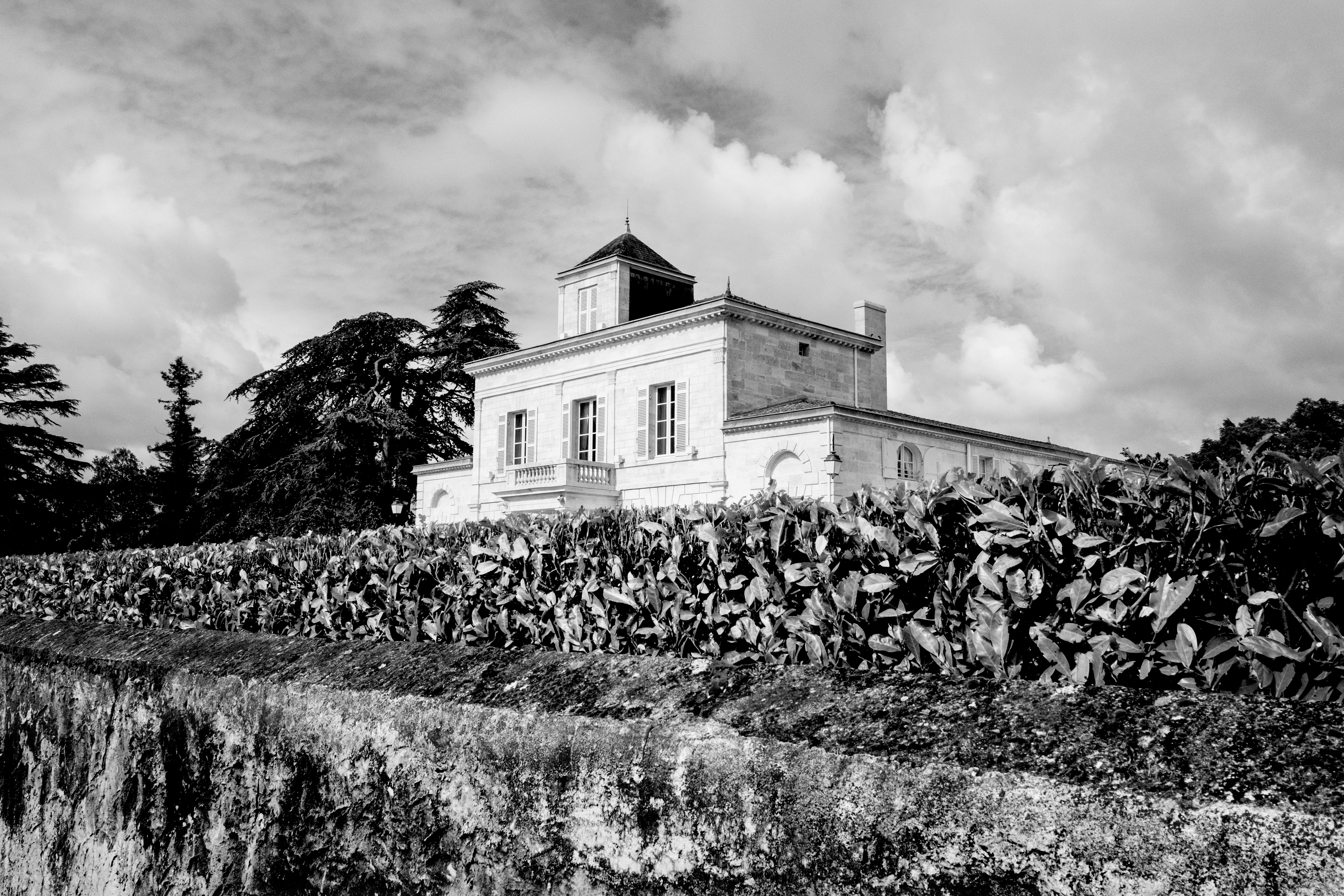
Château Montrose gets its name from the French words “mont rose,” meaning “pink mountain,” referencing the gentle hill it sits on and the pink heather that once grew there. In the early 1800s, the land was just scrubland and forest owned by Etienne-Théodore Dumoulin, who then owned Calon-Segur. He cleared the land and first planted it in 1815. Even when the vines were young, the site’s potential was clear. It was the youngest property to be classified in 1855. In 1866, the estate was sold to Matthieu Dulfus, who added contiguous parcels. It was sold a couple more times before it came into the possession of Jean-Louis Charmolüe, who managed the estate from 1960 to 2006.
When Charmolüe put the property up for sale in 2005, it was snapped up by American brothers Martin and Oliver Bouygues.
"My father first tasted 1990 Montrose in Santa Barbara in the 1990s and fell in love," Charlotte told me. "He never forgot it."
Martin Bouygues, a major shareholder in the eponymously named industrial conglomerate Bouygues Group, wasn’t looking to invest in a wine estate, but when this opportunity presented itself, he followed his heart. After buying Château Montrose, the family expanded this investment track by purchasing neighboring Tronquoy-Lalande, as well as estates in Burgundy and the Loire Valley.
The Bouygues have invested heavily in upgrading Montrose.
The first thing they did was bring in a first growth director. Jean-Bernard Delmas, former director of Haut-Brion, managed the estate until 2011, when Hervé Berland, ex-Mouton Rothschild, took over. Berland retired in 2022, then Pierre Graffeuille left his enviable position at Léoville Las Cases to come on board as CEO.
Since the purchase, the estate has been restructured. In 2010, twenty-two hectares of neighboring vineyard parcels (which were once part of Montrose) were purchased from Phélan-Ségur. The estate now covers 130 hectares (321 acres), of which 95 ha (234 acres) are planted to vines, while the rest remains as meadow and forest land, including three ponds and three streams.
"There is life all around the vines."
“There is life all around the vines,” Vincent Decup explained as we walked through prime blocks located between the Château and the ever-present Gironde estuary. “Since 1855, the estate has existed all in one contiguous block. Woods enclose the vineyard on both sides, so it is secluded. It is always cool here due to the proximity to the estuary and ocean. During the growing season, Montrose tends to get around 100 mm (4 inches) of rain—less than vineyards to the south.”
“Of the six gravel terraces in the Médoc, 3 and 4 are the most important ones,” he continued. “The 4th terrace hugs the Gironde estuary in Margaux, Saint-Julien, the southern tip of Pauillac, and Saint-Estèphe, and includes Château Margaux, Latour, Las Cases, and Montrose. The soil is about 1.5 meters deep with a clay, sand, and gravel mix. Below this, there is an iron pan. On Terrace 4, we have our best Cabernet Sauvignon. Terrace 3 has more Merlot. The varieties mix planted across the estate are 60% Cabernet Sauvignon, 30% Merlot, 7% Cabernet Franc, and 3% Petit Verdot. We are in the process of increasing our Cabernet Sauvignon plantings and decreasing Merlot.”
Beyond pursuing high quality, the Bouygues family laid out a solid environmental vision when they purchased the property in 2006/7, which was revolutionary at the time. 3000 meters of photovoltaic (solar energy) plates have been installed on the roofs to work in combination with the low-energy buildings with dual insulation. The estate also harnesses geothermal energy by pumping water from a well 100 meters deep, recovering the heat with a heat exchanger. From 2019, the vineyard has been 100% organic, and they are seeking certification this year (2023). Cover crops and canopies are managed with the use of electric tractors.
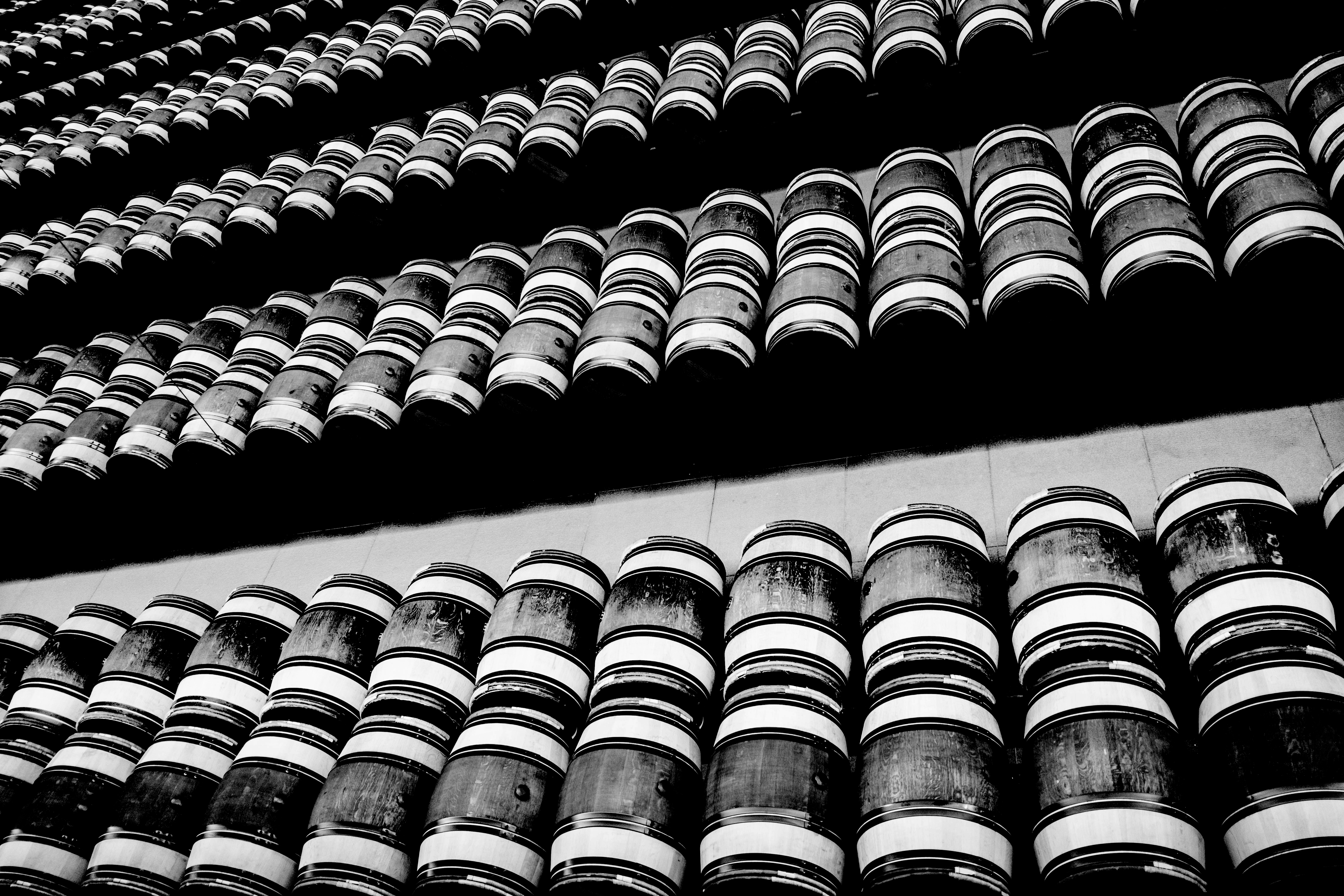
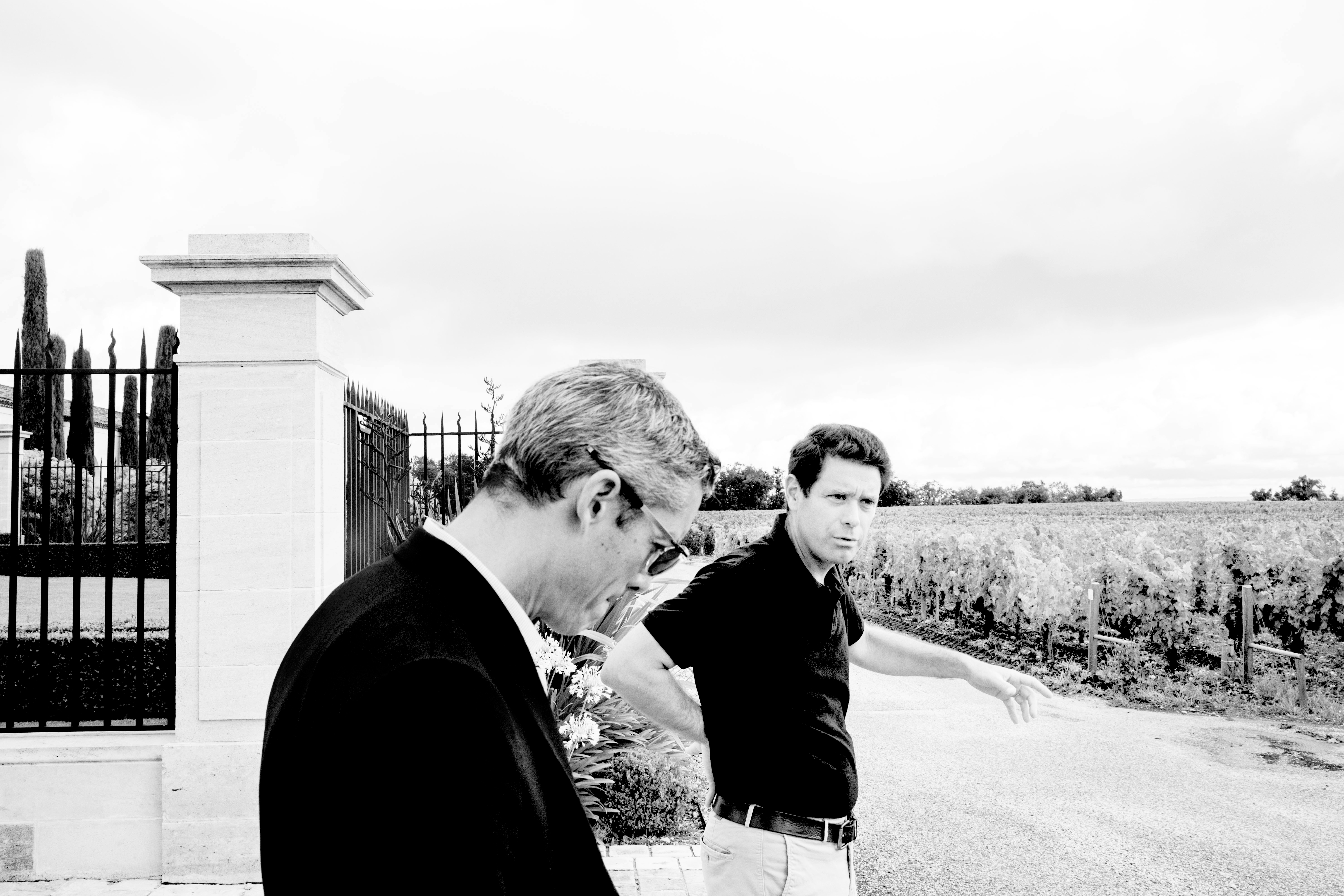
The new barrel cellar at Château Montrose was finished in 2014, and the vat room was renovated in 2017. Where they had 50 fermentation tanks before, now they have 93, which equates to roughly one hectare per tank.
"The winemaking is classic."
“The winemaking is classic,” said Vincent. “Three weeks of maceration and gentle extraction. Each barrel gets tasted separately by variety and scored. Similar scored wines are blended. The more lots we have for blending, the more precision we’re allowed. At the end, we have around 60-70 lots of wines to use for blending.”
“The wine cellar of Montrose was quite small when we bought the property,” Charlotte explained as we sat to taste. “But my father wanted to know and have the history of the estate, so he bought a lot of older vintages. We don’t have many bottles from the 1800s. This bottle of 1893 we will taste was part of the estate and has never left the property.”
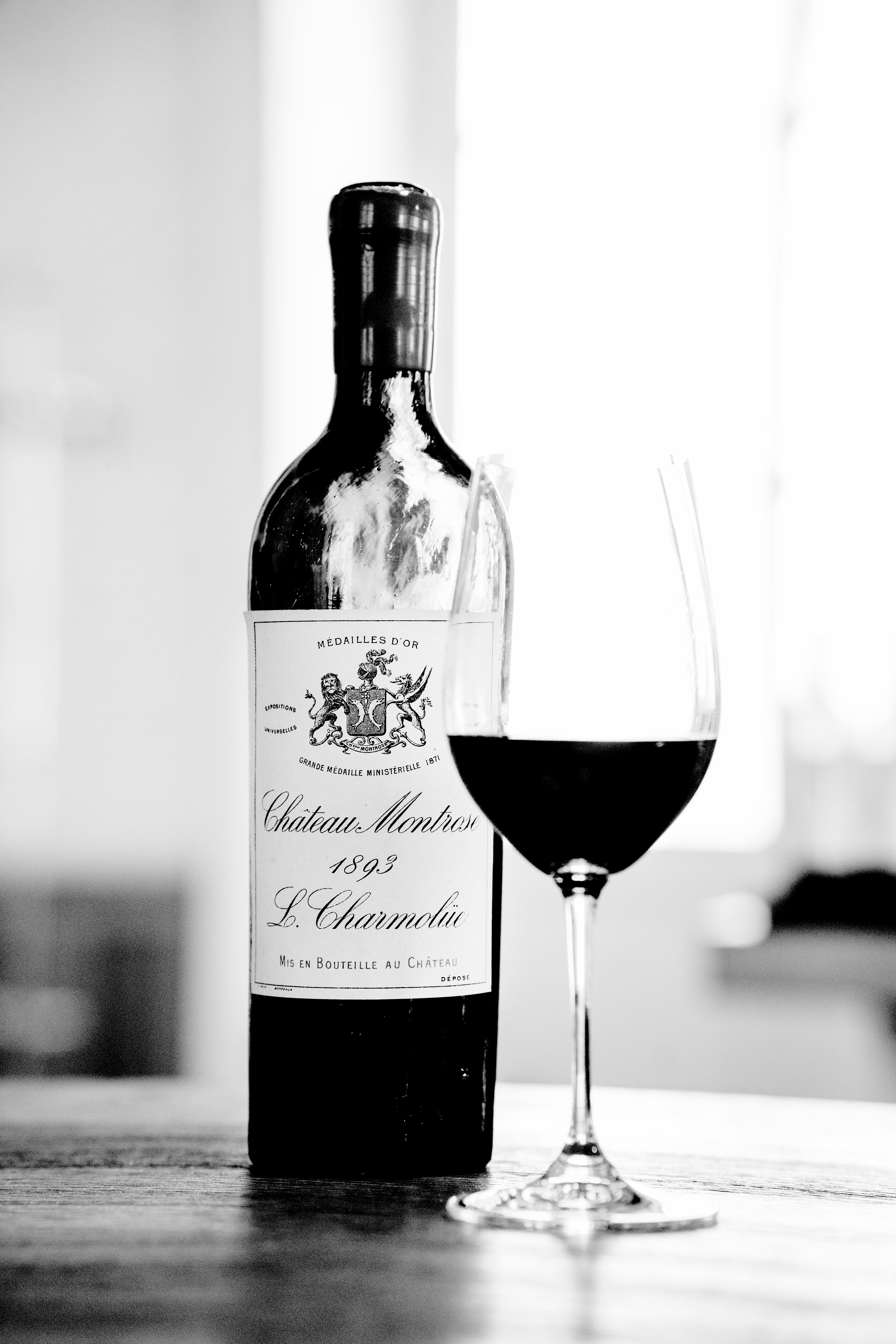
Our flights were divided thus:
Cooler Vintages: 1956,1993, 1996, 1999, 2006, 2007, 2008, 2013, 2014, 2017, 2021.
Warmer vintages: 1893, 1989, 2003, 2005, 2009, 2010, 2016, 2018, 2019, 2020.
There were certainly no duds among the cooler/wetter vintages. On the contrary, the consistency of outstanding wines from these more challenging years is impressive. 1996, 2014, and 2017 are especially worth seeking out. However, true to reputation, it is indeed the hot/dry years where Montrose shines brightest. In the grip of climate change, this goes to show that having a vineyard in a warmer, deeply graveled location is no longer necessarily an advantage and, more and more, can be a disadvantage. Meanwhile, previously marginal/cooler terroirs, which were once deemed challenging except in those rare hot, dry vintages, are now becoming the safer bets regarding consistency of high quality. Although Montrose has revealed itself as a very impressive vineyard since the beginning, strictly in terms of quality, it is now batting with a first growth average, while the price remains in a second growth league.
Savvy buyers would do well to stock up on recent great vintages such as 2009, 2010, 2016, 2018, 2019, 2020, and 2022.
-
Article & Reviews by Lisa Perrotti-Brown MW
Photography by Johan Berglund

PRODUCERS IN THIS ARTICLE
> Show all wines sorted by scoreMore articles
TWI Drinks
25th Nov 2025
2 tasting notes
TWI Drinks
11th Nov 2025
2 tasting notes
Mouton vs Lynch-Bages
06th Nov 2025
16 tasting notes
Chateâu Poujeaux 2000-2022
30th Oct 2025
8 tasting notes
Show all articles