10th Oct 2024
Next week, a collection of Napa Valley producers will be releasing wines from the 2014 vintage as part of the “Open the Cellar” initiative with Napa Valley Vintners. I took the opportunity last month to head over to NVV’s office in St. Helena to taste 47 of the wines being offered, which allowed valuable insight into how the vintage is tracking. For those wondering what they can expect from their 2014s, or what to stock up on, read on!
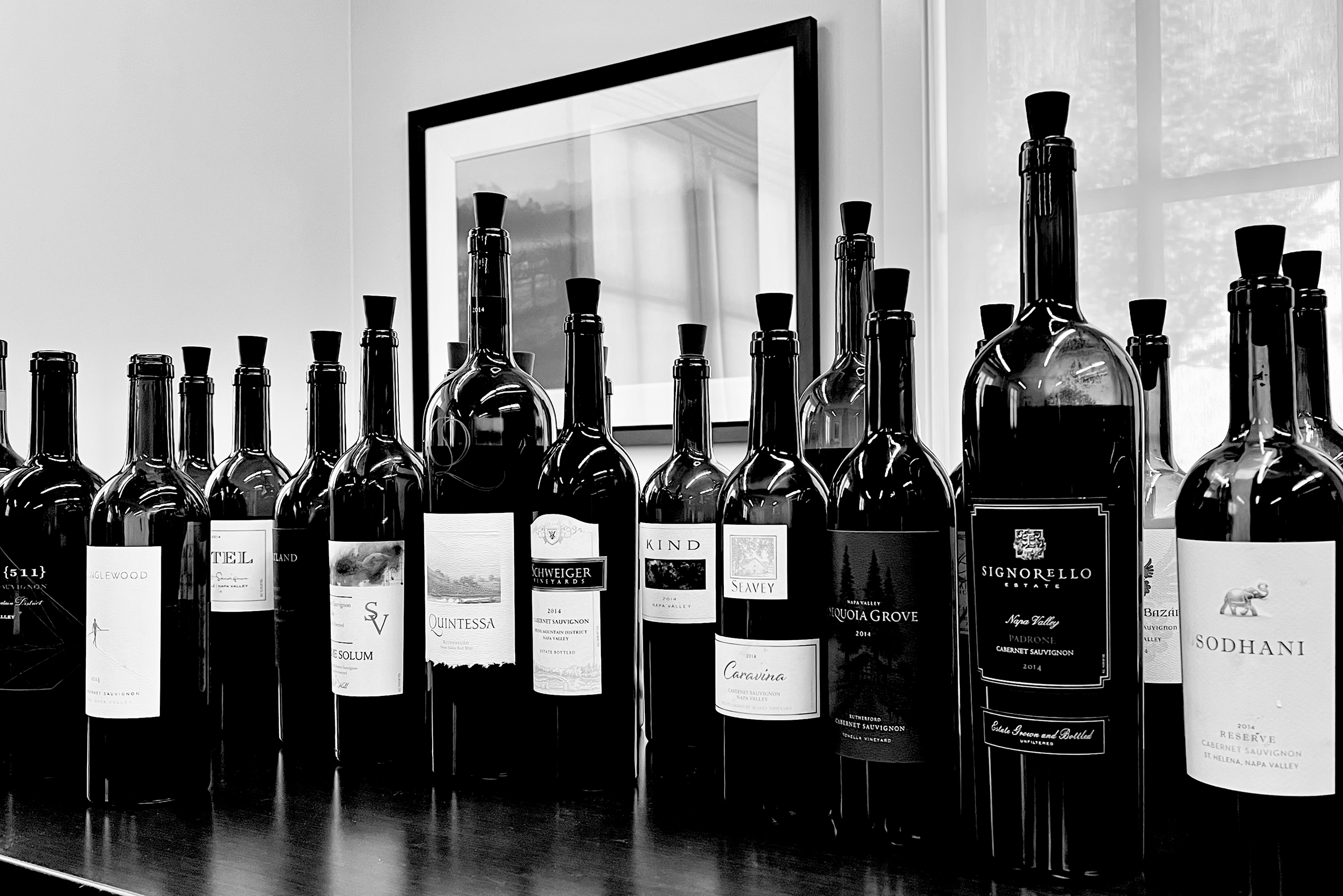
Open the Cellar
From inception, the relative greatness of Napa’s 2014s has been a little difficult to read. This is partly because 2014 emerged from the shadow of the critically acclaimed 2013 vintage, a year resulting in dense, rich Cabernets with formidable structures. The 2014 Cabs were comparatively so forward, fruity, and delicious from the get-go that it was challenging to gauge the structure, age-ability, and underlying gravitas of even the top players.
The year began with a dry January, followed by a good amount of rainfall in February. It then remained very dry for the rest of the year. After a parched 2013 vintage, 2014 confirmed that the region was caught in a drought trend that would eventually extend through 2015 and 2016.
February’s rains, followed by a warm March, led to an early bud break. Thankfully, throughout the summer and autumn, there were no heat spikes for growers to dodge.
Temperatures nearly skimmed 100 degrees F a couple of times in June and July, but otherwise, daily highs remained in the 80s and 90s. It was notably cooler than 2013, and this shows in the wines.
Harvest was tracking about two weeks early and the crop load for Cabernet Sauvignon would be abundant. Grapes for sparkling wines began coming in on July 30th, and the first red varieties were harvested towards the end of August. 2014 looked like a relatively uneventful growing season for Napa Valley winemakers until the 6.0 magnitude earthquake—the largest to hit the San Francisco Bay area since 1989—shook the region in the early morning hours on August 24th. With an epicenter close to the airport and Carneros in the southern part of the valley, some wineries like Hess and Saintsbury suffered significant damage, while areas to the far north were just a little rattled. The overall impact on the harvest that year was minimal.

The bulk of the Cabernet was harvested in September and October under warm and sunny but not hot conditions. It was the third bumper crop in a row, after large crops in 2012 and 2013.
The powerful, muscular, tannic 2013s were tough acts to follow, and the 2014s perhaps came off as looking like lovable Shetland Ponies next to these Clydesdales, at least in the beginning. After ten years, the distinct personalities of both years are showing more clearly. Today, many of the 2013s remain shut down, walled up within their tannic fortresses, while a few are starting to emerge with classic tertiary notes of tobacco, dried black fruits, exotic spices, and earthy undertones. Meanwhile, the 2014s are generally more developed than their 2013 counterparts, and many of them are drinking superbly right now (though no rush to drink). The 2014s tend to be gregarious and fun with flirty floral and savory nuances as well as some red berry highlights. I came away from this tasting liking a lot of the 2014s more than I thought I would and may even personally prefer the style to some of the 2013s, even if the 2013s are the higher-scoring wines when considering quality factors alone.

Two wines in particular were real eye-openers: the 2014 Corison Cabernet Sauvignon and the 2014 Matthiasson Cabernet Sauvignon. I know, I know, I know—these are polarizing producers who tend to make fresher wines at the less-ripe end of the spectrum, which buck the Napa status quo. Nonetheless, as we’re seeing with a lot of the 2011s (a less ripe vintage), the 2014 wines I tasted from these two producers are aging a little more slowly than many others and in a very positive manner. 2014 really played to their style choices, and these wines are fantastically bright, perfumed, and ripe (not at all lean or under-ripe)—well worth seeking out.
But, as with all things wine, the best wine style to choose is down to individual preference and the best palate is your own.
–
Article, Reviews & Photography by Lisa Perrotti-Brown MW

PRODUCERS IN THIS ARTICLE
> Show all wines sorted by score
Ancien
Arns
Arrow Branch
Baldacci Family Vineyards
Barrett & Barrett
Bazán Cellars
Benessere
Cakebread
Corison
Davis Estates
Foretell
Freemark Abbey
Gallica
Groth
Hunter Glenn
Inglenook
Keenan Winery
Kenzo
Kind
Larkmead
Llamas Family Wines
Matthiasson
McKenzie Mueller
Meteor
Myriad
Parallel
Patel
Patland
Peju
Prime Solum
Quintessa
Schweiger Vineyards
Seavey
Sequoia Grove
Signorello
Sodhani
Stewart
Taplin Cellars
The Grade Cellars
Titus
Trois Noix
Vine Cliff
Vineyard 29
Vineyard 511
Young Inglewood
ZD Wines
More articles
Château Le Dôme 1997-2022
10th Sep 2026
9 tasting notes

Bordeaux 2024 Revisited
03rd Sep 2026
69 tasting notes

Château Jean Faure 2004-2023
10th Jul 2026
10 tasting notes
Bordeaux 2025 En Primeur
07th May 2026
382 tasting notes
Show all articles