10th Jul 2025
Peter Sisseck of Pingus fame is free to turn his hands to whatever project he thinks he might enjoy, and it seems Château Rocheyron is exactly that.
From Shipwrecks to Rocheyron
Late in 1997 the container ship MSC Carla, fully laden, set sail from Le Havre on the northern French coast, bound for Boston. Originally built in Sweden in 1972, the vessel had a huge capacity, one which had been augmented during a period in dry dock in South Korea in 1984 when the body of the ship had been lengthened. The vessel set out into the English Channel, and then into the Atlantic, its deck stacked from end to end with containers.
Sadly for those involved, Poseidon, Ampritite, Ceto, Aegaeon and all those Gods who preside over the sea and its storms chose not to look kindly on the MSC Carla as it ploughed its way towards the USA. Caught in a fierce winds and battered by freak waves close to the Azores, the vessel was ripped in two.
Literally ripped in two.
The forward section of the ship, separated from the stern, quickly took on water and sank, taking its cargo down to the sea floor, 3,000 metres below. Miraculously for all 22 on board, the aft section remaining afloat, the crew saved by tightly sealed bulkhead doors; they were subsequently rescued, and the half-ship which remained afloat was towed to port.
The fallout from this shipping disaster was considerable, particularly in light of the previous lengthening work which some claimed was responsible; perhaps unsurprisingly years of legal battles followed.
Meanwhile environmentalists were more concerned about the cargo, particular when it was revealed - days after the accident - that what had gone to the sea bed included a container of medical devices fuelled by radioactive Caesium-137. Should this now be considered a nuclear accident?
I suspect by now the question you have in our mind is a different one though; what exactly does the fate of the MSC Carla have to do with Château Rocheyron in St Emilion, and its proprietor Peter Sisseck? Of course, for the answer to that, you will have to read a little more about Peter and his story.
Peter Sisseck was born in Copenhagen in 1962, the latest addition to a family story within which wine was already closely interwoven. His uncle is Peter Vinding-Diers, a name which may be familiar to you, especially if you took a look at last week's Weekend Wine report on the 2020 white Graves from Château Rahoul. It was at Rahoul that Peter - the uncle, not the nephew - undertook some of his groundbreaking work demonstrating the importance of yeast in driving flavour in wine.
Now, when I was a young man (it was not that long ago - honest!), if I had realised my uncle was running a Bordeaux château, and turning out some pretty attractive wines in the process, wild horses would not have been able to keep me from wheedling my way into a job there. I like to think the prospect was just as appealing to Peter; the fact he was soon working in the cellar, alongside his uncle, suggests it was. This was in 1983, and Peter worked at Rahoul for 18 months, cutting his winemaking teeth. Afterwards he returned to Copenhagen to study agricultural engineering, before he then moved to California to recommence his wine education, working alongside Zelma Long at the Simi estate.
After a few years he returned to Bordeaux, taking on another role alongside Uncle Peter, this time at Château de Landiras.
By this time Peter Sisseck knew his career was going to be in wine, preferably California, and he had his sights set on a post at Ridge Vineyard, working alongside Paul Draper. He was in the process of completing his application when, out of the blue, a very different job offer landed in his lap, an invitation from Hacienda de Monasterio (recently acquired by a friend of the family) in the Ribera del Duero, to oversee the revitalisation of their estate.
Peter accepted.
The die was cast.
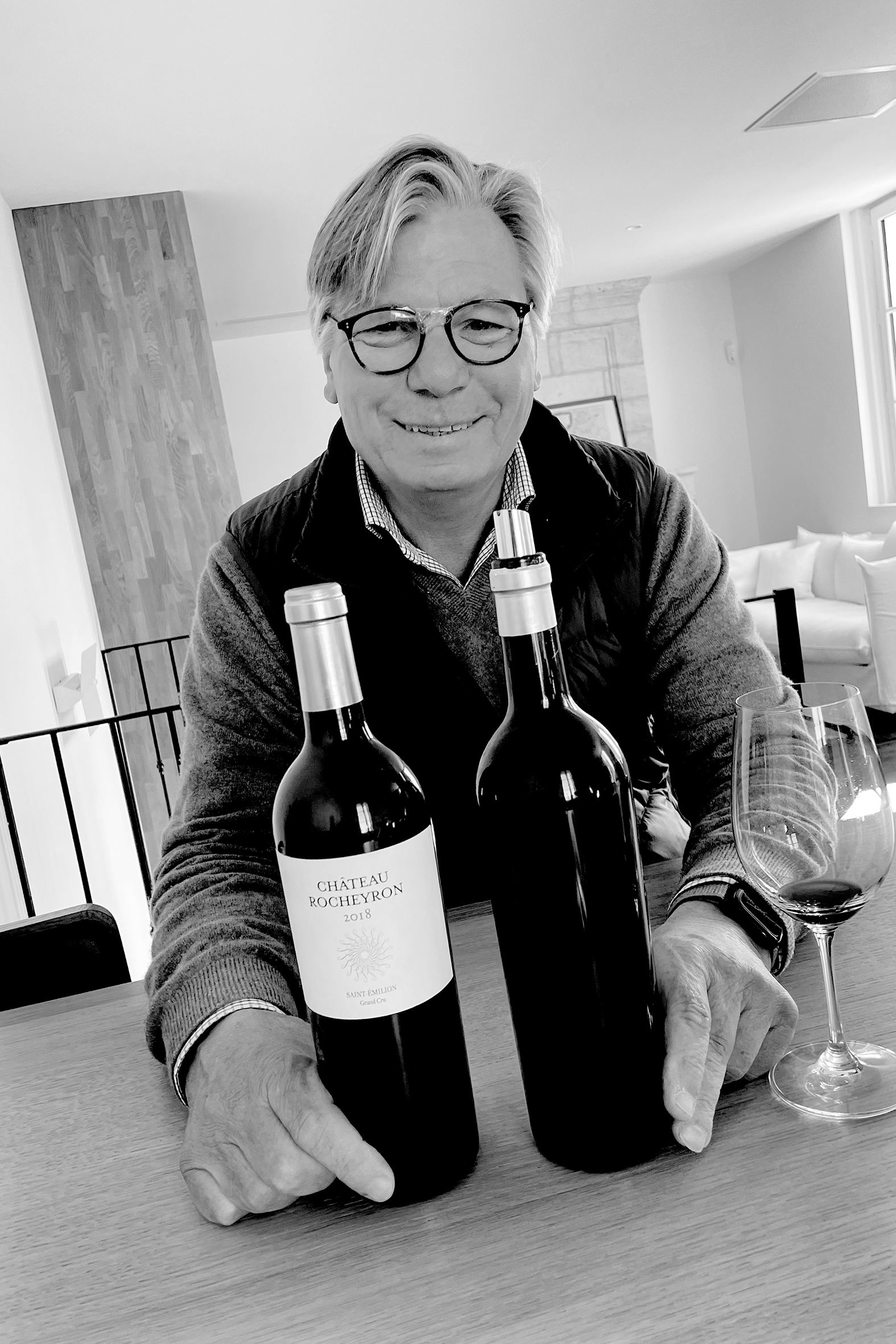
Peter moved to Spain and set about revitalising the Monasterio estate, a lifelong project which continues to this day, but after a while he realised he needed a personal project to also occupy his mind. Scouting around for possibilities he discovered a parcel of old vines, never touched by synthetic treatments. Convinced that they could be the source of a great wine, he bought them, and began producing his new cuvée, christening it Pingus, his childhood nickname (which was how the family distinguished this Peter from his Uncle Peter).
The wine turned out to be of exceptional quality, but it was unknown, and sales were not guaranteed.
He decided to release it en primeur, in the Bordeaux model (at a tiny price that would make modern-day buyers of Pingus weep - is that not always the way?).
Primeur sales need notes and scores, of course, and having found its way to a UK merchant who recognised its quality, it then ended up in front of the most influential critics of the time led, of course, by Robert Parker. His score was generous, especially for a first vintage. And this was when Parker was at the peak of his powers. Parker points really mattered.
In two days, Peter had sold every bottle. A new wine legend had been created.
The price did not stay tiny for long. Demand from US buyers rocketed, and once the wine was physically available, 75 cases were sent to the USA in a huge wine and spirits shipment comprising 1,600 cases of various vinous jewels, including some of the most coveted wines of the era, not to mention ancient bottles of Cognac from the early years of the 20th century.
All 1,600 cases were loaded aboard the MSC Carla.
Four decades later, all 1,600 cases rest on the Atlantic seabed.
The loss of 75 cases - close to one-quarter of that vintage's production - somewhere off the coast of the Azores only served to cement in place the Pingus legend. The price climbed again, and today the wine sells for four times what it fetched before this loss.
These days Peter Sisseck continues his activities in Spain, with the flagship Pingus, as well as a rapidly created second wine necessary to meet the feverish demand for the grand vin, named Flor de Pingus, both today produced at the Dominio de Pingus winery, not to mention the ultra-rare Amelia, and a range of wines offering affordable quality under the Psi label. And yet it seemed Bordeaux continued to call to Peter, as by 2010 he was back in the region, setting foot this time in the eastern reaches of the St Emilion appellation.
At first glance, having made his name in Spain with a wine which is perhaps unlikely to be surpassed, Peter's return to Bordeaux might seem strange. After all, the only way he could eclipse his achievement at Pingus would be to create a wine on the same level as Le Pin or Petrus. This seems somewhat unlikely (you see, I can do understatement when it is called for).
I suspect Peter knows this only too well, and it seems to me he is comfortable with this. After all, having created Pingus from nothing, he is a man with nothing to prove. He exudes an air of casual and affable approachability which reflects this (I have met many winemakers over the years, some who have achieved far less than Peter yet they were blessed with more attitude and pomp - naming no names!).
It seems to me that Peter Sisseck is free to turn his hand to whatever project he thinks he might enjoy, and I sense Rocheyron is exactly that.
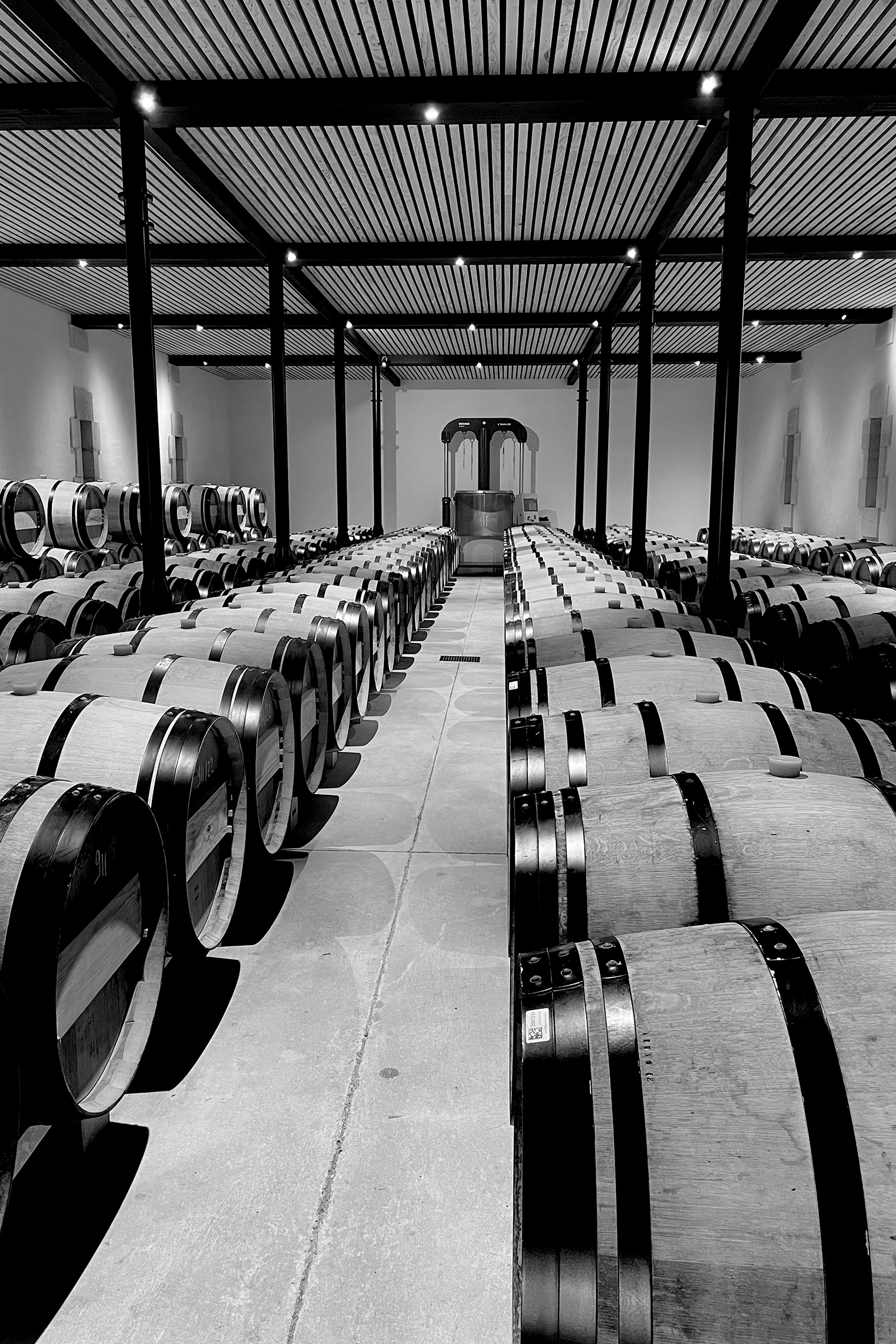
It is a project he and a friend, Silvio Denz, he of the various Faugères estates and Lafaurie-Peyraguey, dreamt up. They located Rocheyron, an unloved jewel in need of a bit of a polish, and they signed on the dotted line in 2009. It came without winemaking facilities, and the first vinifications - of the 2010 vintage - were conducted in the cellars of Château Faugères. New cellars were erected in time for the 2011 vintage.
The Rocheyron vines account for 8.45 hectares of the St Emilion appellation, mostly Merlot of course, with 15% old Cabernet Franc. The viticultural approach is certified organic, the winemaking traditional, the élevage up to 18 months, in up to 40% new oak. A few years after Peter's arrival I got wind of the project, and I made an appointment to visit - this was in April 2016, at the very start of the primeurs. What a disaster that trip was; an air traffic control strike delayed my arrival in the region by several days, and time was too tight to reschedule. The appointment slipped through my fingers, and it would be several years before I made good on my promise to visit.
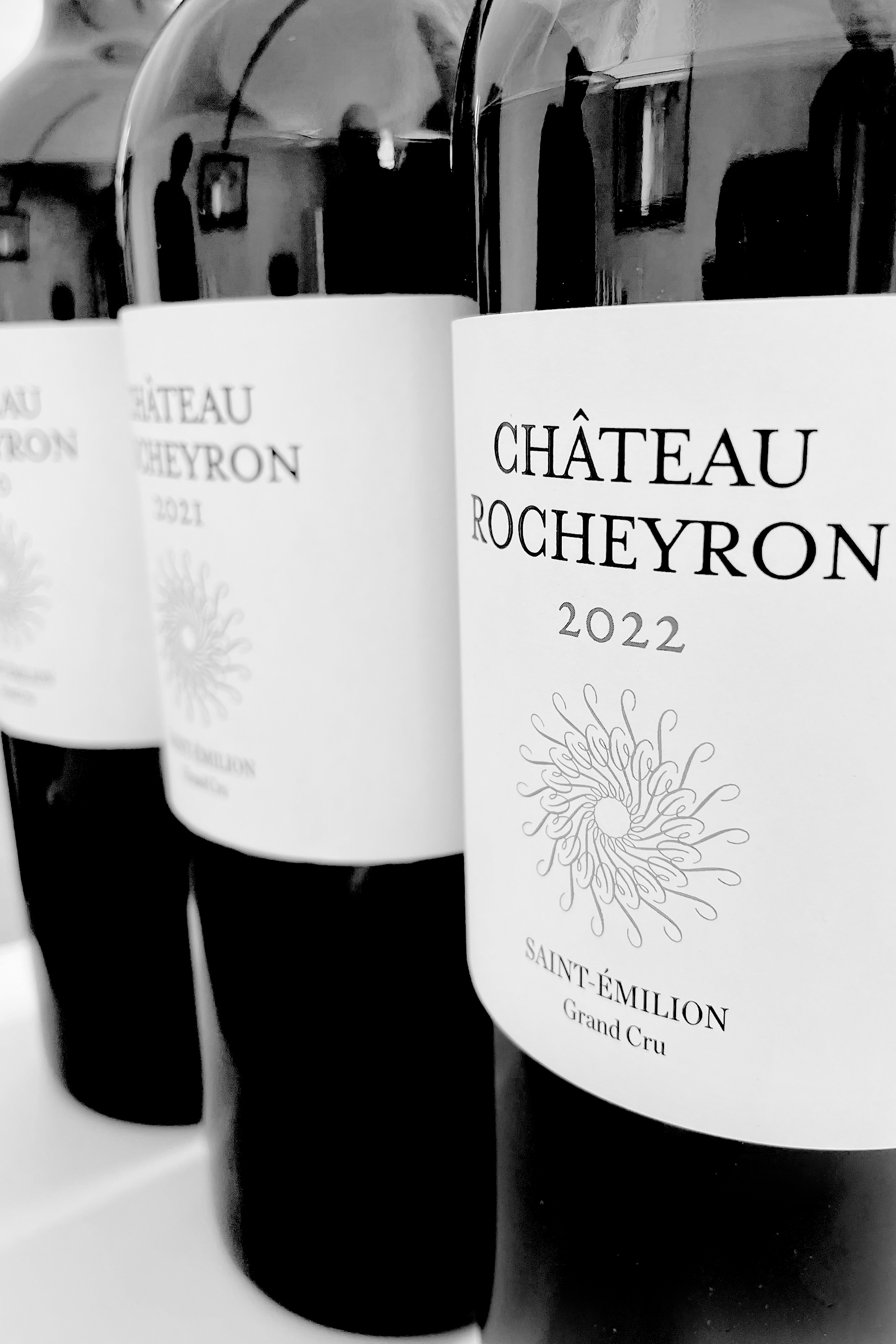
On this more recent return visit (which French air traffic controllers graciously decided could go ahead), after checking in on the 2024 primeurs barrel sample, I had the opportunity to check in on three prior vintages. Once again I was struck by the quality of the wines, although in style they are nothing like Pingus or Flor de Pingus. These are tense limestone-driven wines, mostly Merlot, although if tasted blind I would have guessed the Cabernet played a much larger role than it does. The 2022 was exceptionally strong, but the 2020 and even the 2021 - now there's a surprise, as on the whole 2021 is one of the least impressive vintages in recent years - were not far behind. These are three wines which, I suspect, will sell well, and give much pleasure.
Here's hoping, en route to thirsty drinkers, they don't end up on the Atlantic seabed. Fingers crossed.
–
Article, Reviews and Photography by Chris Kissack

PRODUCERS IN THIS ARTICLE
> Show all wines sorted by scoreMore articles
Bordeaux 2025 En Primeur
07th May 2026
382 tasting notes
Château Vieux Taillefer 2013 - 2025
26th Mar 2026
13 tasting notes

Château Ducru-Beaucaillou 1904-2017
12th Mar 2026
34 tasting notes
TWI Drinks Château Gruaud Larose 1988 and 1989
11th Mar 2026
2 tasting notes
Show all articles