03rd Jul 2024
Land has an ability to evoke emotions. It can conjure a sense of tranquility, inspire joy, instill foreboding, awaken memories. This is partly why a wine of singularity draws me to its source. Not that a vineyard’s vibe directly translates into the character of the wine, but it helps build the picture, enriching the sensory story. It’s been nearly nine years since I last visited Blankiet’s picturesque site. Named Paradise Hills, the vineyard is spectacularly situated just above Dominus Estate in Yountville. And yet, more vivid than the view, I remember the feeling of the place as clearly as a familiar smell—that electric tension.
Tension
Blankiet Estate was a virgin piece of land, forged from scratch in the mid to late 1990s by Claude Blankiet and his wife Katherine. Claude was not born into a wine family, but throughout his youth he was surrounded by wine.
“I was born in Switzerland and grew up in Dijon after the war,” he tells me. “My family has been involved in textiles for a few generations. My father was fond of Chateauneuf du Pape, but wine was not on the dinner table regularly. I was exposed to fine Burgundian wines through older friends, and my first notable purchase was a third of a barrel of Premier Cru Chambolle Musigny in 1971. We bought it en primeur from a producer my two friends knew, and we went to his winery to bottle it a couple of years later. After a few years of aging in my parents' cave, the wine was a revelation that spurred my interest in collecting a few great bottles here and there. I had the opportunity to buy some Cros-Parantoux for less than $40.00 from Henri Jayer, who later became a mentor in my life.”
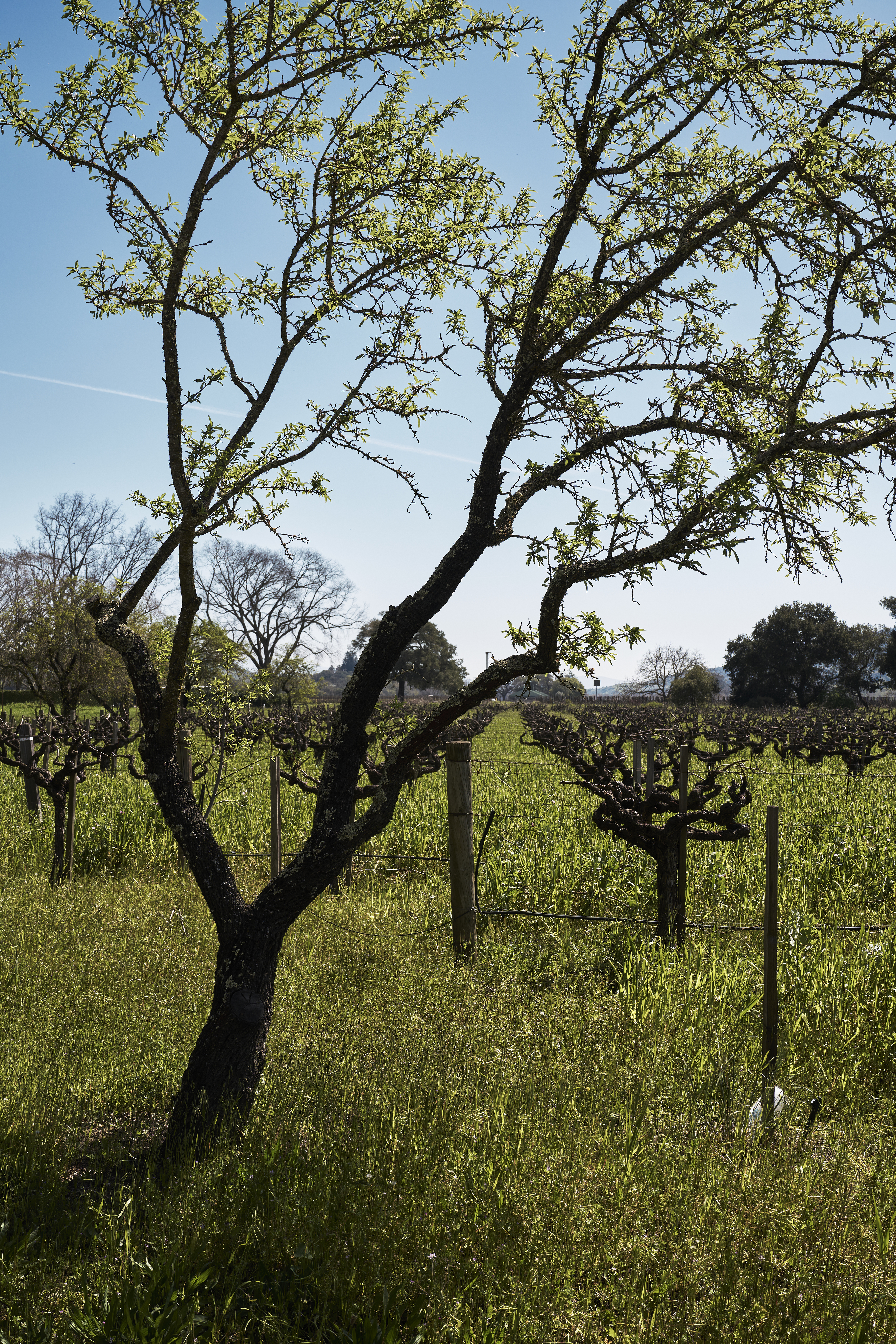
Claude came to the USA in the 1970s to live the American Dream.
“I came to New York in 1976 and discovered fine Bordeaux during my five years on the East Coast,” he explains. “Then, with a friend, we moved to El Paso, Texas, and created what became the largest denim finishing company in the world. Our biggest customers were Levi and the Gap, headquartered in San Francisco. Katherine and I started visiting the Napa Valley in the early ‘80s. We had a couple of friends involved in wine, and the idea of acquiring vineyard land in Napa grew more robust with each visit. We became good friends with Jeffrey Earl Warren, a well-known real estate broker.”
Sitting in the castle he built on the hill above his vineyard, wearing denim jeans and a poker face, Claude strikes me as a guy who knows what he wants and has both the work ethic and stubborn disposition to get it.
“We were very set on the location of the prospective land,” he says. “We liked the western foothills of the Mayacamas and south of the Valley. But such plots of land rarely come up for sale; if they do, neighbors usually buy them. NAFTA (the North American Free Trade Agreement, effective from 1994) became a game changer for the textile industry, forcing companies to relocate out of the country. As the technical partner of the business, I knew that I would be travelling constantly, and it was time for a change of life. In January 1996, we finally got a phone call from Jeff Warren, who said that a tract of land he had followed for a decade had become available. He had secured a 24-hour hold from the owner and asked me to come immediately. We came to Napa the following day, walked the land, and signed a contract on the spot, amazed by the location above the Napanook Vineyard.”
The piece of land that the Blankiets purchased is near a fault line with sub-faults running throughout. Precarious though it may sound, faults can be a bonus in the wine world. Some of the greatest vineyards arise from the complex mix of soils resulting from the tensional stress at divergent tectonic plate boundaries and the subsequent fracturing and movement of rock over millennia.
“Our vineyard is an oddity of nature,” Claude points out. “The West Napa Seismic Fault, located on the ridge between us and Promontory, has several sub-faults draining the mountain range. Creeks running down the Mayacamas divide our estate in two. Studies by Dr. David Howell, Dr. Sarah MacDonald, and Dr. Walter Fitz demonstrate that the northern part of the estate is on top of a fractured rocky mound of andesite covered with volcanic ash. The southern part is made of basalt, decomposing into sand and red clay. I don't know of other vineyards that have these two types of soils side by side.”
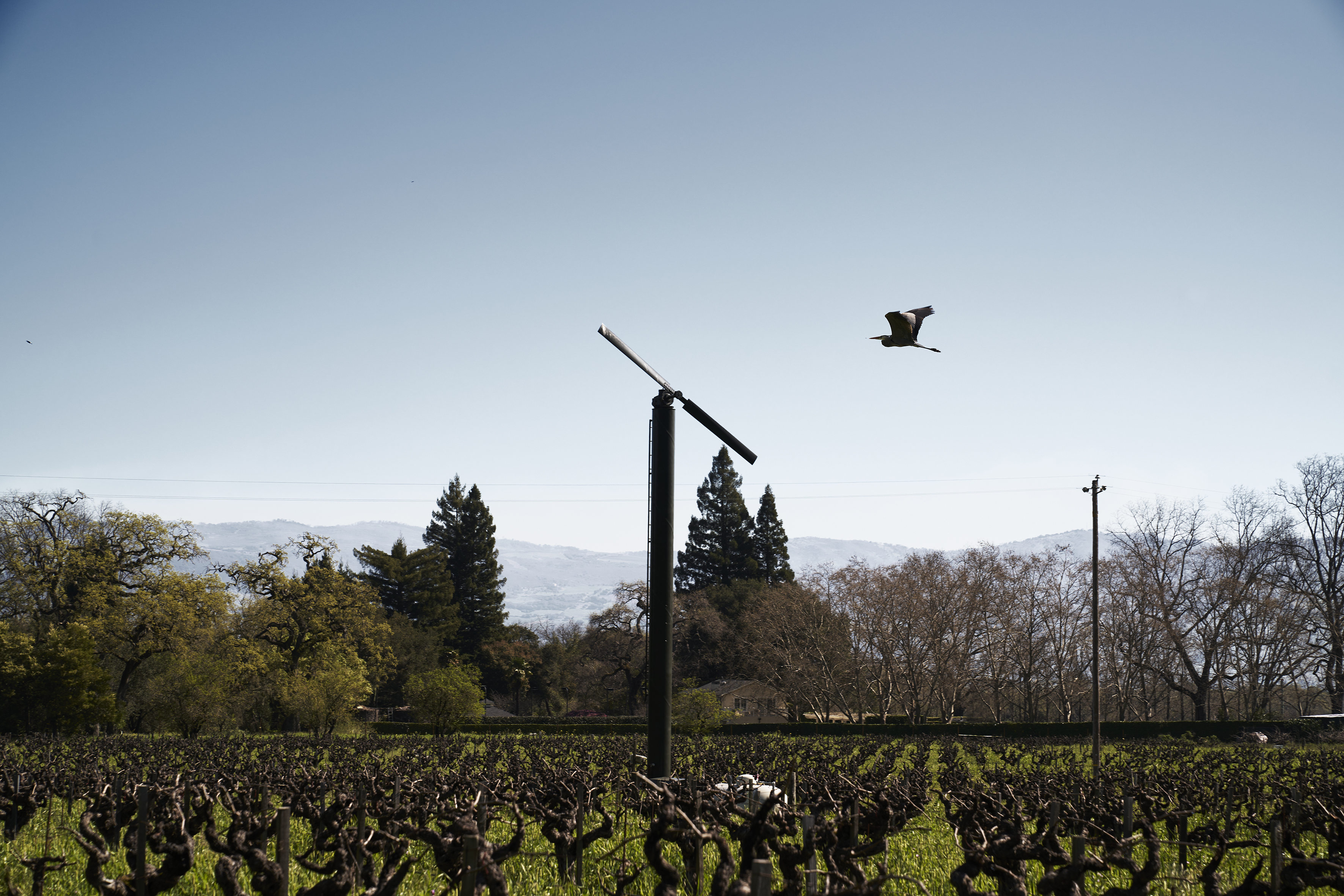

Soon after purchasing the land, Claude hired Helen Turley, the most sought-after winemaker in Napa Valley at the time.
“I was one of the first customers on the mailing list of Helen Turley and John Wetlaufer (her husband) and was fascinated by the early bottlings of her Chardonnays,” recalls Claude. “We invited her to come and see the land we had bought in Yountville. She thought the parcel had extraordinary potential and was interested in helping us. She brought David Abreu to walk the land, securing his commitment to develop it.”
Blankiet’s first release was the 1999 Cabernet Sauvignon Paradise Hills Vineyard, which received critical acclaim. But, whenever strong minds clash, and they inevitably will, there is bound to be tension.
“We had an excellent relationship with Helen; she was a great teacher,” says Claude. “Unfortunately, communication with her husband deteriorated quickly and became an issue with everybody else involved in the project. Helen was a talented winemaker responsible for bringing California Cabernets to higher levels of complexity with her Burgundian approach. If some of her early bottlings have improved 20 years later and dropped their higher levels of tannins, I have to say that I was not very happy with them in their youth. Helen never suggested declassifying some barrels into a second or even third label. Helen had great success with other estates and was reluctant to try new methods, like close-top fermenters instead of open-top like for Pinot or Chardonnay. She also was not a blender and became very angry when I suggested bringing Michel Rolland to help with blending. It was long overdue for us to try a new winemaker.”
In 2006, Claude brought in Martha Levy McClelland as winemaker, under the guidance of Bob Levy. Michel Rolland was hired as a consultant for the blending, and David Abreu remained as vineyard manager.
“Rolland’s style at the time was barrel fermentation on a large scale,” recalls Claude. “Again, I thought that our wines came out over-extracted. Finally, in January 2010, we had the opportunity to hire Denis Malbec as per Lou Kapcsandy's recommendation.”
At last, Claude and Katherine had found a winemaker who shared their tastes and philosophy of winemaking.
“The 2010 vintage was a turning point for us,” says Claude. “Aromatics, lower alcohol, riper tannins, balance, restraint, and a long finish. All the barrels were carefully rated, and a strict selection was implemented to create each blend.”
Sadly, this era of like-minded harmony in the winery was shattered by the sudden death of Denis Malbec. He was only 46 years old.
“After the tragic car accident of Denis Malbec in April 2016, we had the opportunity to hire Graeme MacDonald,” says Claude. “We were his first customer. Three years earlier, we had tasted his inaugural 2010 vintage (of MACDONALD—a joint project between Graeme and his brother Alex) and were impressed by the complexity and purity of the fruit. Of course, the origin and age of the vines were remarkable, but the deft hand of a talented winemaker obsessed with preserving his terroir was obvious. Denis, Graeme, Katherine, and I have been driven to respect our site's natural flavors and aromas.”
Today, 16.5 acres of the Blankiets’ 47-acre parcel are devoted to vines. Those same vines planted by Helen Turley and David Abreu are now 27 years old. The maturity of the vines, as well as the atypical higher planting density and low training system, lend an apt “Old World” look to the place.
“Graeme's wines show the power of old vines planted in highly complex, gravelly soil,” says Claude. “They are powerful wines with a long future. Working with our 27-year-old vines and my dislike of granular tannins, I believe Graeme is right on with our goals. He is making our wines balanced, lower in alcohol, with softer tannins, very aromatic, capable of providing pleasurable drinking a few years after harvest, and certainly able to gain considerable complexity with bottle aging.”

Blankiet produces five labels: four red wines and a rosé. The “Paradise Hills Vineyard Proprietary Red” is mainly Cabernet Sauvignon, while the “Rive Droite” label is predominately Merlot, and “Mythicus” is a 100% Cabernet Sauvignon barrel selection. “Prince of Hearts” is their second label made from declassified fruit.
“My philosophical goal is to create individual wine styles that match each site,” Graeme MacDonald tells me. “The Blankiet style is to restrain the dramatic hillside that tends towards power, to produce wines of elegance and finesse. The wines share my appreciation for purity and focus but differ in their approach, which is what makes them stand out for their unique characteristics instead of winemaking preferences.”
There have recently been small but important changes at Paradise Hills, judiciously steered by Graeme.
“Denis created an important foundation with beautifully balanced wines,” says Graeme. “We have since transitioned the vineyard to organic farming practices, smaller picks to isolate geological changes, and less inputs to emphasize terroir. As a result, the wines have more power, tension, and a distinct sense of place. We have developed a culture of experimentation, which leads to us constantly evolving.”
Without a sense of tension, stories are boring. In the wine speak, we refer to tension as the sensation of palate tightness that happens when intensity is matched by marked acidity. Growing great fruit and making great wine requires measured tension between great minds. The concept that a place can be charged with a feeling is a moot point, but what’s for sure is Paradise Hills is producing striking wines sparked with purity, energy, and exhilarating tension.
–
Article, Reviews and Photography by Chris Kissack

PRODUCERS IN THIS ARTICLE
> Show all wines sorted by scoreMore articles
Château Le Dôme 1997-2022
10th Sep 2026
9 tasting notes

Bordeaux 2024 Revisited
03rd Sep 2026
69 tasting notes
Château Jean Faure 2004-2023
10th Jul 2026
10 tasting notes
Bordeaux 2025 En Primeur
07th May 2026
382 tasting notes
Show all articles