05th Jun 2025
Bordeaux was doing what Bordeaux does best. The white linen tablecloths lay crisp and starched, and the bone china plates which sat upon them shimmered beneath the light of ornate chandeliers. Impeccably dressed sommeliers glided from table to table, filling hundreds of fine crystal glasses with first growths, while white-gloved waiters laid down dishes before hungry diners - the critics and the trade, here in Bordeaux to taste the 2022 vintage - with the coordination of gold medal-winning synchronised swimmers.
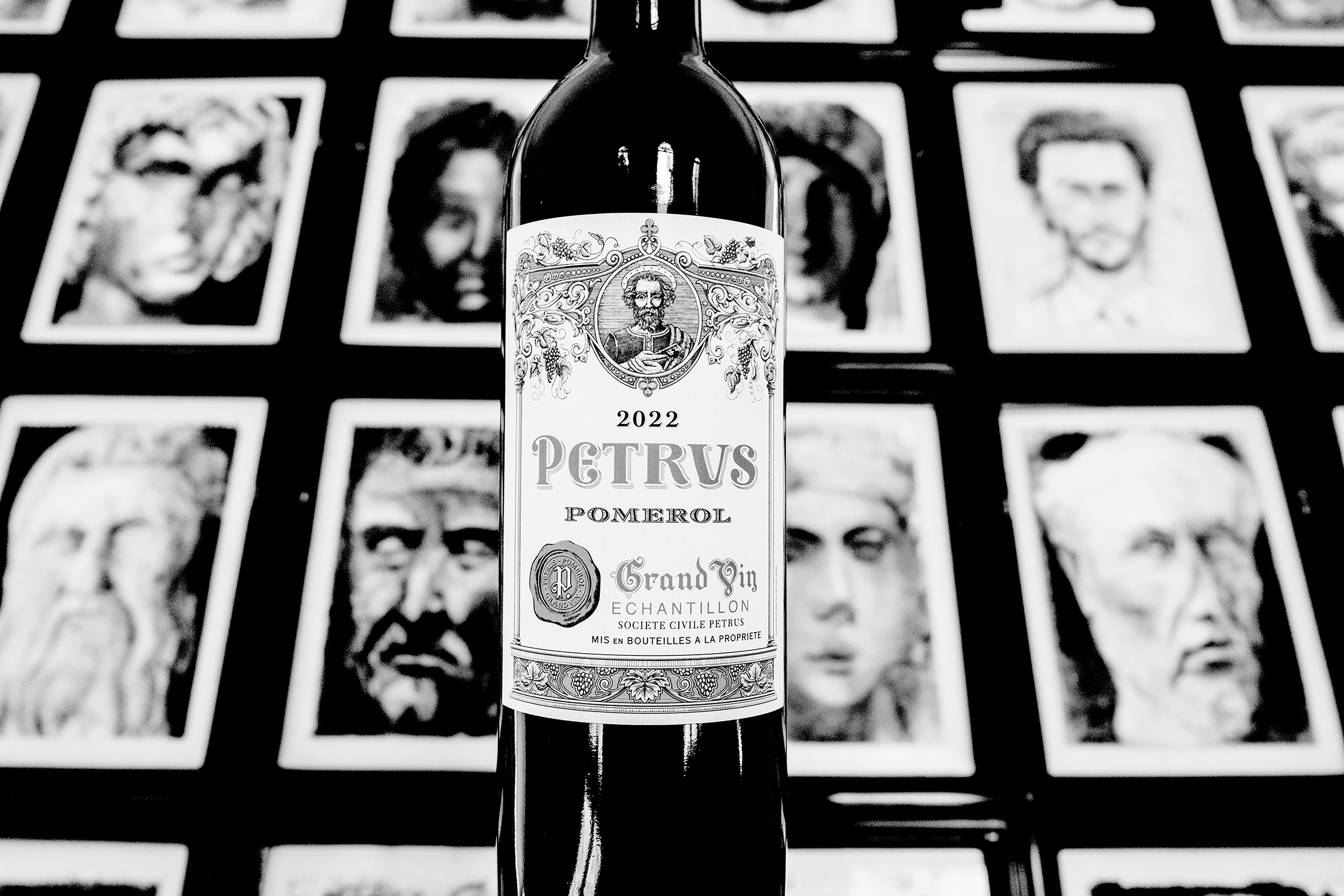
All Eyes on the Prize
Back in April 2023, all seemed well with the world of Bordeaux.
Tasting the 2022 barrel samples at that early stage did nothing to make me think otherwise. Despite their embryonic state, the wines convinced with their unprecedented combinations of concentration and freshness, the very best of quite stratospheric quality. Some were like none I had seen before, in more than twenty years of tasting and writing about Bordeaux; they were astonishing wines which set the pulse racing like some of the region's greatest vintages, years such as 1990 or 1982 springing to mind. Wines of great concentration but also perfumed freshness, magical Merlots and capital Cabernets with the aromatics and vigour of a cool vintage, but the texture and concentration of a warm one. Like a conjuror who produces exactly the card you wanted, at the moment you least expected it, Bordeaux had furnished us with an amazing vintage from a season which, at a glance, looked like it should have given us another soupy 2003.
As I said, back in April 2023, all seemed well. Lift the bonnet (or hood if you're in North America), though, and we see that Bordeaux's engine might not be purring so smoothly as it first seems.
While a handful of 2022 wines sold well en primeur, many did not. Interest in buying Bordeaux at this early and increasingly expensive stage is on the wane, and this translates into tangibly declining sales; despite being the most superb vintage, the 2022 primeur sales accounted for just 5% of the annual turnover at London merchant Farr Vintners; compared this with the 2009 vintage, which accounted for 50% of their turnover in 2010. The reason for this decline is blindingly obvious; price. Bordeaux drinkers are realising there is simply no point buying en primeur when physically available vintages are available for significantly lower prices, some of which - 2006, 2008 and 2012, for example, decent wines all still widely available - are not only much cheaper but are also ready to drink. Also, very high prices have a tendency to soften, as the wines find their place in the market, and nothing smarts more than finding those en primeur purchases you stretched to are available years later at a lower price. Perhaps after you have paid for several years of storage as well. Many primeurs buyers have had their fingers burnt in this fashion.

The en primeur system is certainly not purring smoothly, yet this is just one facet of a broader Bordeaux system for selling wine which, by some accounts, is at breaking point.
Négociants have their backs to the wall; financing their primeur purchases with borrowed money, they need to make sufficient return on the wines to pay the interest on their loans before they even register a profit. High interest rates during recent years have made this a challenge, and rumours of négociants flirting with receivership are rife. Meanwhile those which manage to keep their heads above water need ever-larger facilities to store their ever-larger volumes of stock; during a visit to a left-bank cru bourgeois property last year I saw their neighbour was building a huge warehouse, and I enquired of my host what its purpose might be; the land was owned by one of the big négociants, so you already know the answer.
Meanwhile, as margins narrow and profits continue to fizzle out, the big businesses which have invested in Bordeaux in recent decades are beginning to look elsewhere for better returns. Rumours again (because nobody will ever confirm or deny such sensitive matters), but an unprecedented number of left-bank classed-growth properties are currently said to be up for sale. Yours for the taking, if you have the right contacts, and more than a few million to spare.
What Bordeaux needs is a reinvigoration.
The 2022 vintage primeurs could have been it, if more wines had been sold at the right price, but the campaign misfired. The 2023 primeur price reductions which followed a year later were inadequate; newsworthy percentage cuts in prices sadly reflected the high starting point of the 2022 vintage, rather than bargains to be had in 2023. Next up will be 2024, perhaps the most challenging season in many years (the Bordelais were out spraying against mildew before I left the region in April 2024, and things did not get much better during the ensuing months, culminating in a rain-soaked harvest); a few weeks from now I will taste the results for the first time, but given the fact even the greatest vintage such as 2022 is a hard sell it is difficult to imagine a huge swell in consumer interest in 2024, given Bordeaux's current approach to pricing.
Mind open or not, this is the challenging environment into which the freshly bottled 2022 vintage has been delivered, and in this report I will post new tasting notes and scores on several hundred wines now that they are finished and physically available.
I do so, however, with a hint of despair, as while many of the wines are stunning, many also feel increasingly inaccessible. Wines to be tasted, reviewed, praised and then forgotten about, because quality is irrelevant when what was once a good and reliable classed growth claret (or equivalent) to be purchased in case quantity, cellared and enjoyed in ten or twenty years, now costs several hundred pounds/dollars/euros for a single bottle upon release. How many of us can tie up that much money, for that period of time, to culminate in a one-bottle experience? Yes, I know you can drink and enjoy the wines young, and there are plenty of critics who pay lip service to this concept, but they all know that in reality the joy in drinking Bordeaux comes with maturity (in the wine, although there is nothing wrong with maturity in the drinker as well).
Nevertheless, for the moment I will tuck my despair away in my back pocket (where I tuck everything I don't want to think about, including Ryanair boarding passes, my imposter syndrome and several sky-high utility bills), and leaving these words on markets and prices behind I will focus purely on the quality of what lies within the bottle.
Vintage Recap
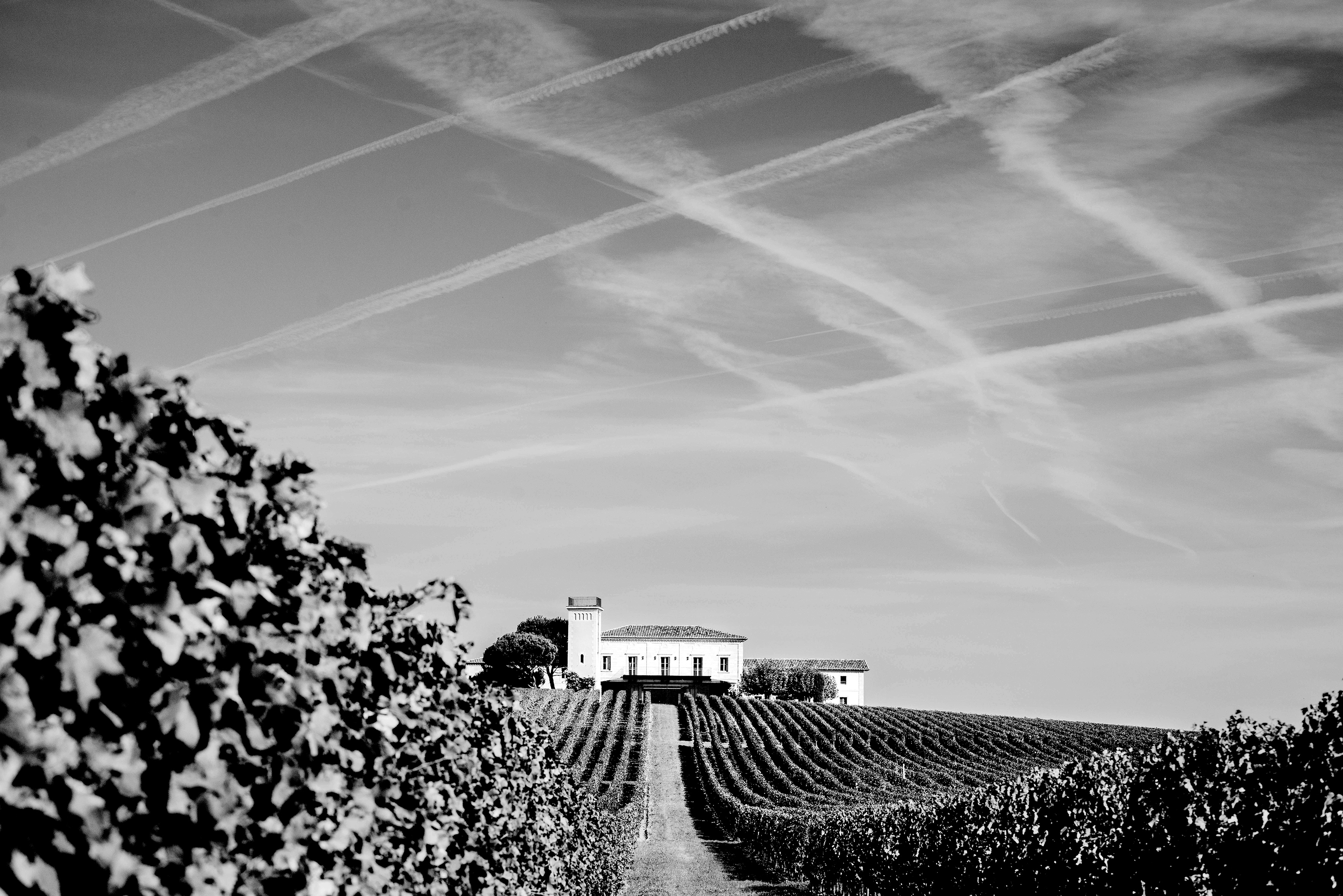
I will keep this brief, as there is nothing new to say about the growing season compared to my more detailed report published in 2023. After high levels of rainfall which replenished reserves of groundwater during 2021, the 2022 season started off well with mostly warm and dry weather. Some in the region felt this conditioned the vines for the year ahead, by reducing stomata formation in the leaves, which would reduce the vines' susceptibility to subsequent drought. It is at least plausible. There was an episode of frost during the first week of April, but as the buds were largely still dormant there was not widespread damage as a result. Only a few properties, including some low-lying vineyards around Libourne such as Quinault L'Enclos, took a notable hit.
The weather remained very warm, hot at times, especially in May, June and then July. There came a series of short heatwaves, the first kicking off in early May, the second in mid-June. After this there came some welcome rain, not to mention less-than-welcome hail (causing damage on a number of St Estèphe vineyards). St Estèphe and Pauillac benefitted from the highest rainfall, following by St Julien and Margaux, with Graves and the right-bank appellations of St Emilion and Pomerol trailing in last. Despite the rain the flowering went generally well, with minimal losses to coulure or millerandage.
July was very dry again. The véraison kicked off in July, and continued at a pace through August into September. A smattering of rain in the middle of August freshened up the vines, while a few days of higher temperatures in mid-September constituted one of the few spikes of excessive heat that came after the véraison. But the vines remained healthy, the leaves green and bright, and the fruit finished ripening without any hiccups.
After a remarkably warm and dry summer the harvest was unsurprisingly early, the picking of the whites beginning in early August, unheard of a couple of decades ago. The reds came in from early September onwards. With a warm and dry season disease pressure had been low throughout, and the fruit was in perfect condition as it arrived at the cellars. The only disappointment was in the yield, which despite the strong flowering turned out to be much lower than had been hoped for. This was a vintage of small berries, thick skins and low juice content, reflecting the long period of dry and warm weather, features in the fruit which would result in rich colours, textures and concentration in the finished wines. Meanwhile the presence of groundwater, those June rains, and cooler nocturnal temperatures, engendered a sense of freshness in the wines.
The Tastings
Not for the first time I took a first fresh look at the vintage with the Union des Grands Crus de Bordeaux in London. This is a useful memory-jogger as to the style of the vintage, but it would be unwise to use this as a sole guide to the wines.
Why do I say that? Here are some fun facts for you. Journalists at the London UGCB event have six hours (10am until 4pm) to taste. Typically there are about 130 wines for tasting (the number might vary slightly from year to year, depending on the vintage). Put simply, if you taste everything (dry whites and reds of Graves and Pessac-Léognan, all the left-bank wines from St Estèphe, Pauillac, St Julien, Margaux, Listrac-Médoc, Moulis-en-Médoc, Haut-Médoc and Médoc, the right-bank wines of St Emilion and Pomerol, and Sauternes) that is less then three minutes per wine to taste, assess, write notes and assign a score which a taster must then be able to justify to consumers, subscribers, readers and to the châteaux. It is entirely unrealistic and why simple single-tasting reports from this event should be taken with a pinch of salt.
Four weeks after this tasting I headed to Bordeaux, spending fourteen days in the region. I should say, in the interim, I also tasted over sixty Cru Bourgeois wines from this vintage, further informing my opinion, but I wrote this tasting up separately (I had much more than three minutes per wine here, by the way) in my 2022 Cru Bourgeois reports. As for my visit to Bordeaux, the majority of my time was spent tasting at the châteaux, revisiting wines tasted with the UGCB, as well as those big names who do not participate in such joint activities. I also had the opportunity to participate in some large tastings, with the Laboratoire Rolland for example, and with leading négociants Joanne and CVBG, which ensured I had a proper 'meeting' with all those wines I encountered so swiftly in London. The end result was that I tasted the majority of wines of interest at least twice, and some wines as many as five times. But this is what it takes to build a credible report.
The Wines Today
I realise as I write this I have already disclosed my overarching opinion on the wines in my opening paragraphs; having been swept up in their fragrant quality during the primeurs, I returned to be equally impressed - if not more impressed - now that they are in bottle. I always advocate reading tasting notes and never just the scores, but if you will allow me to break my own rule I was struck by how often my new score fell at the top end of my primeurs range, rather than in the middle. And where scores fell outside the range, the tended to fall upwards rather than down. At their best, these are superb wines which constitute a great vintage which will in future years be talked of in the same breath as the region's most legendary years.
A little of the youthful floral fragrance seen during the primeurs has faded through the élevage, which is only to be expected, as the wines revert to more typical varietal expressions, and with time allow their terroirs to shine. They remain not only confident and ripe, but also fresh and cleanly delineated. This is not a vintage of unbalanced breadth, soft blowsiness or roasted fruit, criticisms which might be thrown at the wines of other exceptionally warm vintages such as 2003. These are beautifully constructed wines. They will impress in the same manner that 1982 and 1990 impressed, being texturally polished and filled with substance and ripe tannin, although they also have an unparalleled sense of freshness; the wines of 2022 are much better than anything these two vintages ever furnished us with.
In comparison to recent vintages they show well. They are certainly superior to the wines of the 2021 vintage, many of which - having been vinified with a very light extraction - are already entering their drinking windows. They have a touch less classicism than the likes of 2016 and 2019, but are on a par with these vintages in terms of quality, and while less classically formed than the 2023 vintage there is no doubt in my mind 2022 is a superior vintage. If they are close to any recent vintage in style it is perhaps 2020, or maybe 2010, although - dare I say it - 2022 is better than both. One recent vintage they do not resemble is 2018, the wines of which had the same richness as 2022 but also a rather robust, tannin-infused, warm-vintage feel to them, enough for some critics to initially describe them as 'Californian' in style. The wines of 2018 also had higher alcohol levels. The wines of 2022 are much fresher and more fragrant than 2018, and the alcohol levels are not as high.
These are, naturally, generalisations. The very best wines provide stratospheric levels of joy, the textures plush and dramatic, the tannins ripe and finely threaded together, set in a frame of freshness and fragrance, but of course not every wine sings. No particular appellation has the upper hand; this style is all pervasive, the warm and dry weather of the 2022 season having painted the wines of St Estèphe, St Julien and St Emilion, as well as Pessac-Léognan, Pauillac and Pomerol, all in the same colours. Terroir does make a difference though, and this was a little more apparent revisiting the wines at this stage than it was during the primeurs. A few corners of the two big-name right-bank appellations clearly struggled in the dry heat of the 2022 growing season, engendering the wines with dry and hard (and sometimes green) tannins which support a core of rather baked fruits. A few wines from the sandy soils at the very foot of the Pomerol slope display this difficulty with eye-popping clarity, as do one or two from peripheral corners of the St Emilion vineyard. It is perhaps not too difficult to understand why; these are rapidly draining sandy soils, and these two appellations received a lower level of rainfall than their left-bank counterparts.
And of course, this being Bordeaux, there are always wines which have been pushed too far. Wines that shimmer with oaky lactones, the aromatics resembling that of the water of life from Bowmore or Bruichladdich more than wine from Bordeaux. And the extraction pedal was pressed very hard in some cellars, exactly the opposite of what this small-berry, thick-skinned, high(-ish) alcohol, high solid-to-juice ratio vintage demanded. Thankfully the former problem is rare, the latter much less common than it used to be, and this remains a vintage rich in cellar-worthy wines.
This is a vintage to buy for your cellar. The only obstacle to be overcome is, as I have already made clear, the price.

There is only one question you should ask yourself when weighing up a Bordeaux 2022 buying decision.
Can I afford it?
I say this because, in terms of quality, and restricting my comments to the red wines, buying into the 2022 vintage is what might be termed a no-brainer. The wines are, at a very elementary level, simply delicious; they are gorgeously aromatic wines with unprecedented floral complexities, now giving way to gloriously fresh yet dark fruit character; and they have beautifully formed palates, sinewy and polished, but also elegant and bright. These features come supported by ripe tannins but also appropriate levels of acidity, keeping a sense of freshness alive in the wines.
They taste this way now; they will only taste better in ten, fifteen or twenty years.
There are other reasons - beyond mere immediate pleasure (although does anything else really matter when it comes to wine?) - why you should consider buying into this vintage. First, slipping on my academic's trencher cap for a moment, this is a fascinating, cerebrally stimulating vintage to taste and drink because it offers a complete paradox; a dry and sunny growing season which engendered the textures and flavours typical of a warm vintage, but with the aromatics, acidity and freshness of a much cooler year. It is a paradox which reminds us that it is not possible to simply sum up a vintage as warm, cool or something between the two; we have to look at the timing of the heat as well. Before or after the véraison? Before or during the vendanges? Earlier rather than later? Or vice versa?
It is something of a coincidence that, while tasting and reviewing the 2022 Bordeaux vintage, I have also published reports on the wines of 2014 Bordeaux at Ten Years, and on the wines of 2014 Loire at Ten Years. In this older vintage, the style of wine made in both regions was also shaped entirely by the timing of the weather, the ripening warmth coming in at the last minute, after a long, cool summer. By contrast, in 2022 the warm weather was all (or mostly, anyway) very early, pre-véraison, producing an entirely different (and far superior) style of wine.
Surely it is worth having a bottle or two in your cellar so you can ponder these thoughts (and other mysteries of the universe), when you pull the cork ten years from now?
No? Alright, if that does not convince you then I would argue the 2022 vintage deserves a place in your cellar because the wines are, quite simply, unique. Quality-wise it is one of the best vintages of the past 25 years, in a cohort that would also include 2019, 2016, 2010, 2009, 2005 and 2000; but these vintages all have different styles. I adore the reserved, occasionally minty classicism of 2000, although I think the perfectly formed wines of 2005 have the edge. The easy seduction of 2009 is enjoyable at fifteen years, while the robust, reinforced-concrete structure of 2010 suggests these wines will live on in the cellar for decades. The classical balance of the 2016 vintage fired anew my enthusiasm for Bordeaux, a style closely matched by the precision seen in 2019.
But none of them are 2022, the only vintage which seems to offers inky darkness and salving brightness combined. How can you resist?
As I said, the only question is, can you afford it?
I write this because the release prices for the 2022 were into the stratosphere and, frankly, a turn-off for regular buyers of Bordeaux. It was certainly not a campaign to excite, enthuse and hopefully attract new buyers to this region. But this water flowed under the bridge too long ago to rehash it all here. Rather than go over this already well-trodden ground, I will instead continue with my choices, which as always are made according to three vaguely defined and undisclosed price levels.
They pertain only to the red wines; I don't see much point in chasing the dry whites of 2022, and while the sweet wines are very good I would rather use this page to explore, for one final time, the superlative reds.

Bordeaux Dreams
I can't remember exactly when, but a few years ago I excluded all the blue chip wines from this selection. It is of little use me telling you to buy Le Pin or Petrus; you are either in the market for these wines, or you aren't, and presumably not heavily influenced by my notes and scores. So they are excluded, along with the 'old school' first growths of St Emilion (you know the two names I mean) and the left bank first growths.
It was not particularly challenging to pull together a shopping list (for when my lottery ticket comes up) at this level, as the top of the pyramid is inherently narrow. I ended up with a baker's dozen, fairly evenly split between left and right banks.
Starting on the right, we have one of the vintage's superstars, and one of two wines not excluded on the grounds of being a first growth (or equivalent) to score the perfect 100 points; this was the 2022 Vieux Château Certan, the latest in a strong of brilliant wines to have come from this particular Thienpont cellar. I am sure I scored the 2020 something similar. Whatever Alexandre and Guillaume Thienpont are up to here, it seems to be working.
Then came a super 2022 Château Figeac, notable for its recent promotion to level A of the very top rung of the St Emilion classification (does this mean I should exclude this property along with Ausone and Cheval Blanc?). It is an elevation in rank declared for the first time on the 2022 label, and the wine within merits the commendation. And from another property at the same level - until recently self-demoted, anyway, the 2022 Château Angelus is a superb wine, in a much more elegant style than was seen here ten or perhaps even just five years ago.
The other great successes also came in St Emilion, where a fine 2022 Château Canon is testament to the fine tuning than this property has undergone, while the super 2022 Château Troplong-Mondot results from more radical work, as Aymeric de Gironde continues to shape this estate as he sees fit. Meanwhile, running in the same groove he was occupied for the past few decades without seemingly changing very much at all, the great François Mitjavile has turned out a superb 2022 Château Tertre-Roteboeuf.
Meanwhile, a lone representative from Pomerol, the 2022 Château L'Église-Clinet is a wine Noëmie Durantou can be proud of.
Moving to the left bank, we find the other wine of 'perfection', the stunning 2022 Château Pichon-Lalande, accompanied by a bevy of left bank classics; all three 2022s from the Léoville trio - Las-Cases, Barton and Poyferré - are stunning, as is the wine from the modern-day darling of St Estèphe, the 2022 from Château Montrose. Looking south, beyond the city of Bordeaux, there is no mistaking the quality within the 2022 Château Haut-Bailly either.
Bordeaux Sense
Now for a selection of sensible but serious wines that you can enjoy as well as pour for Robert Parker when he comes round for dinner. You have invited him, haven't you?
In truth this was a very difficult section to draw together, principally because many of the names I would like to see on such a list have in 2022 priced themselves beyond what I see as eligible for a Bordeaux Sense selection. I ended up with a shortlist of 28 wines, and then made a subjective selection of those I would buy first, based on either a more favourable price, the perceived grandeur of the name, vineyard and appellation (does this mean I am a label-drinker?), or simple personal whim.
The end result was that left bank dominates, with the 2022 Château Langoa Barton one of the leading contenders as it offers great quality but looks under-priced compared to many of its peers. Similarly, from among the ranks of the classed growths, I would plump for the 2022 Château Branaire-Ducru, 2022 Château Lagrange, 2022 Château Batailley and 2022 Château Pédesclaux. This little lot can be topped up with three wines hovering just outside the 1855 classification, the 2022 Château Chasse-Spleen, 2022 Château Gloria and 2022 Château Angludet, while from south of Bordeaux another perennial good-value over-performer returns to delight us again this year; the 2022 Château Malartic-Lagravière is certainly worthy of your time.
Meanwhile, three right bank options which should tickle the tastebuds of any more classically composed palates include the 2022 Château Grand Mayne, 2022 Château Laroque and 2022 Château de Pressac.
Bordeaux Reality
Bordeaux for drinking. Affordable, but truth be told, still pricy when viewed against the broader world of wine. Weigh up these options, but these days they face stiff competition from Rioja, South Africa, Australia, South America and Italy. And, of course, from the world's greatest region, the Loire Valley.
Again, starting with the left bank, the 2022 Château du Retout is going to be a super crowd-pleaser; it is not long ago I drank the 2010 and 2014 vintages, both were delicious and the 2022 will surpass both. I also think the 2022 Château Poujeaux is a top choice here, one which - like the Langoa-Barton - also looks a little softer on price than it should be. Meanwhile, there is the modern-day saviour of the Médoc appellation, the 2022 Clos Manou, as well as the old-school restraint of the 2022 Château Lestage proving that the ranks of the Cru Bourgeois classification should not be ignored by those hunting for quality and value combined.
Looking to the right-bank, the 2022 Château Côte de Baleau also seems a little softer on price than I would have expected, while the 2022 Château Mangot looks to offer great value for money. Alongside, in St Emilion or nearby appellations, the 2022 Château d'Aiguilhe from Stephan von Neipperg is another great value, while the success I found in the 2022 Château Montlandrie and 2022 Château Les Cruzelles - both wines long associated with the late Denis Durantou, now made by his daughter Noëmie - make the Durantou collection of wines one of the strongest in the region, with ultra-high quality at the top end, and supreme value at the lower end.
In recent years I have made efforts to explore Fronsac, and it has paid off. The recently profiled Château de Carles has turned out a super 2022 Haut-Carles, while old favourites step up and perform anew, with a very fine 2022 Château de La Dauphine and 2022 Château Fontenil. These all offer great Bordeaux drinking at a fair price.
Hopping back over the Dordogne and then the Garonne brings us south of Bordeaux once again, to the vineyards of Pessac-Léognan, and three more wines worthy of recommendation. The 2022 Château Brown is stellar, and great value too, proprietor Jean-Christophe Mau always pulling out the stops to make the best he can. I was also seduced by the 2022 Château Cantelys, at one time a Cathiard property run alongside Smith-Haut-Lafitte, but now owned by Grands Chais de France, and quality is as good as ever. Chapeau! And finally, speaking of the Cathiards, a lone appearance for a second wine in this line-up, as the 2022 Petit Smith Haut Lafitte puts in a performance to match many of the grander names so far listed.

PRODUCERS IN THIS ARTICLE
> Show all wines sorted by score
Alcee
Angelus
Angludet
Argilius
Ausone
Badette
Balestard La Tonnelle
Barreyres
Bastor-Lamontagne
Batailley
Beaumont
Beauregard
Beausejour
Beausejour Duffau-Lagarrosse
Belair-Monange
Belgrave
Belle Coline
Bellefont-Belcier
Berliquet
Bernadotte
Bernon Becot
Bertineau Saint-Vincent
Beychevelle
Bonalgue
Bourgneuf
Bouscaut
Branaire-Ducru
Branas Grand Poujeaux
Brane-Cantenac
Brown
Cadet-Bon
Calon Segur
Cambon la Pelouse
Canon
Canon la Gaffeliere
Canon Pecresse
Cantelys
Cantemerle
Cantenac Brown
Cantin
Cap de Faugeres
Cap de Mourlin
Cap Leon Veyrin
Cap St George
Capbern
Carbonnieux
Carlmagnus
Certan de May
Chantalouette
Charmail
Chasse-Spleen
Chateau Margaux
Chauvin
Chemin Royal
Cheval Blanc
Cissac
Citran
Clarisse
Clarke
Clement-Pichon
Clerc Milon
Climens
Clinet
Clos Beauregard
Clos Cantenac
Clos de l'Oratoire
Clos de La Vieille Eglise
Clos de Sarpe
Clos des Jacobins
Clos des Lunes
Clos des Prince
Clos du Clocher
Clos du Marquis
Clos Floridene
Clos Fourtet
Clos Haut-Peyraguey
Clos L'Hermitage
Clos Les Grandes Versannes
Clos Lunelles
Clos Manou
Clos Marsalette
Clos Rene
Clos Saint-Martin
Cos d'Estournel
Cos Labory
Cote de Baleau
Coufran
Couhins
Couhins-Lurton
Coutet
Croix Cardinale
Croix de Labrie
Croix du Trale
Croizet-Bages
d'Aiguilhe
d'Arcins
d'Armailhac
d'Issan
Dalem
Dallau
Dassault
Dauzac
de Cambes
de Camensac
de Carles
de Fargues
de Ferrand
de Fieuzal
de Fonbel
de France
de l'Annonciation
de la Dauphine
de la Solitude
de Lamarque
de Laussac
de Millery
de Myrat
de Pressac
de Rayne Vigneau
de Reignac
de Rochemorin
de Sales
de Viaud
de Villegeorge
Desmirail
Destieux
Doisy Daene
Doisy-Vedrines
Domaine de Chevalier
Dourthe
du Courlat
du Glana
du Moulin Rouge
du Retout
du Tertre
Dubois-Grimon
Ducru-Beaucaillou
Duhart-Milon
Dutruch Grand Poujeaux
Enclos de Viaud
Enclos Tourmaline
Faugeres
Ferrande
Feytit-Clinet
Figeac
Filhot
Fleur Cardinale
Fleur La Mothe
Fombrauge
Fonbadet
Fonreaud
Fonroque
Fontenil
Fourcas Dupre
Fourcas Hosten
Franc La Rose
Franc Mayne
Gazin
Gigault
Giscours
Gloria
Grand Barrail Lamarzelle Figeac
Grand Corbin
Grand Corbin-Despagne
Grand Mayne
Grand Village
Grand-Puy Ducasse
Grand-Puy-Lacoste
Gruaud Larose
Guillot Clauzel
Guinaudeau
Guiraud
Haut Condissas
Haut-Bailly
Haut-Batailley
Haut-Bergey
Haut-Brion
Haut-Brisson
Haut-Madrac
Haut-Marbuzet
Haut-Simard
Herve-Laroque
Hosanna
Jean Faure
Kirwan
L'Aurage
L'Eglise-Clinet
L'Evangile
L'Hetre
L'If
La Bessane
La Branne
La Cabanne
La Chenade
La Clemence
La Clotte
La Commanderie
La Communion
La Confession
La Conseillante
La Couronne
La Croix
La Croix Bellevue
La Croix de Gay
La Croix des Moines
La Croix St. Georges
La Dominique
La Fleur
La Fleur Pourret
La Fleur-Petrus
La Fon du Berger
La Garde
La Grangere
La Grave
La Lagune
La Louviere
La Marzelle
La Mission Haut-Brion
La Mondotte
La Patache
La Pointe
La Prade
La Roque de By
La Rose Perriere
La Serre
La Tour Blanche
La Tour Carnet
La Tour de Bessan
La Tour de By
La Tour de Mons
La Tour Figeac
La Vieille Cure
La Violette
Labegorce
Lafaurie-Peyraguey
Lafite Rothschild
Lafleur
Lafleur-Gazin
Lafon-Rochet
Laforge
Lagrange
Lanessan
Langoa Barton
Laniote
Larcis Ducasse
Larmande
Laroque
Laroze
Larrivaux
Larrivet Haut-Brion
Lascombes
Latour
Latour a Pomerol
Latour-Martillac
Le Bon Pasteur
Le Boscq
Le Crock
Le Dome
Le Gay
Le Pin
Le Prieure
Le Rey
Le Thil
Leoville Barton
Leoville de Las Cases
Leoville Las Cases
Leoville Poyferre
Les Carmes Haut-Brion
Les Charmes-Godard
Les Cruzelles
Les Grands Chenes
Les Hauts-Conseillants
Les Trois Croix
Lespault-Martillac
Lestage Simon
Lilian Ladouys
Lousteauneuf
Lurra
Lynch-Bages
Lynch-Moussas
Malartic Lagraviere
Malescot St. Exupery
Mangot
Mareil
Marjosse
Marquis d'Alesme
Marquis de Terme
Martin
Maucaillou
Mauvesin Barton
Mazerat
Mazeyres
Meyney
Monbousquet
Monbrison
Monregard La Croix
Mont-Perat
Montaiguillon
Montlandrie
Montlisse
Montrose
Montviel
Moulin de Blanchon
Moulin de Canhaut
Moulin du Cadet
Moulin Haut-Laroque
Moulin Riche
Moulin Saint-Georges
Mouton Rothschild
Nairac
Nenin
Noaillac
Olivier
Ormes de Pez
Palmer
Paloumey
Pape Clement
Pavie
Pavie Macquin
Pavillon Beauregard
Peby Faugeres
Pedesclaux
Perrin d'Hoge
Petit-Village
Petrus
Pey La Tour
Peymouton
Phelan Segur
Pibran
Pichon Baron
Pichon Longueville Comtesse de Lalande
Picque Caillou
Pierre 1er
Pindefleurs
Plagnac
Plince
Poitevin
Pontet-Canet
Porte Chic
Potensac
Poujeaux
Prieure-Lichine
Puy-Galland
Puygueraud
Quintus
Rahoul
Ramage La Batisse
Rauzan-Gassies
Rauzan-Segla
Reynon
Reysson
Roc de Becot
Roc de Cambes
Rol Valentin
Rollan de By
Rolland-Maillet
Roquetaillade La Grange
Rouget
Roullet
Saint-Pierre
Saintayme
Sansonnet
Saransot-Dupre
Senejac
Seraphine
Siaurac
Sigalas Rabaud
Simard
Siran
Smith Haut Lafitte
Sociando-Mallet
Soutard
Soutard-Cadet
Suduiraut
Taillefer
Talbot
Tauzinat l'Hermitage
Tertre
Tertre Roteboeuf
Teyssier
Thieuley
Tour Saint Christophe
Tour Saint-Fort
Tour Seran
Tournefeuille
Trimoulet
Trocard
Tronquoy
Tronquoy-Lalande
Troplong Mondot
Trotanoy
Trotte Vieille
Valandraud
Vieux Chateau Certan
Vieux Maillet
Villemaurine
Vrai Canon Bouche
Vray Croix de Gay
Yon-Figeac
More articles
Château Le Dôme 1997-2022
10th Sep 2026
9 tasting notes

Bordeaux 2024 Revisited
03rd Sep 2026
69 tasting notes
Château Jean Faure 2004-2023
10th Jul 2026
10 tasting notes
Bordeaux 2025 En Primeur
07th May 2026
382 tasting notes
Show all articles