27th Mar 2025
How does it feel
How does it feel
To be on your own
With no direction home
Like a complete unknown
Like a rolling stone
- Bob Dylan
Rolling Stone
“When I came to the USA in the early 1990s, I wanted to get a job in the Willamette, but I couldn’t find work there,” says Christophe Baron, who came from a family of growers in Champagne. “But I could find a job for 18 months in Walla Walla. A friend was working there, but his visa was expiring. So, I took over his internship. They put me in the tasting room on the weekends because they said I sold more wine with my accent. Then, I went to work harvests in Australia, New Zealand, and Romania, hoping to come back to the Willamette Valley to make Pinot and Chardonnay. I knew that I would NOT go back to Champagne. America was the place to be—the market was here. I never thought I would end up in Walla Walla, but I had to go back to pick up the car I’d left there. Then I saw The Stones.”
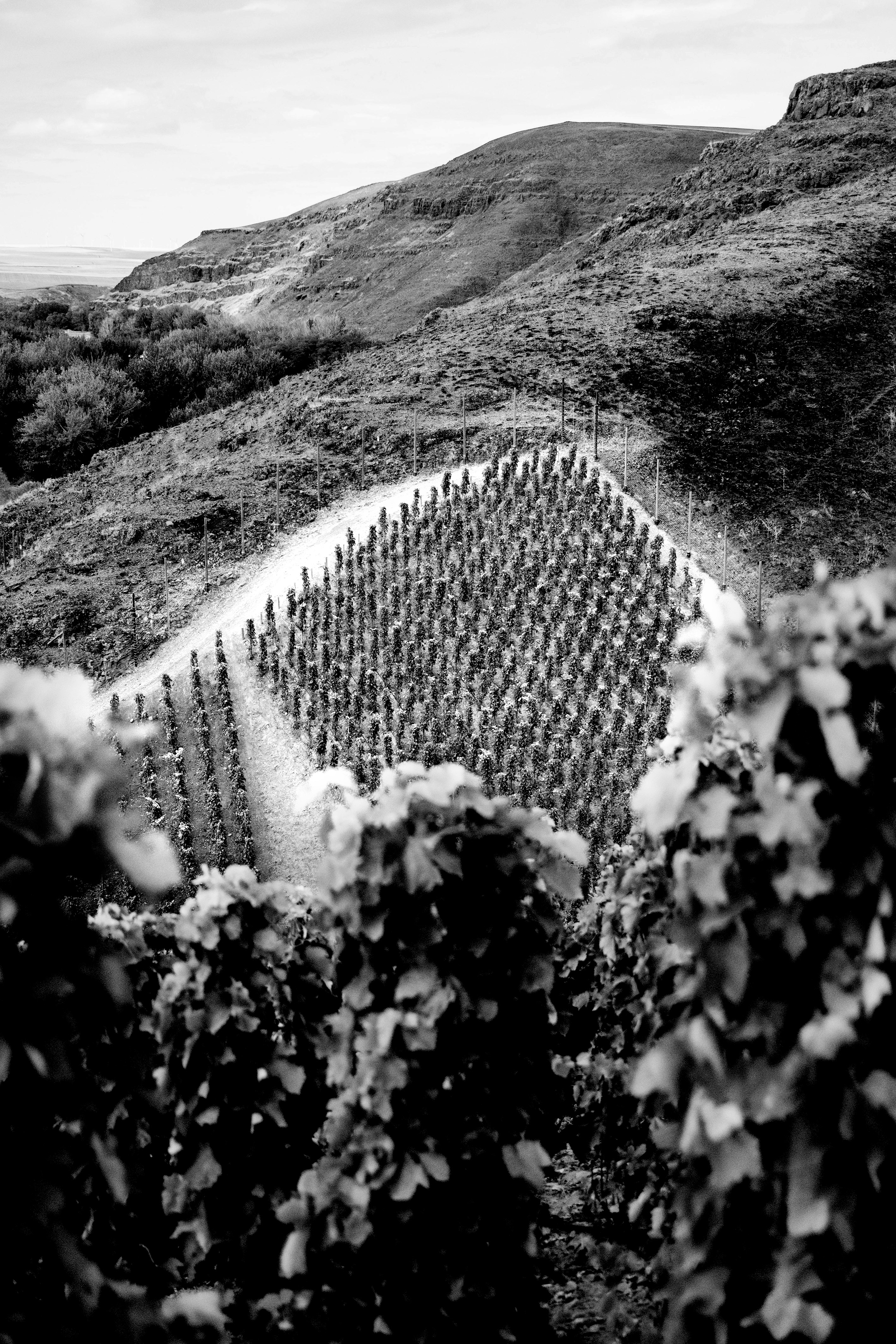
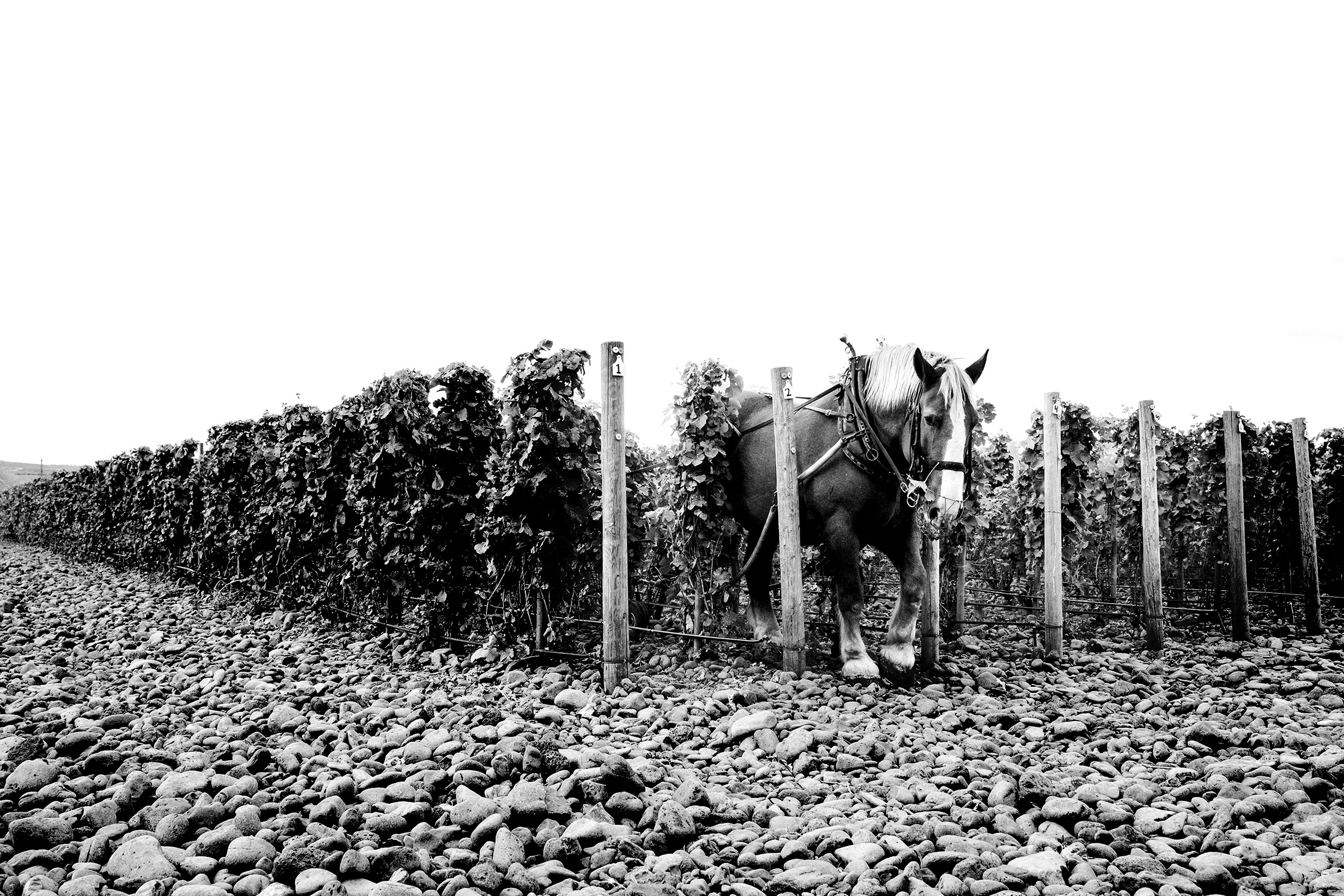
The Stones is Christophe’s preferred term for The Rocks District AVA (American Viticultural Area), established as a sub-AVA of Walla Walla in 2015. Unlike Walla Walla, which straddles Washington State and Oregon, The Rocks District is entirely within Oregon. This small 6-square-mile nugget is the only AVA in the USA that has boundaries defined by its soil type—these remarkable baseball-sized stones.
"I came to Milton-Freewater, and I saw this incredible field of stones," Christophe says. "They reminded me of the stones you see in the Southern Rhône. I said to myself, ‘This is it!’"
Milton-Freewater was an otherwise unremarkable one-horse town just over the border from Washington. Today, largely thanks to Christophe’s recognition of its potential, it has become a thriving center of fine wine production.
In 1996, Christophe purchased that 10-acre field of stones for $3000 an acre. There, he planted his first vineyard—Cailloux Vineyard—on March 21, 1997, to a mix of Syrah, Cabernet Sauvignon, and Viognier. He called his new venture Cayuse, after a Native American tribe whose name was derived from the French word “Cailloux,” which means “stones.”
"These are basalt stones and volcanic soils," he explains as we walk through Cailloux Vineyard. "This is all a big alluvial fan. The Walla Walla River used to be much, much larger than it is today."
In the following years after Cailloux Vineyard was established, Cayuse grew to include five vineyards, encompassing a little more than 47 acres. In total, including all his projects—Cayuse, Horsepower, Hors Catégorie, and No Girls—Christophe owns 75 acres across 13 vineyards, with a total production of around 8,000 cases per year.
“My upbringing in Champagne was centered around old vine Pinot Meunier,” Christophe tells me. “Arriving here, I was drawn to Syrah and Grenache more than Bordeaux varieties. When I was at school in Burgundy, we would drive to the Rhône on the weekends to party. That’s when I got to love the great producers of the Northern Rhône and Châteauneuf du Pape. We would visit producers like Jamet, Clape, and Rayas. It was an amazing time. At 21 and 22, I was already drinking these wines.”

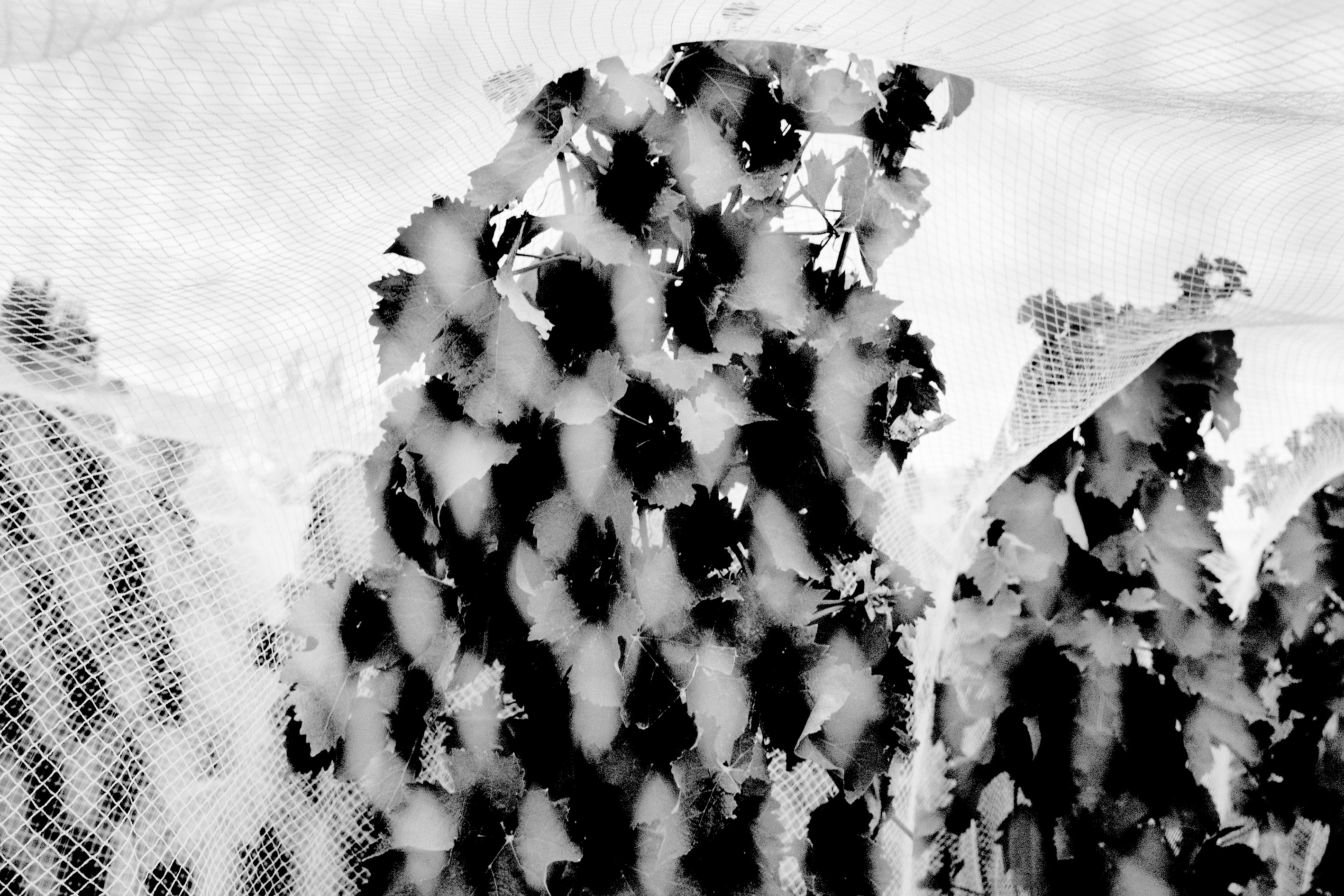
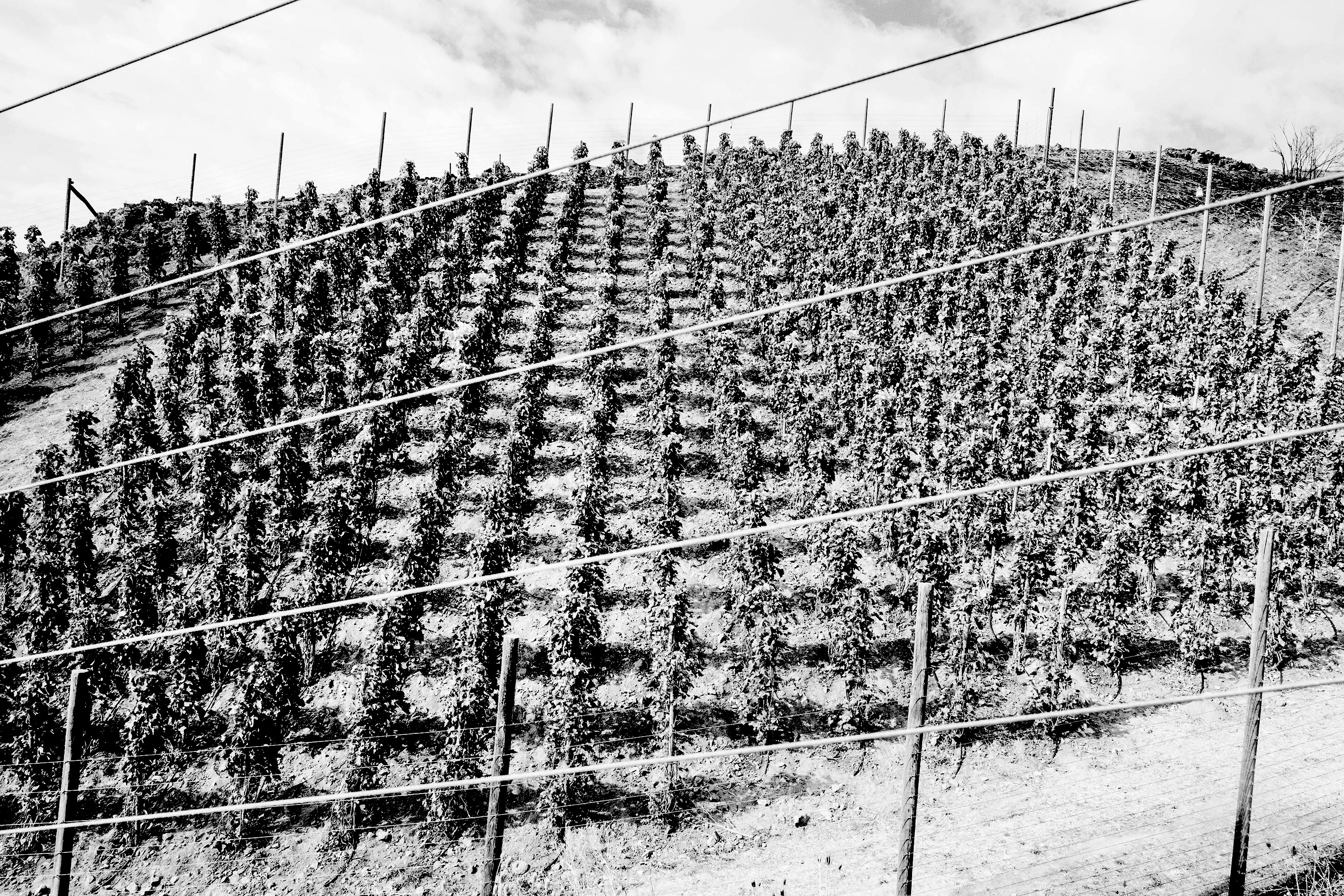
Production across all of Christophe’s labels is entirely from estate-grown fruit. From the beginning, he knew he wanted to farm biodynamically.
“When I was studying in Beaune, I was buying La Revue du Vin de France,” he recalls. “In 1989, I read the cover article about biodynamics and Nicolas Joly at Coulée de Serrant. He was the first one to take Steiner’s philosophy and approach. Then I heard that Anne-Claude Leflaive and Lalou-Bize Leroy were adopting this approach. Anne-Claude was doing a trial with her Clavoillon parcel in Puligny—1/3 conventional, 1/3 organic, and 1/3 biodynamic. The difference with the biodynamic was striking. So, from the beginning, when I got my first vineyard, I knew I wanted to do this, but I needed a consultant. In 2002, I wanted to switch from organic to biodynamic, and Philippe Armenier of Domaine Marcoux in Châteauneuf du Pape had started a consulting business in Santa Rosa (Sonoma, CA). He was a consultant to producers in Oregon, including Beaux Freres. I worked with Philippe for about 15 years, but we are now self-sufficient. Working this way is like second nature to us now. But, you know, everywhere you go, being biodynamic is different depending on your needs. For example, you might focus more on the use of 501 (horn silica) in France, but more on the soil in Australia. For me, it’s an ancestral way of farming.”
When we enter the winery, Christophe corrects my use of this term.
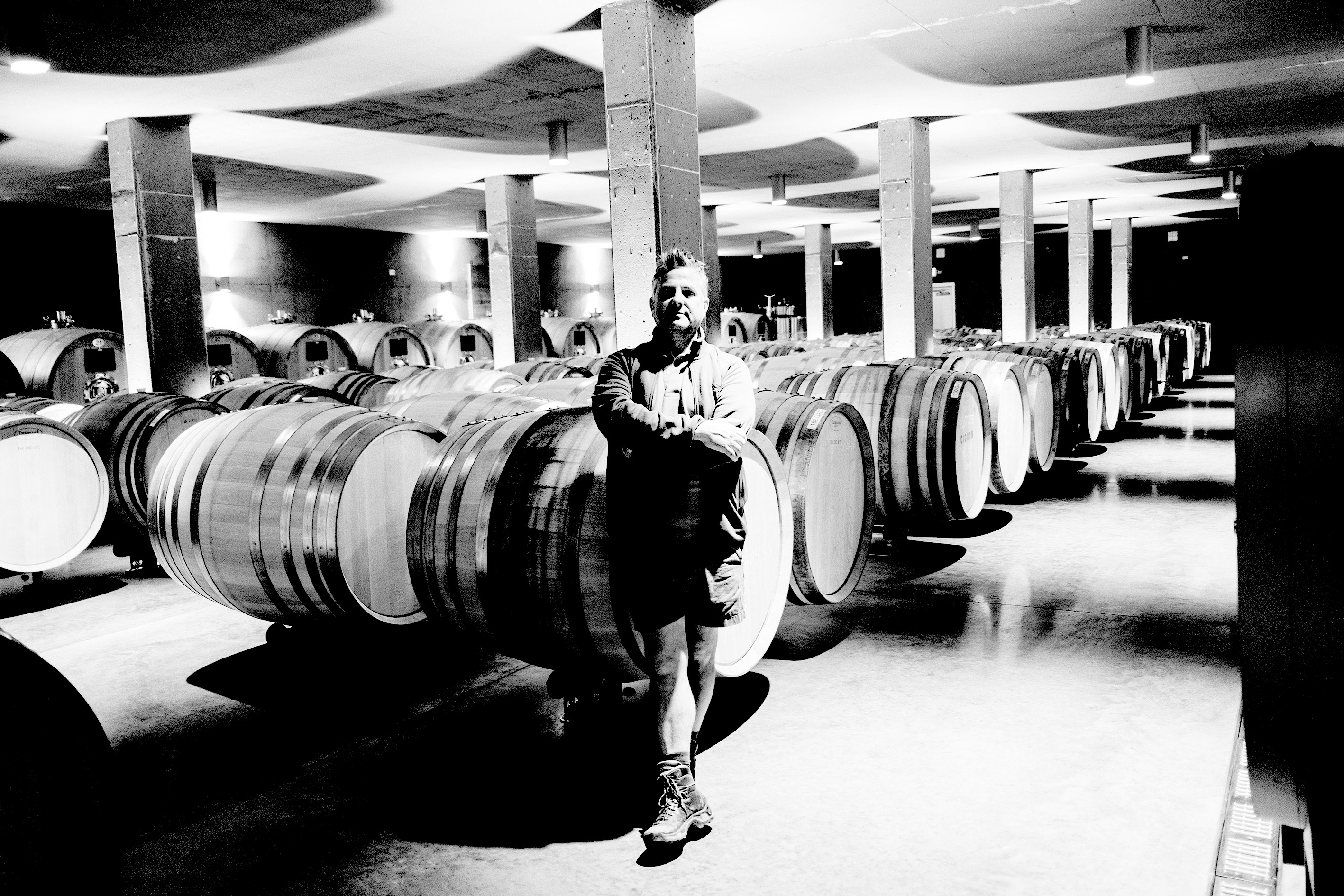
"I don’t have a winery because I’m not a winemaker,” he says. "I’m a vigneron. I look at this more like an artist’s studio. I’d rather have people look at me like a crafter. A vigneron grows all their fruit and is 100% control over the quality."
As for the way he crafts, Christophe tells me, “We use a lot of whole cluster and not much new oak. Every year we purchase about the equivalent of 25 to 30 new barrels, including two foudres and some demi-muids (around 150 gallons), for a production of around 8000 cases. We use a little new oak in the Tempranillo and Syrah, but never in the Grenache. We are looking for finesse, elegance, and freshness. Maybe we have a couple of wines above 14% alcohol each year, but most are closer to 13%. The alcohol depends a lot on the yeast.”
2000 was first vintage of Cayuse’s Bionic Frog, now a cult classic (for want of a better term).
“The name ‘Bionic Frog’ comes from when I was working in Australia,” Christophe laughs. “This was the nickname given to me by the other cellar workers. I didn’t want a pretentious, gilded label for this wine. So, I created this crazy cartoon frog. The wine comes from our Coccinelle Vineyard, which means ‘ladybug’ in French. It’s only 4.5 acres, situated at the beginning of the alluvial fan, with more silty loam mixed with the stones. Most vineyards in The Stones are north-west facing, but this one is more south-facing. It’s like a dome, and it’s the first to ripen. It tends to give a lot of structure and a lot of finesse.”
I ask about the demand for this wine and am told, “There is a waiting list to get on the waiting list.”
Christophe explains while tasting 2023 barrel samples, “2023 was a great vintage, but a very condensed harvest. It was a three-week harvest—our shortest ever! We harvested in September. Yields were about average, and the fruit was pure and clean. It was an easy vintage. And in 2024, we had no heat spikes! We were able to achieve ripeness of the Syrah at 13.5%. We pick everything based on taste.”
Christophe presents me with a barrel sample of a Grenache with no name yet. I’m intrigued.
“It’s from a new vineyard called ‘11 Acre,’ for the time being,” says Christophe. “We planted a Grenache selection of Rayas clones that we got it from Beaux Freres, and they got it from John Alban. It never ripened at Beaux Freres. One day I was staying at their cottage, and I asked about their Grenache. Mike Etzel told me they were going to pull it out, so I asked if I could have cuttings before they got rid of it. It’s a crazy selection—there’s even some white grapes mixed in there, so I know it’s the real deal. The wine is so meaty. It reminds me of Henri Bonneau’s cuvée Célestins. We will bottle it only in magnum. Don’t ask me when we release the wine, maybe after 7 to 9 years. I’m doing more and more of this—aging wines before we sell them. 2022 was the first vintage of this new wine.”
I ask Christophe if he’s got anything else new and exciting in the pipeline.
"Yes," he says with a cheeky grin, "I could tell you, but I’d have to kill you. I can say there will be something very special in the future, and it is a Cabernet Franc. Watch out Clos Rougeard!"
A rolling stone gathers no moss, and neither does Christophe Baron.
About 80 to 90% of Christophe Baron’s wines are sold direct to consumer.
-
Article & Reviews by Lisa Perrotti-Brown MW
Photography by Johan Berglund

PRODUCERS IN THIS ARTICLE
> Show all wines sorted by scoreMore articles
Château Jean Faure 2004-2023
10th Jul 2026
10 tasting notes
Bordeaux 2025 En Primeur
07th May 2026
382 tasting notes
Château Vieux Taillefer 2013 - 2025
26th Mar 2026
13 tasting notes

Château Ducru-Beaucaillou 1904-2017
12th Mar 2026
34 tasting notes
Show all articles