29th May 2025
In 1995 a fresh-faced Philippe Blanc worked his first vintage at Château Beychevelle; recently, in 2024, he worked his 30th. To celebrate this achievement he pulled the corks on a multitude of old vintages, from 2022 back as far as 1905. Chris Kissack tells us his opinion of the wines, with a history of the château and details of the vines and vinifications today. All told with the help of Marin the Hunchback.
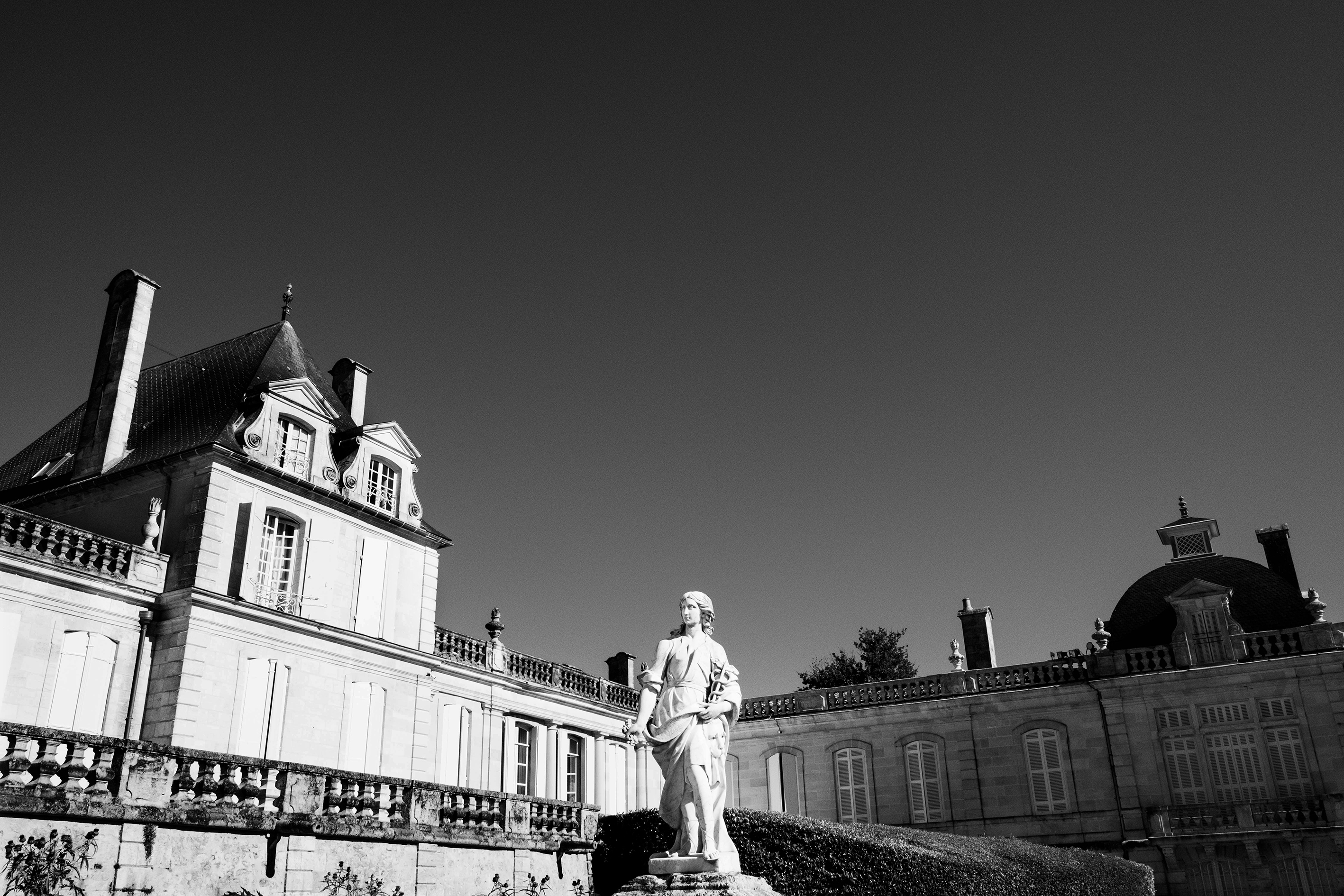
Moonlit Magic Circles
Marin the Hunchback crouched down behind a large oleander on the banks of the drainage channel, and stared out across the monochrome nocturnal gloom.
The shrub was positioned maybe forty pieds from the clearing at Prat Lahouret where his friend Aubert - like Marin, also a hunchback - had told him the magicians had rid him of his deformity. It had not been easy getting here. He could, he supposed, have walked down from the carriageway, along the banks of the Chenal du Milieu - the channel which carried water away from the Médoc marshes, recently excavated by the men from the Netherlands - but he had feared being seen. And so he had made his way cross-country, scurrying behind the nobleman's manor house at Beychevelle, after which he had scrambled through the thicket and scrub until he reached the water's edge. His arms and legs smarted with a tiny thousand scratches and cuts, battle scars inflicted by bramble and gorse, but Marin hardly noticed the pain.
And after all, why should he? This night was to be the beginning of his new life. The magicians had removed the hump from Aubert's back, and now he stood tall, like a chevalier. Marin was here for a dose of the same.
He relaxed, his breathing softening as he recovered from his arduous expedition through the undergrowth. The light from the full moon glistened intermittently on the surface of the water, catching little crests as it lapped against the muddy banks. In the distance he could hear the repeated screeches of a houre, a female barn owl, a form Marin knew was commonly assumed by the Médoc witches. Surely this meant the magicians were near?
And then, suddenly, there was silence. The nearby waters stilled.
Marin observed seven cloaked silhouettes enter the clearing, and he held his breath as he watched them form a circle; as they came to a halt the silence yielded to a murmuring chant.
It was just as Aubert had described.
This was the moment.
Marin stepped out from behind the oleander, and strode into the centre of the magic circle.
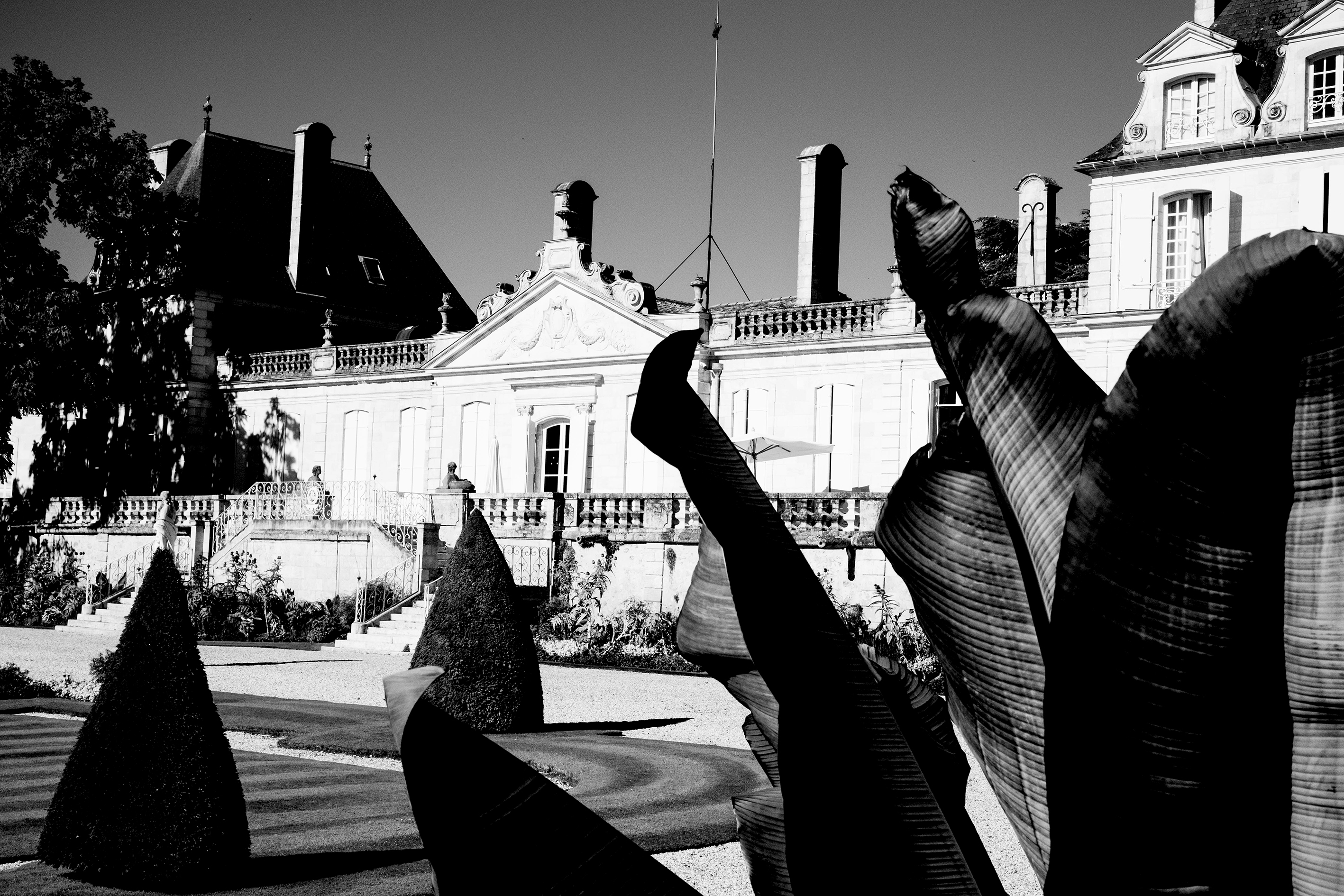
The Magic of Beychevelle
The Médoc has long been a superstitious place, local folklore rich in tales of werewolves (which are, as I am sure you know, transformed wizards) with a penchant for snacking on lost children, witches who take the form of barn owls, and dainty fairies who can slip beneath doors and through keyholes to cause havoc within the home. And of course there were the magicians, wizards or warlocks you might call them, who would gather at Prat Lahouret, a stone's throw from the Beychevelle residence, to practise their dark craft.
Did such sorcerers ever really meet here, as locals described, and as was recounted in detail in St Julien (Jacques Legrand SA, 1984) by Bernard Ginestet? Or was it all just a fantasy, a story perhaps created to besmirch the nobleman the fictional Marin feared and despised, one Jean Louis de Nogaret (1554 – 1642), the first Duc d’Epernon, resident of the manor house, and owner of this land?
I am sure we shall never know, but the practicing of the dark arts is only one of several perhaps fanciful tales that swirl around this figure. Another is that, following the duke having assumed the title of admiral, ships passing by on the Gironde would lower their sails as they reached Beychevelle. It is often said that this procedure - bacha velo in the Gascon tongue - was the origin of the name Beychevelle, but I have always found the claim, which reeks of self-importance, more than a little dubious. Suggestions that passing sailors would instead lower their breeches as they sailed by in order to "show their respects" are more believable, although whether such an act could be seen from the château - which sits 1.3 kilometres from the water's edge, perhaps 2 kilometres from the channel followed by passing ships - is also rather doubtful.
Whatever the truth about these tales, one fact about Jean-Louis de Nogaret of which we can be sure is that his expansive estate would give birth to four of St Julien's classed growth properties (and as all 1855 experts know, there are only eleven in the entire commune, so that is quite a chunk of the St Julien appellation). It was following the death of Jean Louis's son, Bernard, in 1661, that the estate was broken up, in order to service his not inconsiderable debts. Four new properties were born, the first three being Branaire-Ducru, Ducru-Beaucaillou and Saint-Pierre. The fourth, of course, was Beychevelle.
In this report from Château Beychevelle, I present a potted history of the château, together with 22 new tasting notes on wines tasted on two occasions at the property. The main tasting was part of an event to celebrate the role played by Philippe Blanc, the estate's director, who recently celebrated his 30th vintage here (he started in 1995, so he reached this milestone with the 2024 harvest), and covers recent vintages (we can safely call 2022 'recent' I think) as well as older wines, back as far as the 1905 vintage (and I think we can safely call that 'older').
A Brief History of Beychevelle
The history of this land and its vines and can be traced back as far as the late-13th century, although for such an exhaustive account I will direct readers towards the historical profile I have penned on Winedoctor. Here I think I should keep it a little more succinct, purely to provide some context for the estate's modern-day existence.
Following the Nogaret era Beychevelle was acquired by the nobleman Henri de Foix-Candale (1640 - 1714), who took possession in 1674. From him it passed to the d'Abbadie and then Brassier families. The latter were significant proprietors; François de Brassier (1704 - 1761) was essentially responsible for the château as it stands today, as he expanded and remodelled the pre-existing manor house which Marin, the hero of my introduction, had skirted. Delphine de Brassier (1722 - 1795) was the proprietor during the Revolution (along with her husband and offspring, all of whom fled the country) during which she was 'relieved' of seven-ninths of the estate. Her daughter managed to reconstitute much of the property, before selling it to Jacques Conte (1753 - 1836) who sold it in turn to Pierre-François Guestier (1793 - 1874), one of the founders of the négociant firm Barton & Guestier.
Guestier was thus at the helm when the property sneaked into place in the 1855 classification, just as the door slammed shut behind it, the last of the St Julien properties to be included. He remained here until his passing, after which the château and vines were sold to Armand Heine (1817 - 1883) who began a period of investment in both the residence and the winemaking facilities. Heine's daughter married into the Achille-Fould family, her husband one Charles Armand Achille-Fould (1861 - 1926), the scion of a wealthy dynasty descended from Achille Marcus Fould (1800 - 1867), Napoleon's finance minister. It was the Achille-Fould family who would guide the property through the choppy waters of the 20th century, which brings us to the wines discussed here.
The Wines and Times
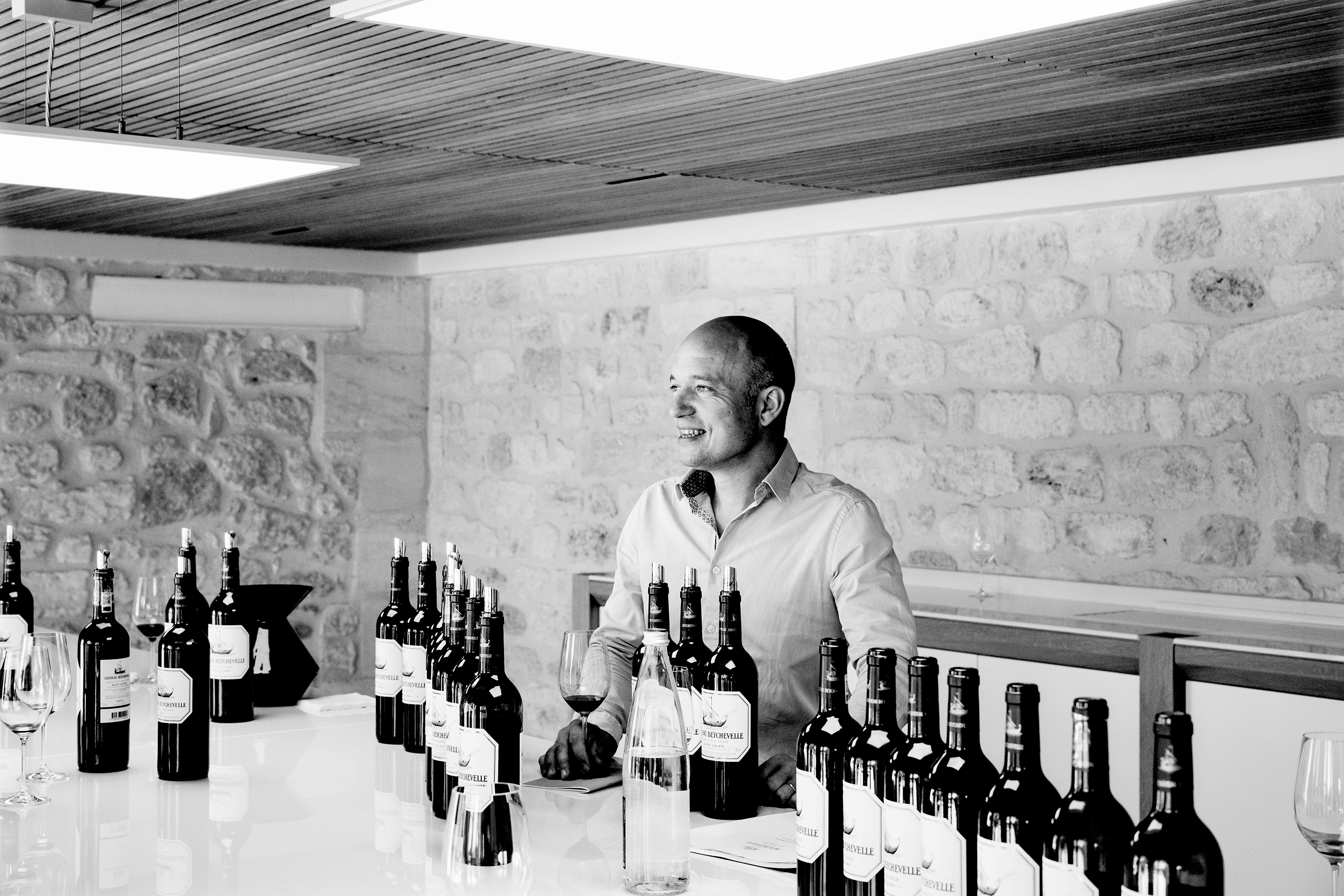
The wines tasted over two visits include various vintages of Brulières de Beychevelle, the Haut-Médoc made from the fruit of vines inland of Beychevelle, abutting the Château Beaumont estate. In addition, a few vintages of the second wine, Amiral de Beychevelle were poured. The main attraction, however, was the tasting of multiple vintages of the grand vin.
All the wines were poured from bottles of a standard size (as opposed to magnums or larger formats) and the vintages chosen were intended to end in '5', but not all such vintages were deemed suitable, or in some cases the château had no stock, and so a substitute vintage was chosen. This explains why vintages such as 1921, 1934 and 1964 have crept into the line-up. In addition I tasted a couple of less venerable vintages, including the younger 2022 and 2013, which at least proves the team here are willing to show wines from both ends of the quality spectrum.
As for the bottles it is possible that these may have been reconditioned or recorked at some time, but as this is not done systematically at the château, but only on the condition of the individual bottle, particularly the degree of ullage, it was not possible to be certain if this applied to individual bottles. In terms of provenance, however, this is impeccable; all came up direct from the château's cellars.
Starting with the oldest wine, the 1905 Beychevelle hails from the era of Charles Achille Fould, who was notable for resisting the shift to grafting onto American rootstocks, at the time still a novel system for circumventing the scourge of phylloxera, and one which many were uncomfortable with. As for the wine, this is a first encounter for me with this rarely seen vintage, and its high quality is apparent on tasting.
This was followed by two more wines from Charles, starting with the 1915 Beychevelle. It is humbling to be able to taste a wine from this era, made at a time much of Europe was ravaged by war. Sadly, the vintage itself does not have a great reputation for the quality of its wines, nevertheless this 1915 certainly displayed a charming drinkability which I admired, and I have to wonder whether we should ask for much more at 110 years of age? Then again, looking at the stupendous performance put in by the 1921 Beychevelle, perhaps we should? This was a great vintage, the quality of which shines through in the wine, as this was the strongest of all the very old vintages in the line-up.
Charles Achille-Fould passed away in 1926, the property passing to the next generation, with the older of two sons, Gaston, who went by the name Armand in honour of his famous great grandfather, taking the reins. Armand was in charge during the middle years of the 20th century, with four vintages poured from his era. Unexpectedly (given the quality of the four vintages), the 1934 Beychevelle comes out on top, showing a degree of ethereal charm which I appreciated. It was superior to the 1945 Beychevelle, which is not what I would have predicted based purely on the character and quality of the two vintages. Having said that, I liked the latter vintage, it is just that being objective it feels a little less enthralling than I might expect for a 1945, one of the true greats of the 20th century. And, having since tasted another bottle of the 1945 earlier this year (to be included in a forthcoming report, along with a string of other 1945s and 1955s), it is clear that there are better bottles out there.
As for the 1955 Beychevelle and 1964 Beychevelle, the first started off well, but the initially convincing aromatics soon yielded to cork taint. This was a great shame, as 1955 was a superb vintage, and it was also the year Armand Achille-Fould engaged the services of Émile Peynaud as consultant, two features which should have been in this wine's favour, but of course neither fact can overcome TCA when it strikes. As for the 1964, this wore the effects of the rain-soaked harvest on its sleeve; it was a difficult vintage, more so on the left bank than the right, and it shows.
After Armand's death the estate was divided between a number of heirs, and Armand's son Aymar Achille-Fould took the lead, but he could not keep the estate together in the face of growing intrafamilial discord. The 1975 Beychevelle was made in this environment, so it is perhaps not a surprise that it is no more than a decent result in this modest vintage. Subsequently some family members sold their stakes, and as a consequence in 1983 the pension fund Grands Millésimes de France (GMF) was able to acquire 43% of the business. This was the situation when the 1985 Beychevelle emerged blinking into the sunlight; it has a classic style for the vintage, very finessed, if on the light side. The vintage tends to fade into the shadows cast by 1982 and 1990 (and of course other vintages of the decade also have their merits) but there is a filigree charm and occasional sense of nervosity to the 1985 vintage I like, one which reflects the borderline (some might say inadequate) maturity of the Cabernets in this vintage. The 1985 from Beychevelle slots right into my preconceptions about the vintage.
Aymar Achille-Fould died in 1986, and following this the property came fully into the hands of big business; GMF increased their holding to 89%, a slice of which was subsequently sold to Japanese firm Suntory (better known for their long-term ownership of Château Lagrange and their many whiskies, which play a starring role alongside Bill Murray and Scarlett Johansson in the superb Sofia Coppola film Lost in Translation).
It was during the GMF-Suntory era that Philippe Blanc was appointed director of Château Beychevelle, in 1995, and over the subsequent thirty years the estate was transformed, although there was no time for his efforts to have any impact on the quality of the 1995 Beychevelle, which reflected the character of the vintage, which I have long thought a little over-rated on the left bank, the wines basking in the reflected glory of right-bank successes in the same vintage.
Philippe Blanc's early efforts focused on the vineyard, bringing the use of insecticides to a halt in 1996, switching to pheromone-based methods instead, reducing and ending the use of a number of potentially harmful chemicals, and in 2000 switching to only organic or locally produced compost and fertiliser. This set the scene for increased quality, and that is something I see in the 2005 Beychevelle, the wine dark, savoury and fresh. This was followed by the complete cessation of herbicide use in 2008. The 2009 Beychevelle showed charm, appropriate for this vintage which always had success written through it. While the velvety texture and sweet structure means this benefits from an appropriately cool pouring temperature (I have found this with many 2009s poured at home recently), there is no need for any special treatment beyond that, and this has years in it yet.
In 2011 there was a change in ownership, GMF selling their stake in the property to Castel, and the estate remains in the joint ownership of Suntory and Castel today. At this time Suntory created a new company to manage this acquisition, which subsequently also acquired Château Beaumont, and so the teams from Beaumont and Beychevelle often work together, and the wines are often tasted together. This brings us up to the 2015 vintage. I am not entirely convinced by the 2015 Beychevelle, but that reflects the fact I have never really been convinced by the 2015 on the entire left bank, rather like my position on 1995; there are good left-bank wines, but it is easy to find better ones from contemporaneous vintages, 1996 and 2016 being the two prime candidates.
The greatest development during Philippe's tenure has been the construction of new winemaking facilities, which precedes the final and most recent vintage tasted here, the 2022. Before coming to that, perhaps I should provide a quick summary of the vineyard and vinifications today.
The Vineyard
The Beychevelle estate is extensive, with 250 hectares all told, although of this only 90 hectares is planted to vines, the remainder is pasture for grazing, scrubland, woodland and similar, with the occasional clearing suitable for Medieval mystical moonlit meetings. The vineyard is planted to 52% Cabernet Sauvignon and 40% Merlot, a very high proportion of the latter variety, Beychevelle being one of a small number of properties in the St Julien appellation to make more use of Merlot (Léoville-Poyferré is another, although there the figure is not as high as 40%). The remainder is 5% Cabernet Franc and 3% Petit Verdot. The vines are planted at a high density, largely between 8,300 and 10,000 vines per hectare.
Despite Philippe Blanc having ceased the application of various chemicals over the years, he has stopped short of a full adoption of organic practices, and indeed in recent years he was wound back from this position. The system here is viticulture raisonnée, with measured use of chemicals as required, early in the season rather than later, which helps to reduce the presence of chemical residues on the fruit at harvest time. The work in the vines is overseen by Philippe and oenologue Romain Ducolomb, who joined Philippe in 2012 after a long stint at Château Clinet.
Harvest and Vinification
The harvest is manual, as you would expect; only once have I spotted a machine-harvester in St Julien, many years ago, and I later worked out it was on vines not in the possession of one of the eleven classed growths. The decision to pick is made on tasting, with minimal formal analysis, and the harvest is effected by seasonal workers from Eastern Europe, Spain or Morocco. There is a traditional sorting on a table, as well as optical sorting, before the fruit enters the new cellars, which were erected in 2016.
Following the trend in the region, the new cellars are equipped with a higher number of vats (all stainless steel) of smaller volume, facilitating a more precise approach. There are 59 vats ranging from 73 up to 160 hectolitres, matching the size of several parcels, with the larger vats dedicated to the Haut-Médoc and second wine in St Julien, the smaller vats pressed into use for the grand vin. The cellars are on several levels; the fruit is elevated to the upper level and moved over the vats in small wheeled cuves, and deposited within by gravity. Thereafter the vinification rolls out with a few days of cold soak at 10°C, followed by a warmer fermentation.
The process draws to a close with the élevage, Philippe bucking the trend seen on some estates in Bordeaux with a move towards more new oak in recent years, pushing the percentage as high as 70% in some vintages. The grand vin rests in barrel for up to 18 months, but with less racking and less aggressive fining than has been done in the past.
With that quick canter through vineyard and cellar, we now arrive at the 2022 Beychevelle, which is an unparalleled success, a perfect storm of a great vintage, superb new cellars, and an experienced team who know their vines and their facilities well. No wonder the 2022 is the best young wine I have tasted here.
That only leaves one question to be answered; what might have happened to Marin the Hunchback and his plea for wizardly intervention at Prat Lahouret?
Well, sadly for Marin, legend his it that the sorcerers had grown tired of helping out local hunchbacks and were a little short of ideas as to what they should do with the hump they had removed from Aubert. And so they sent Marin on his way, not only with his own hump intact, but with Aubert's added to his back as well. It seems that asking for magical cures at Beychevelle has the potential to backfire; maybe Marin would have been better off drinking the magical elixirs this estate produces instead.

PRODUCERS IN THIS ARTICLE
> Show all wines sorted by scoreMore articles
Château Jean Faure 2004-2023
10th Jul 2026
10 tasting notes
Bordeaux 2025 En Primeur
07th May 2026
382 tasting notes
Château Vieux Taillefer 2013 - 2025
26th Mar 2026
13 tasting notes
Château Ducru-Beaucaillou 1904-2017
12th Mar 2026
34 tasting notes
Show all articles