26th Jun 2025
Perhaps the greatest upheaval in the world of Sauternes and Barsac in recent times has been the sale of Château Climens. Arguably the leading château in the Barsac appellation, one which had been in the hands of the Lurton family for five decades, Climens was one of the very few potential challengers to the hegemony of Yquem.
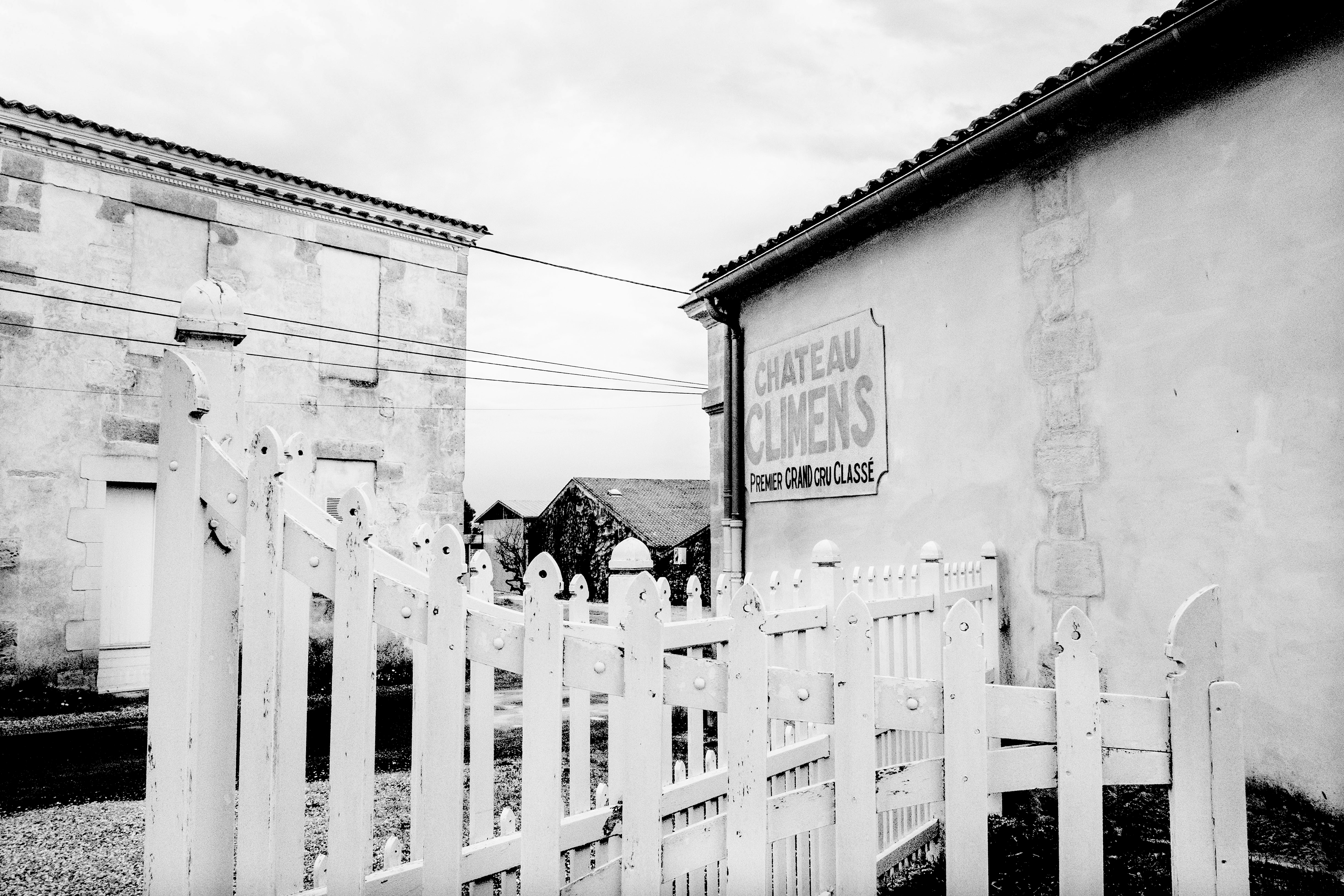
Climens Turns Dry
The 2001 vintage was a case in point; a vinous tour de force which challenged in terms of quality, and the early release prices seemed a little closer to Yquem's than to the more commonplace Barsac and Sauternes peers.
Perhaps the greatest upheaval in the world of Sauternes and Barsac in recent times has been the sale of Château Climens. Arguably the leading château in the Barsac appellation, one which had been in the hands of the Lurton family for five decades, Climens was one of the very few potential challengers to the hegemony of Yquem. The 2001 vintage was a case in point; a vinous tour de force which challenged in terms of quality, and the early release prices seemed a little closer to Yquem's than to the more commonplace Barsac and Sauternes peers.
Integral to the Climens success story was the scrupulous and visionary direction of Bérénice Lurton. Having taken the reins in 1992, aged just 22 years, she instituted a quality revolution on the estate; the wines were better than ever, cementing in place an already strong reputation. Along the way she adopted, with advice from consultant Corinne Comme, biodynamics in the vineyard.
I recall a visit to the property soon after the conversion to see the tisanerie, the preparation and storage area for all their plant preparations, which was located on the first floor above the cuverie and barrel cellar. Piles of drying leaves, bark and plants - nettles, bay leaf, horsetail, willow and more - were lined up against the wall with regimental regularity, while trays of orange geranium petals sat drying in the sunlight which streamed through the open windows. Almost all the plants had been harvested from the estate, or nearby; it was clearly a significant undertaking.
Tragically for Bérénice, this all came tumbling down when a string of disastrous vintages pushed the property to the brink of ruin. Frost in 2017 wiped out the crop, while in 2018 there was rampant mildew, and while the harvest was of a good volume the perfectionist Bérénice could not find the quality in the vintage to produce a grand vin. After a good 2019, in 2020 the crop was destroyed by a catastrophic hailstorm. The frost which returned to the region in 2021 was the final straw; to not produce any grand vin in four vintages out of five is simply not viable, and in 2022 she was forced to accept outside investment in the estate.
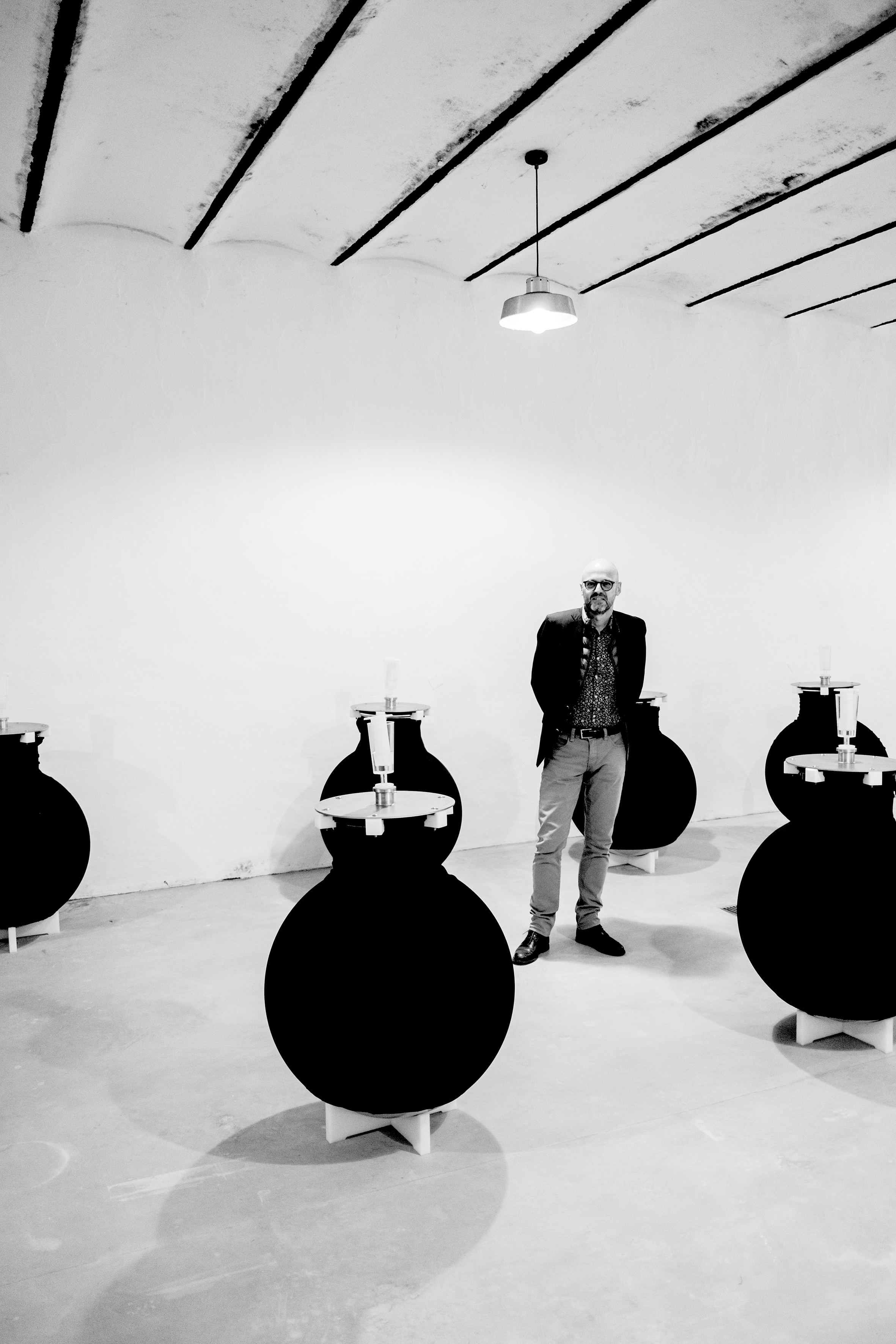
The new owners, the Moitry family, were newcomers to wine. Nevertheless they are not newcomers to business, and it was clear that to balance the books a new approach was required. With their arrival the development of a dry wine programme - which had already started under Bérénice's direction with the creation of the Asphodèle cuvée - was accelerated and expanded.
The most actively involved of the new owners is Jérôme Moitry. He and technical director Frédéric Nivelle, who has worked on the estate since 1998 and thus provides valuable experience and continuity, have now established a portfolio of three (or four, depending on where you draw the line - more on that below) dry cuvées, alongside a single sweet grand vin.
I have met up with Jérôme and Frédéric twice over the past six months, to get to grips with this new range of wines, as well as to check in on several vintages of the estate's revered Barsac.

The Wines
Dealing with the wines in chronological terms it would make sense to come first to Asphodèle, a wine introduced by Bérénice in the 2018 vintage, a move prompted by the destructive frost of 2017. The cuvée came from the youngest vines, was 100% Semillon (and it still is - this is the only variety planted here, the last Sauvignons having been uprooted by Lucien Lurton in 1971), and was made with consultation from Pascal Jolivet, better known for his work in Sancerre and Pouilly-Fumé. Having said that Asphodèle is now just one component of a dry-wine harvest; its origins have changed, and it makes more sense to view all the wines together in their modern context.
The first move made by Jérôme and Frédéric was to curtail the production of Barsac, channelling a much greater proportion of the fruit into dry wines instead. While it is easy to decry this move, it is simple economics; estates in Barsac and Sauternes (and the Coteaux du Layon, and Bonnezeaux, and Quarts de Chaume...) cannot balance the books producing small volumes of sweet wines which then simply do not sell. Dry wines are the saviours of the sweet; they are made in larger volumes, have much broader commercial appeal than the sweet wines, and the income they generate allows production of the historic sweet wines to continue, albeit in much smaller quantities.
As a consequence today the grand vin comes only from the estate's best parcels, of older vines. The second wine of the estate, Cyprès de Climens, which came from younger vines, has been discontinued, and all the other fruit is dedicated to the dry wines.
The figures bear out the validity of the approach. After the frost of 2021, when no Climens was produced, the 2022 vintage was a benevolent one, the estate bringing in just 7.5 hl/ha for the sweet grand vin, a low figure, but one that is typical for Sauternes and Barsac, the result of botrytisation and concentration on the vine. The yield for the dry wines, meanwhile, was a very healthy (especially for a fully biodynamic property) 35 hl/ha. The conditions during 2023 were difficult, resulting in a smaller crop from the old vines, so the yield for the sweet wine was just 2.7 hl/ha. The young vines, feeding into the dry wines, were cropped at 27 hl/ha. The story in the very wet and miserable 2024 vintage was similar, with between 4 and 5 hl/ha for the sweet grand vin, and a more respectable 20-ish hl/ha for the dry wines.
Alongside the sweet wine there are three principal dry cuvées, the distinctions being what happens in the cellar, rather than vine age or terroir. All the fruit for the dry wines is picked by hand, and transported to the cellars where the bunches go directly into one of three pneumatic presses.
The first juice so liberated, deemed to be of the highest quality, is destined for the cuvée Lilium. This is moved to stainless steel cuves where it begins the fermentation, and once this is underway it continues into Wine Globes; if you are not familiar with Wine Globes, they are 220-litre vessels made from glass, and thus very inert, and they push their contents towards a more reductive style. Here the wine rests on its fine lees, which also help to maintain a more reductive style. There is absolutely no contact with wood during the fermentation or élevage. The 2023 Lilium, reported on here, is a stunner, blending complex notes of white chocolate and orange leaf with nascent Semillon richness.
The later juices, of secondary quality, are then divided between two other cuvées. The first is the continuation of Bérénice's Asphodèle cuvée, the juices moved in this case to concrete vat for the fermentation and élevage. It rests here for eight months, on the fine lees, before bottling, the end result a wine aimed at more gastronomic settings. Both the 2023 and 2019 Asphodèle showed well, and while I think 2023 may be superior, the 2019 vintage really drove home the benefits that come with leaving dry Semillon in bottle for a few years. Or even longer, I suggest.
The second of the two late-pressing cuvées is Petite Lily, which is handled differently, the aim being to make it more accessible for earlier drinking. Of two main distinctions, the first is that this juice is blended with some of the vin de bourbes, the particulate-rich wine which remains after the settling. The second is that it sees a little oak, with 12% of the final blend aged in barrel. While these two elements no doubt have some impact on the palate, having tasted and drank Petite Lily, I still believe - like most young dry Semillon from Bordeaux - it will improve with bottle age. Tasting the 2023 Petite Lily only reinforced this message, and a bottle I pulled the cork on at home last year (all in the name of research, obviously) sent me the same message.
Finally (I did say there were three or four wines - well, this is the fourth) there is Fenouil & Camomille, which - in Jérôme's words - serves as the estate's research and development cuvée. The 2023 is made with no added sulphites and no filtration, otherwise the schema is as for Lilium, with fermentation and élevage in steel then in Wine Globe. Initially I was told this cuvée, of which there are just a few hundred bottles, was to be sold via the on trade; more recently, the mood seems to have shifted, and I am not convinced it will ever be poured beyond the walls of the estate. But we shall see.
I finish this report with some notes on the sweet wine, but will not go into detail here about this, my intent being to describe the expanded range of dry wines. Suffice to say, of the sweet wines tasted, the 2005 vintage is the one to seek out. Although the truth is this; it is difficult to go wrong with any young vintage of Climens.

PRODUCERS IN THIS ARTICLE
> Show all wines sorted by scoreMore articles
Château Jean Faure 2004-2023
10th Jul 2026
10 tasting notes
Bordeaux 2025 En Primeur
07th May 2026
382 tasting notes
Château Vieux Taillefer 2013 - 2025
26th Mar 2026
13 tasting notes

Château Ducru-Beaucaillou 1904-2017
12th Mar 2026
34 tasting notes
Show all articles