10th Jul 2026
I rarely get to travel through time. But a vertical of Château Jean Faure — 2004 through 2023 — is exactly that: a walk through the entire modern history of an estate that, not so long ago, had been pronounced clinically dead.
Doctor FRANCenstein
Almost every vintage in front of me was a chapter, and almost all marked a real turning point in the life of the property. So rather than start with the wines, let me walk you through Jean Faure the way I drank it: forward, from the chaos of 2004 to the poise of 2023.
But first, the patient.
The Cabernet Franc Resurrection of Château Jean Faure:
The terroir
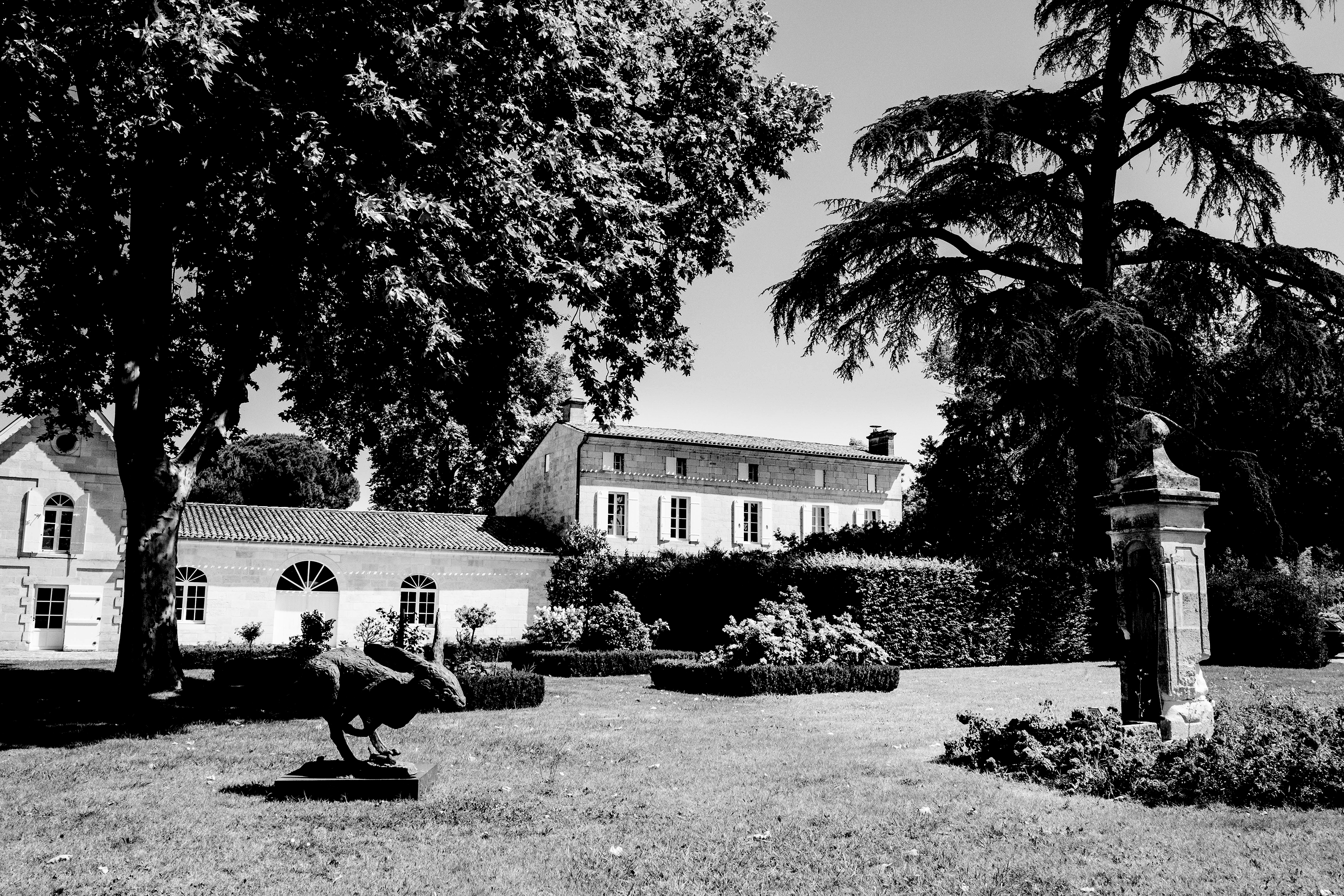
Eighteen hectares. One single block. That detail matters more than it sounds: this is not a patchwork of scattered parcels stitched together over the centuries, a stone's throw from Cheval Blanc and Figeac, bordered by La Dominique and L'Évangile.
Under the topsoil, clay. Deep clay, starting at around 40 cm. The agronomist and oenologist Xavier Choné drilled thirty soil pits across the vineyard and concluded that roughly 80% of Jean Faure sits on a very clayey subsoil — the kind of cold, water-holding clay into which Cabernet Franc roots can plunge 150 to 200 cm. It belongs to the same iron-streaked family — the famous crasse de fer — that also runs beneath Petrus.
That clay explains everything that follows, because clay and Cabernet Franc are a marriage. And Jean Faure has more Cabernet Franc than almost anyone in Saint-Émilion: around 65% of the vineyard today, completed by Merlot and a few rows of Malbec.
In the cellar
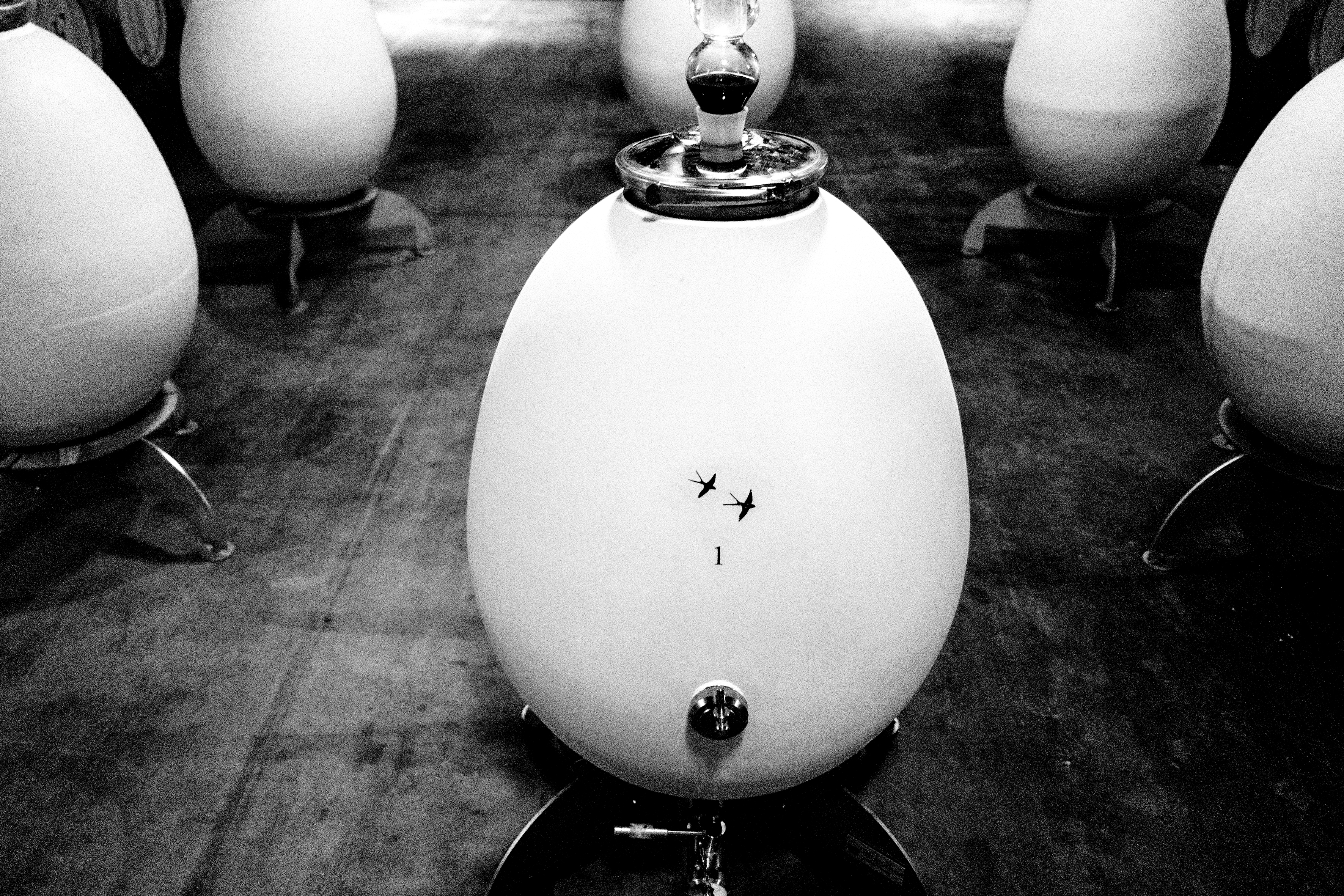
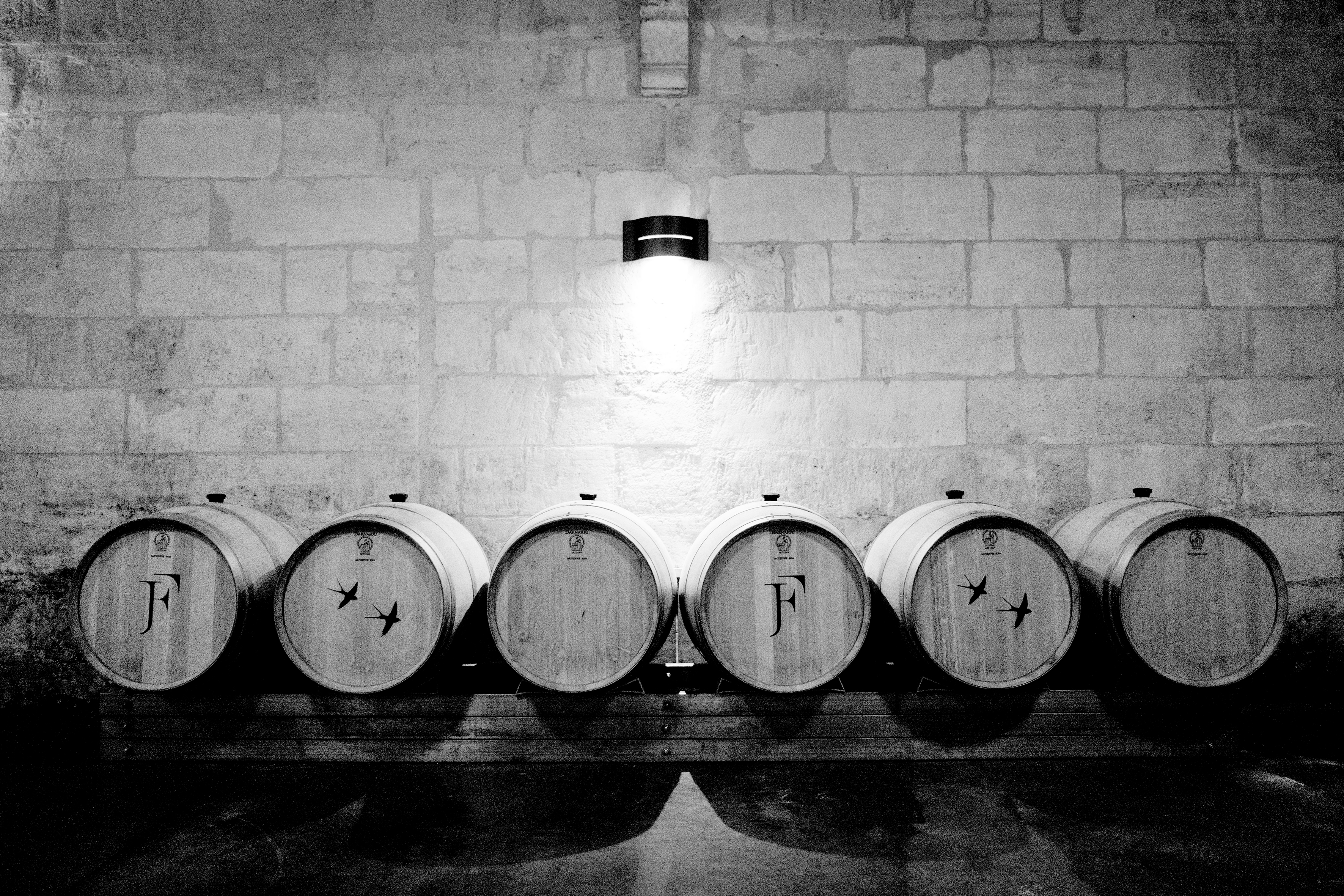
The grand vin is raised for about eighteen months. The recipe, roughly: 35% new French oak, 30% one-wine barrels, 20% concrete, and 15% large wooden foudres — with time on fine lees to keep the aromatics lifted and fresh. It is a deliberately un-flashy élevage. No varnish of new oak, no muscle for the sake of muscle. The wood is there to frame, not to shout.
Keep that in mind. It's the whole philosophy in one paragraph.
A short history of a long sleep
Jean Faure is old — properly old. It appears on the early maps of Bordeaux's great terroirs, and as far back as in the 1893 Féret it was already listed as a first growth of Saint-Émilion. So when the first official Saint-Émilion classification arrived, the estate's name was almost a formality.
In 1955, Jean Faure was named a Grand Cru Classé in the inaugural classification. In 1969, the rank was confirmed. And in 1986, it was gone — struck from the Grands Crus Classés altogether.
The estate's own press kit has a beautiful word for the decades that followed: l'éclipse. The eclipse. The official explanation was blunter: the commission cited notable shortcomings in how the property was run, principally at the oenological level. In plainer language — careless winemaking. The terroir was still one of the best in Saint-Émilion. The wine no longer was.
For nearly two decades, Jean Faure was a great terroir with no pulse.
Enter the doctor:
2004: The reanimation
In 2004, Anne and Olivier Decelle bought Château Jean Faure.
Decelle is not a typical Bordeaux story. He had run Picard, the French frozen-food empire, before trading surgelés for vines — first Mas Amiel in Roussillon, later projects in Burgundy and the Rhône, and now this sleeping Grand Cru beside Cheval Blanc. He didn't buy a château. He bought a forgotten terroir, with a house in disrepair and, crucially, old Cabernet Franc vines whose roots — as he would quickly discover — went astonishingly deep.
The work began underground. New drainage. Tonnes of stones added to balance the soil's water. An end to chemical inputs. And, tellingly, he brought in Claude and Lydia Bourguignon — the soil-microbiology gurus — to bring the dead earth back to life before worrying about the wine.
2006: From restoration to precision
If 2004 was triage, 2006 was when Jean Faure started to think.
From the middle of the decade, Stéphane Derenoncourt came on as consultant, and the project changed gear — from rescue to precision. A modern, parcel-by-parcel cuvier. Careful, lower-extraction handling, especially of the temperamental Cabernet Franc. This suited Decelle's own instincts: he has always talked about prizing a certain austerity, and about building wines on acidity and tension rather than power. The wines stopped apologising for the past and started making a case for the future.
2012: The spark of life
It isn't in this vertical, but 2012 is the hinge on which the whole story turns.
On 6 September 2012, the classification commission gave Château Jean Faure back its rank: Grand Cru Classé. After the eclipse, the long sleep, the status it had held since 1955 was returned.
What's striking is how Decelle won it. His dossier wasn't a sales pitch; it was a thick, science-heavy tome built around the soil studies of the Bourguignons and Xavier Choné. He didn't argue that the wine had improved. He argued that the terroir had never stopped being great — and that, finally, the wine could prove it.
The patient sat up.
But here's the thing about resurrections: the dramatic moment isn't the end of the story. It's the beginning. The lightning strikes — and then you have to find out what you've actually brought to life.
2013: The first test
The very next vintage asked a tough question. The classification had come back. 2013 asked whether Jean Faure had.
2013 was one of the most difficult Bordeaux vintages in decades: a cold, wet spring, a disastrous flowering, coulure and millerandage, relentless disease pressure, agonising decisions in the rows. For much of the Right Bank — and especially for Merlot — it was close to a write-off.
For a freshly re-classified Grand Cru, it was a trap. The easy move would have been to hide behind the new title. Instead, 2013 became the first real exam for the new philosophy: could meticulous, terroir-driven work and a high proportion of Cabernet Franc hold up in a genuinely brutal year?
2017: Green and grand at once
By 2017, the answer was a quiet, confident yes — and the estate raised the stakes again.
With the 2017 vintage, Jean Faure earned organic certification (the French Agriculture Biologique label), three years after starting its official conversion. Horses in the rows. No herbicides. Sulphur, clay and plant infusions in place of synthetic sprays.
The point isn't the certificate. The point is what it proved: that "Grand Cru Classé" and "ecological viticulture" are not opposites. At Jean Faure, they became the same sentence.
2018: The team behind the terroir
A resurrection needs more than one doctor.
In 2018, Marie-Laure Latorre took over as estate director, with Daniel Duclos as chef de culture and Louis Gadais as maître de chai. This is the human pivot in the story — the moment the project stopped being one man's vision and became a team's craft. Owners set the direction; it is people like Daniel and Louis who turn a philosophy into a style, vintage after vintage.
2020: From "no chemicals" to a living ecosystem
In 2020, Jean Faure began its conversion to biodynamics.
If organics is mostly about what you stop doing — no synthetic chemistry — biodynamics is about what you build. Cover crops and grasses, trees, animals, a pond, beehives. The vineyard reimagined not as a monoculture to be defended but as an ecosystem to be fed.
Even the horses have names: Quanou, Nola, Marquise and Varyx.
It's the logical next step. Bring the soil back to life (2004), prove it (2012), protect it (2017) — then let it become a living system in its own right.
2021: A vintage of patience
2021 wasn't loud. No headline, no fireworks. But it was a genuine test of the new identity.
Frost, rain, disease pressure, a long and late ripening, classical, old-school Bordeaux year that rewarded nerve and punished greed. And in exactly that kind of vintage, Cabernet Franc — late, fresh, aromatic — was the hero. The grape Jean Faure had built its whole life around turned out to be precisely the grape 2021 wanted.
Patience, it turns out, is also a terroir.
2022: Confirmed, in stone
In the new 2022 Saint-Émilion classification, Château Jean Faure once again appears among the Grands Crus Classés. The 2012 return was no fluke, no one-cycle favour — it was confirmed.
And the wine kept pace with the paperwork. Behind the scenes, the buildings finally caught up with the vines: a new vineyard shed with dedicated biodynamic workspaces, and, in 2023, a brand-new winery and vat room. The cellar, at last, as serious as the terroir.
2023: The creature, finished
And so to the end of my journey — and the most telling wine of all.
With 2023, Jean Faure became fully certified biodynamic, through Biodyvin. And the family did something that reads like a thesis statement: a cuvée of 100% Cabernet Franc.
Think about what that means. On this clay, with these old vines, Cabernet Franc no longer needs Merlot to round it off or to apologise for it. It can stand entirely alone — joining the tiny, rarefied club of serious Right Bank Cabernet Franc statements, alongside something like Angélus's Hommage à Élisabeth Bouchet.
From an estate that has quietly pushed its Cabernet Franc from around half the vineyard to nearly two-thirds, a 100% Cabernet Franc cuvée is not a gimmick. It's the whole point, distilled.
- Article and Reviews by Aleksandr Fedutinov
- Photography by Johan Berglund

PRODUCERS IN THIS ARTICLE
> Show all wines sorted by scoreMore articles
Château Le Dôme 1997-2022
10th Sep 2026
9 tasting notes
Bordeaux 2024 Revisited
03rd Sep 2026
69 tasting notes
Bordeaux 2025 En Primeur
07th May 2026
382 tasting notes
Château Vieux Taillefer 2013 - 2025
26th Mar 2026
13 tasting notes
Show all articles