25th Jul 2024
Even before I moved to Tokyo in the early 2000s, one of my favorite writers has long been the Japanese novelist and short storyteller Haruki Murakami. His style has a uniquely eclectic signature—it’s not classic Japanese. Still, it’s not Western either, amalgamating an uncommon collection of cultural influences spiked with humor, often dipping a toe into the surreal. Since Japanese company Suntory purchased Château Lagrange in 1983, the estate has been slowly evolving into a similarly singular expression that embraces multicultural influences as well as history and heritage, resulting in recent vintages that are not just delicious, they have subtext.
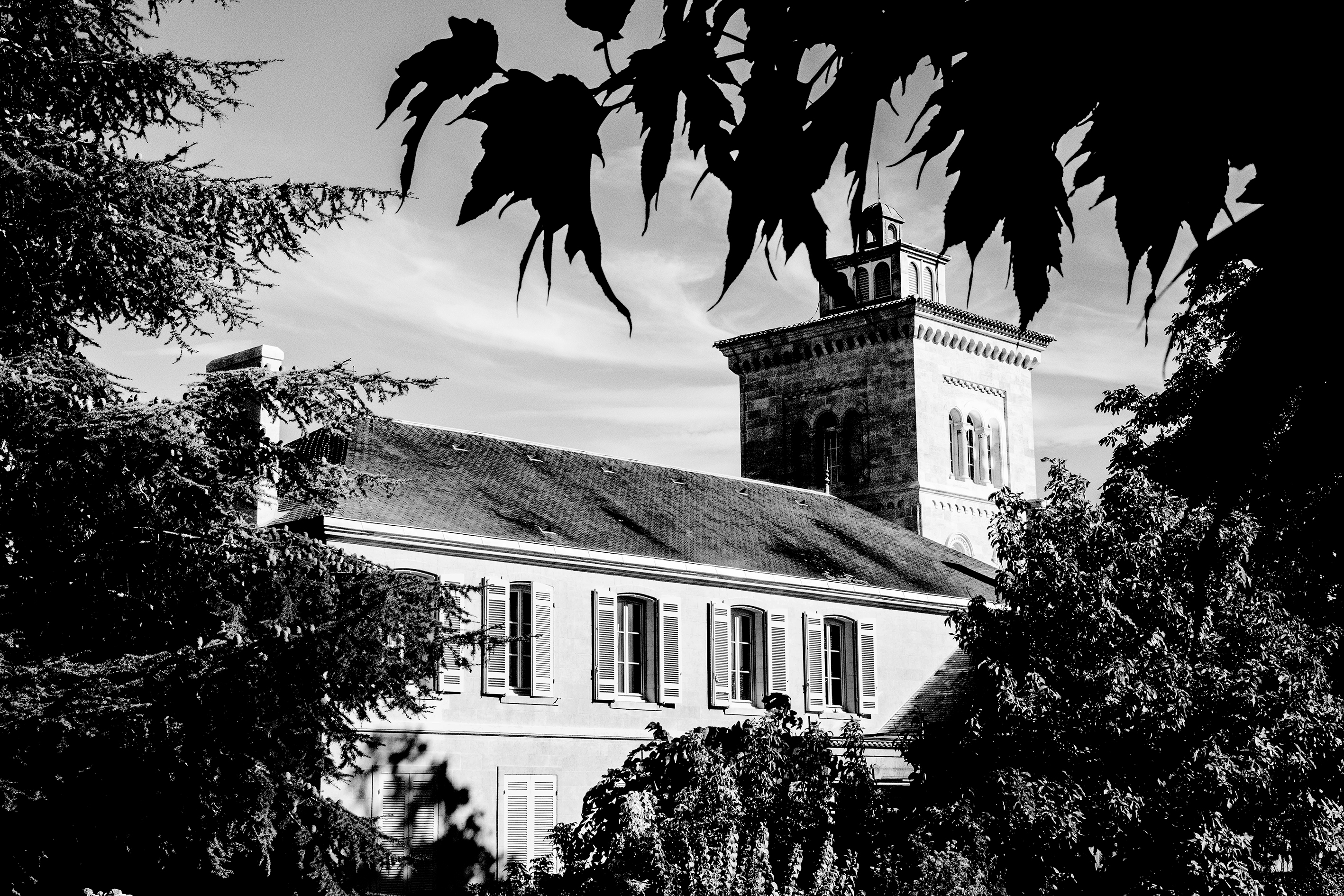
South of the Border, West of the Sun
Founded in 1899, Suntory is one of Japan’s oldest distributors of alcoholic beverages. Over the years, it has diversified to become a major player in soft drinks and whisky, and it has numerous international subsidiaries and interests. The company’s purchase of Château Lagrange in 1983 blazed the trail for Asian investment in the region and set a high benchmark for transforming under-performers into over-achievers.

Château Lagrange sits in the far southwestern corner of the compact commune of Saint-Julien. The vineyard consists of one contiguous 118-hectare (292 acres) block around the château. Although historically and today it remains one of the largest vineyards among the classified growths, its size has ballooned and shrunken over the years. In the mid-twentieth century, challenging times saw chunks of the land sold off to neighboring estates, dwindling it down by nearly 2/3 of what it was to just over 50 hectares by 1983. Suntory purchased a château on its last legs. The Japanese drinks giant purportedly invested more than three times the purchase price on buying contiguous vineyard land and replanting within the first couple of years just to get the property back to its fighting weight. But, as anyone involved in wine production knows, these investments would take many years to show in the wines.
“2019 was Suntory’s 120th anniversary,” said Matthieu Bordes, Château Lagrange’s general manager and winemaker, who has been making wine at the estate since 2006. “So, I was under a lot of pressure to make a great wine that year.”
The 2019 Lagrange was the standout in the recent 2000-2019 vertical tasting I conducted with Matthieu at the château. Achieving this new quality benchmark was the culmination of many years of meticulous labor and many improvements.
One of the major changes since the Suntory purchase has been the decrease in the amount of Merlot planted and used in the grand vin and the increase in Cabernet Sauvignon. When Suntory purchased the estate, around 50% of the plantings and blends were Merlot. Today, the plantings are 67% Cabernet Sauvignon, 28% Merlot, and 5% Petit-Verdot.
“Since 2007, we have increased dramatically the amount of Cabernet Sauvignon in the grand vin,” commented Matthieu. “In the 1990s, there were usually equal proportions of Cabernet Sauvignon and Merlot with a little Petit Verdot. I’ve nudged the percentage of Cabernet Sauvignon up to around 70% or more. I believe Cabernet Sauvignon has to be the backbone of the wine. I’m not a big fan of Merlot. It gives approachability, but the base needs to be Cabernet.”

Another important milestone in the post-purchase vineyard improvements is achieving an average vine age of 40 years.
“Our vineyard can be divided into two parts,” said Matthieu. “There’s an older section with vines planted before Suntory bought the property. These were 25 to 60-year-old vines then. Our oldest plantings are from 1952. And then we have the part that they replanted.”
These days, the vineyard is managed and harvested far more precisely than in the past.
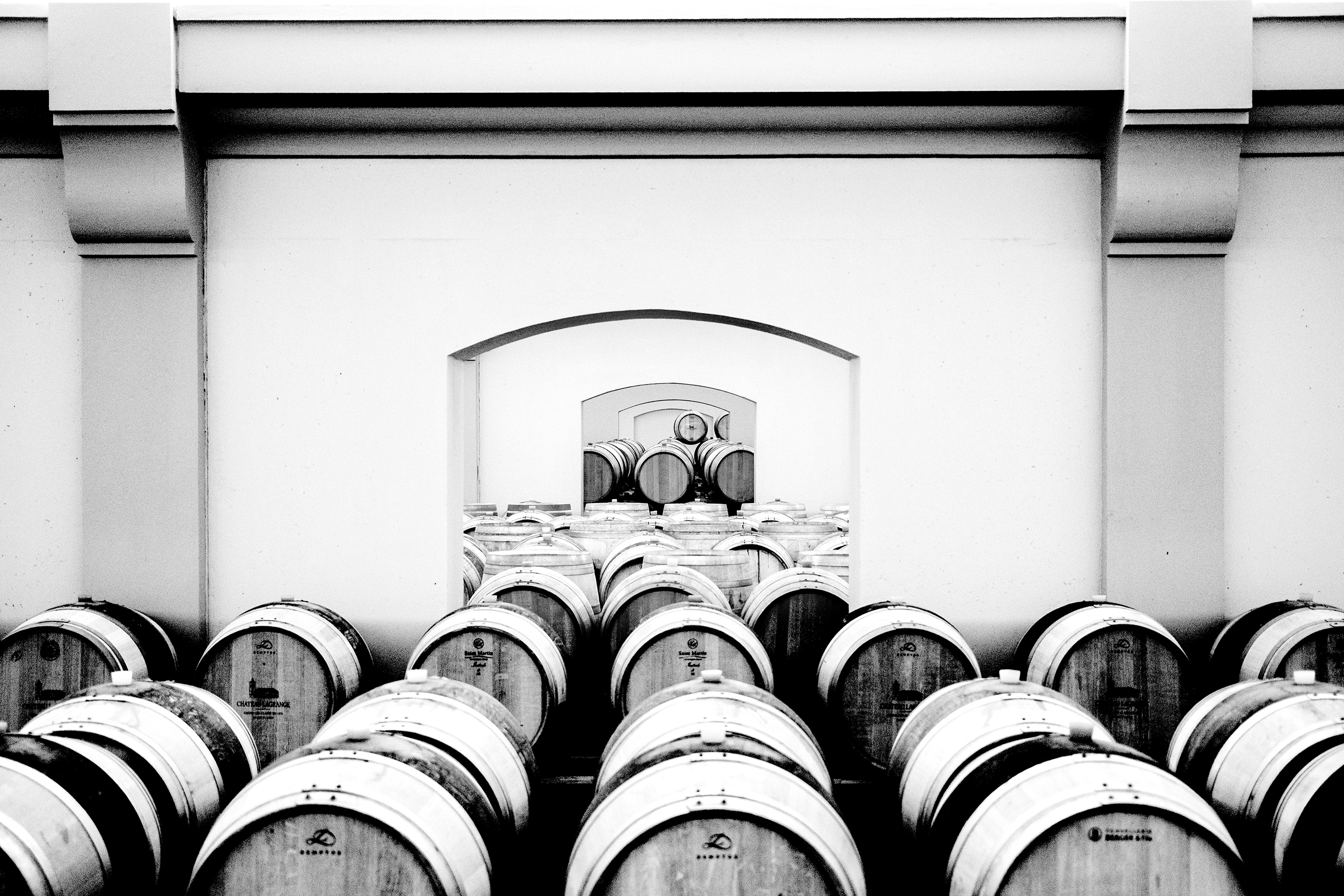
“Our vineyard is sub-divided into 103 plots, which are managed separately,” Matthieu pointed out. “I want to make on each plot the best grapes I can, but some terroirs have their limit. Now we have changed from using a smaller number of large vats to 102 smaller vats, to accommodate out separate vineyard plots. This means we can work very precisely. We no longer need a third wine now because we can make better wine by picking and vinifying more precisely. Now we are riper, and there is more fruit. But we never pick Cabernet Sauvignon over ripe. We are also very careful with the Merlot, but it is difficult to pick this below 14-14.5%.”
Speed of processing was another focus of Matthieu’s.
“We changed the vat room to be extremely efficient,” he said. “We can now process 18 hectares in a day. This is very important—to be able to pick and process when perfectly ripe. Some days, we pick nothing. Some days, we pick a lot.”
Because Château Lagrange is one contiguous block tucked up in the southwestern corner of Saint-Julien, as opposed to many plots scattered across the commune, which is far more common, this vertical tasting highlighted a real terroir signature as opposed to a house style. The latest releases from 2015 onward, in particular, offer a bright, refreshing, shimmery expression, also revealing a glimpse of a deeper, more opulent subtext yet to come.
“We always have great freshness and low pH here,” Matthieu told me. “We can maintain pHs of 3.4 to 3.5 even in hot years. The 2016 is 3.41. We never have a pH above 3.6.”
Selection is also key. Part of the secret to 2019’s success is that only 30% of the crop made it into the grand vin.
“We are lucky with our owners,” said Matthieu. “Our owners only want us to make good wine. We focus just on quality; we have no financial considerations. We taste the wines to go into the grand vin blind. We want to keep the estate’s identity and make the best wine we can.”
The 2019 Lagrange is composed of 80% Cabernet Sauvignon, 18% Merlot, and 2% Petit Verdot. Deep garnet-purple in color, it skips out with youthful, vibrant notes of wild blueberries, black raspberries, and crushed blackcurrants, followed by hints of camphor, lilacs, and smoked meats. The medium-bodied palate (13.5% alcohol) delivers beautifully defined black fruit and perfumed layers supported by fine-grained tannins and wonderful freshness, finishing long and mineral-laced. It’s temptingly approachable right now, but that touch of gravitas in the subtext suggests a far greater experience to come following 5 to 7 years of cellaring patience.
-
Article & Reviews by Lisa Perrotti-Brown MW
Photography by Johan Berglund

PRODUCERS IN THIS ARTICLE
> Show all wines sorted by scoreMore articles
Château Le Dôme 1997-2022
10th Sep 2026
9 tasting notes

Bordeaux 2024 Revisited
03rd Sep 2026
69 tasting notes
Château Jean Faure 2004-2023
10th Jul 2026
10 tasting notes
Bordeaux 2025 En Primeur
07th May 2026
382 tasting notes
Show all articles