26th Mar 2026
"What's in a name? That which we call a rose / By any other name would smell as sweet."
— William Shakespeare, Romeo and Juliet
**********
A wine that cannot legally bear the name of the place it comes from. Vines older than the rules that exclude them. A bottle borrowed from olive oil. And in the glass — something that may be more authentically Saint-Émilion than almost anything else produced here today.
Enter Château Vieux Taillefer.
Origin Story
We all know Saint-Émilion is red. But, there are some rare exceptions.
Take Château Cheval Blanc, which in 2016 released its first white — vintage 2014. Or the rock-and-rollers of Château Valandraud, Jean-Luc Thunevin and Murielle Andraud, who — in their inimitable style — broke all the rules and launched their white back in 2003, with an almost impossibly limited release of 585 bottles. Add to that Château Angélus, who have been experimenting with whites, releasing the Blanc du Milieu line and even a white Grand Vin — though not yet commercially.
What all of them have in common: standard Bordeaux varieties — Sauvignon Blanc, Sémillon, Sauvignon Gris — planted in the 21st century.
Which raises a fair question: is white wine on the right bank simply a modern trend? A fashionable detour from the region's red identity?
The Estate
The history of Château Vieux Taillefer dates back to the late 18th century. For most of those two-plus centuries, it existed quietly — a modest family property spread across several communes of the Saint-Émilion appellation, five hectares in total.
Then, in 2006, everything changed.
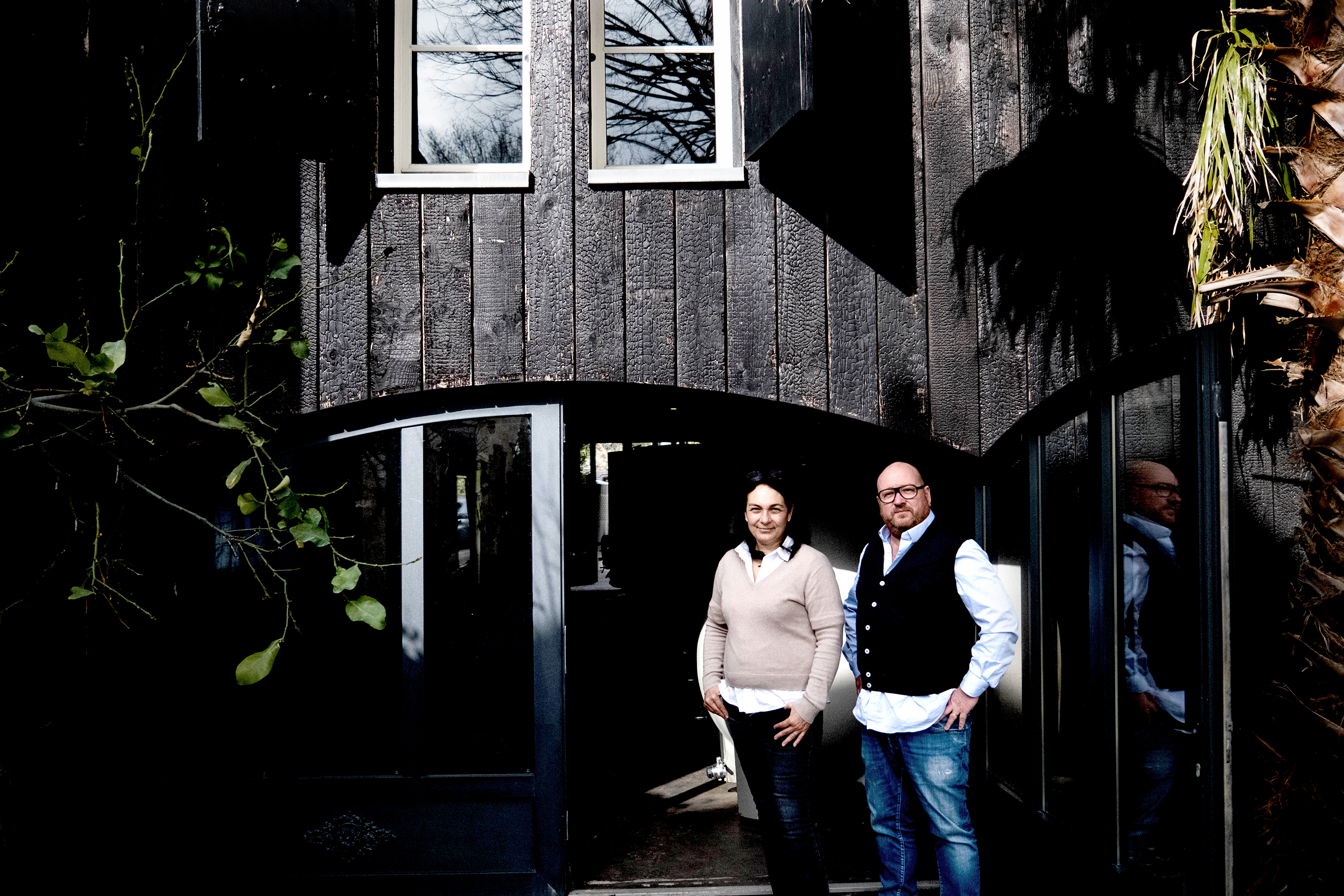
Catherine and Philippe Cohen acquired the estate. And this was not a casual purchase by enthusiastic newcomers. By the time the ink was dry on that transaction, the two of them had already spent the better part of three decades inside the world of Bordeaux's finest wines — not as visitors, but as participants.
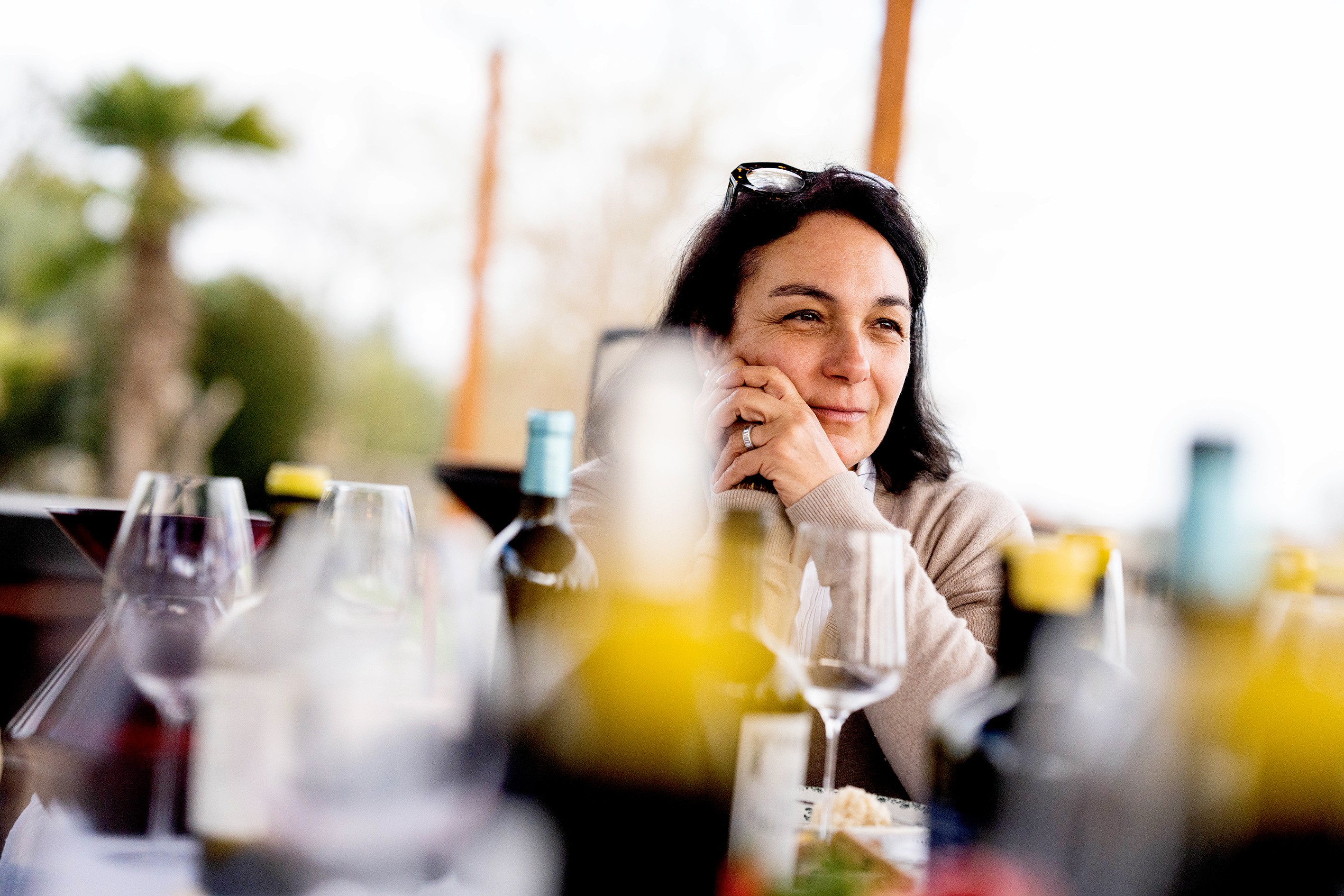
Catherine: From La Fleur-Pétrus to Taillefer
Catherine Cohen is an oenologist by training, a graduate of the Institut Jules Guyot in Dijon. But her real education began at La Fleur-Pétrus, under the guidance of Jean-Claude Berrouet — one of the most consequential figures in the modern history of Bordeaux, a man who made 44 consecutive vintages at Pétrus before retiring after the 2007 harvest.
Catherine first trained at La Fleur-Pétrus in 1995, returned in 1998, and stayed through 2001 — on the same plateau, in the same blue clay, with the same grape that defines the entire right bank: Merlot. In parallel, she supervised the vinification for all the estates distributed — but not owned — by Moueix: Château Siaurac in Lalande de Pomerol, Le Prieuré in Saint-Émilion, Vray Croix de Gay in Pomerol, and Château Tournefeuille in Lalande de Pomerol.
The road to Taillefer itself came through a chain of introductions that only the wine world produces. Berrouet, convinced that the future lay in Saint-Émilion rather than the Côtes de Castillon, pointed the Cohens in the right direction — and introduced Catherine to the owner of Château Monte Christo, where she went on to work for nearly a decade. It was that owner who, in turn, introduced them to the proprietor of Château Vieux Taillefer. They met in 2005. They bought in 2006 — starting from scratch, with a completely different vision: terroir-driven, organic, away from the massive yields and heavy chemistry that had defined the estate before them.

Philippe: The Other Half of the Equation
Philippe Cohen brings a different kind of expertise to the partnership — one that is just as essential, if less often discussed.
A négociant in rare and prestigious wines for over 25 years, he runs CDP Fine Wines, based in Saint-Émilion, which has become one of the reference points for the distribution of exceptional domaine wines worldwide. His background spans foreign languages, political science, and wine commerce — an unusual combination that turns out to be exactly what an estate like Taillefer needs: someone who can build the wine alongside Catherine and then place it in exactly the right hands.
The Philosophy: Nothing Added, Nothing Taken Away
Since taking over Taillefer, the Cohens have built the estate around a set of principles that are quietly radical by Bordeaux standards.
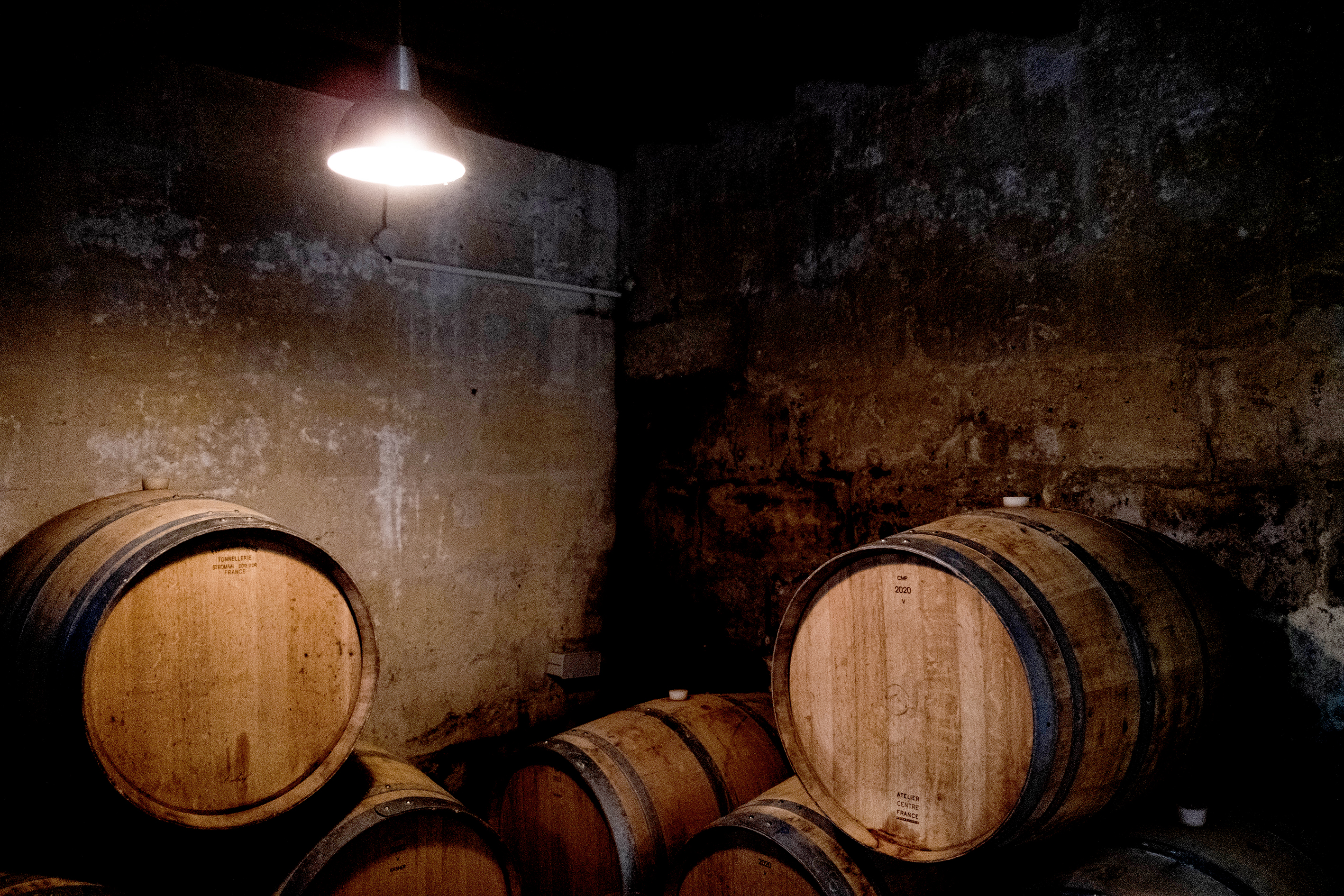
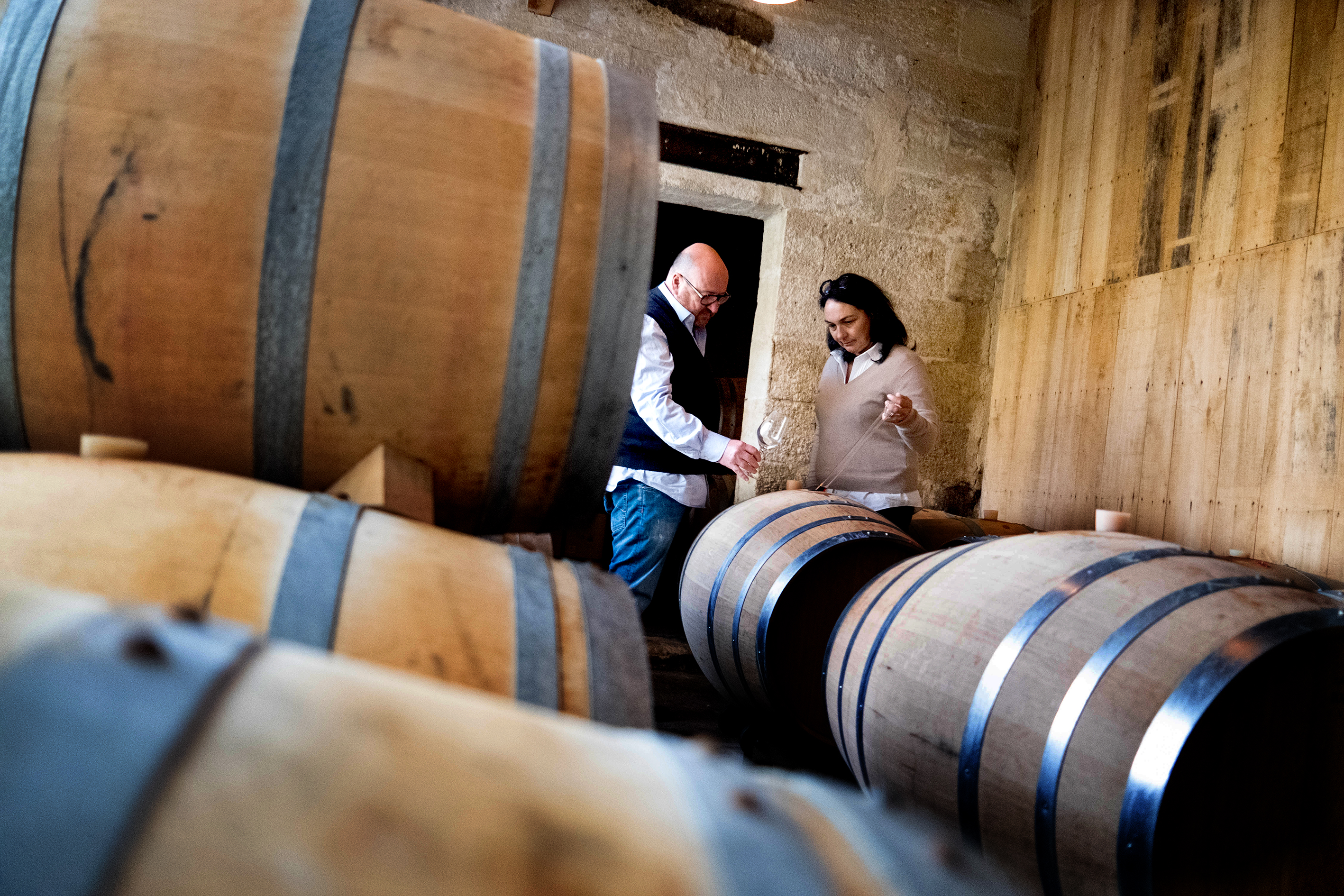
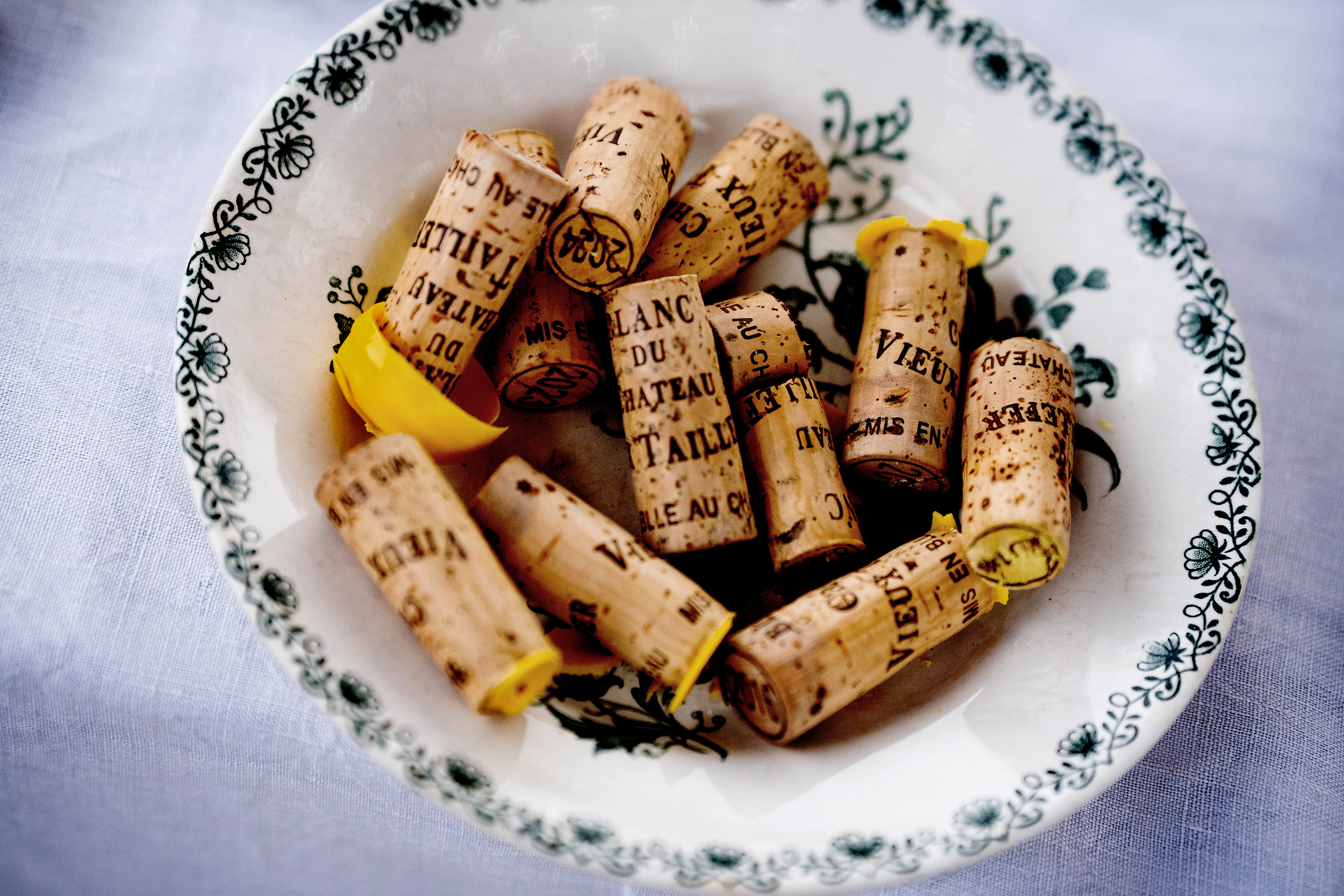
Every parcel is vinified separately. Grapes are never crushed or broken before fermentation. Cold pre-fermentation maceration is standard. Alcoholic fermentation runs entirely on indigenous yeasts — no additions of any kind, no oenological products whatsoever. Even sulphites have been replaced by a grape-seed derivative, a technique the Cohens learned from Guillaume Sélosse during his time working in their cellar.
Since 2018 the entire production is certified organic by ECOCERT.
Three wines emerge from this process. Two reds — Château Vieux Taillefer and a second cuvée (not a second wine — an important distinction) Pavillon de Taillefer, both Saint-Émilion Grand Cru.
And then there is the white. Which deserves a chapter of its own.
The History of the White: A Phone Call That Changed Everything
Five years after acquiring the estate, the Cohens set their eyes on two parcels in Saint-Christophe-des-Bardes — both belonging to the same elderly gentleman. The first — 0.78 hectares, planted entirely with Merlot — they managed to acquire in early 2011. Today, the red Château Vieux Taillefer is produced entirely from the vines of that parcel.
The second parcel, just 0.25 hectares, the old man had decided to keep for himself — for personal, non-commercial production. The Cohens respected his decision and moved on.
Then came the phone call.
Sometime in late August or early September of that same year — a period that will make perfect sense in a moment — the gentleman had a change of heart. He called Philippe and Catherine to say the second parcel was now available after all, and that if they moved quickly, they might still catch the harvest. The grapes, he said, were already ripe.
What followed sounds less like a business negotiation and more like a comedy sketch. Philippe and Catherine — by his own admission — initially thought the old man was confused. He was very elderly, and not entirely in full command of his faculties. But they listened.
— You can buy it now, and if you hurry, you can even harvest. The Sauvignon is practically at peak.
— Sauvignon? In late August? How is that possible?
— Sauvignon Blanc — almost perfect!
The Cohens were baffled. White varieties, planted in the very heart of Saint-Émilion?
— And the Merlot is nearly ready too!
— Wait — Merlot as well??
— Of course. Merlot Blanc.
It was not confusion. It was not a joke.
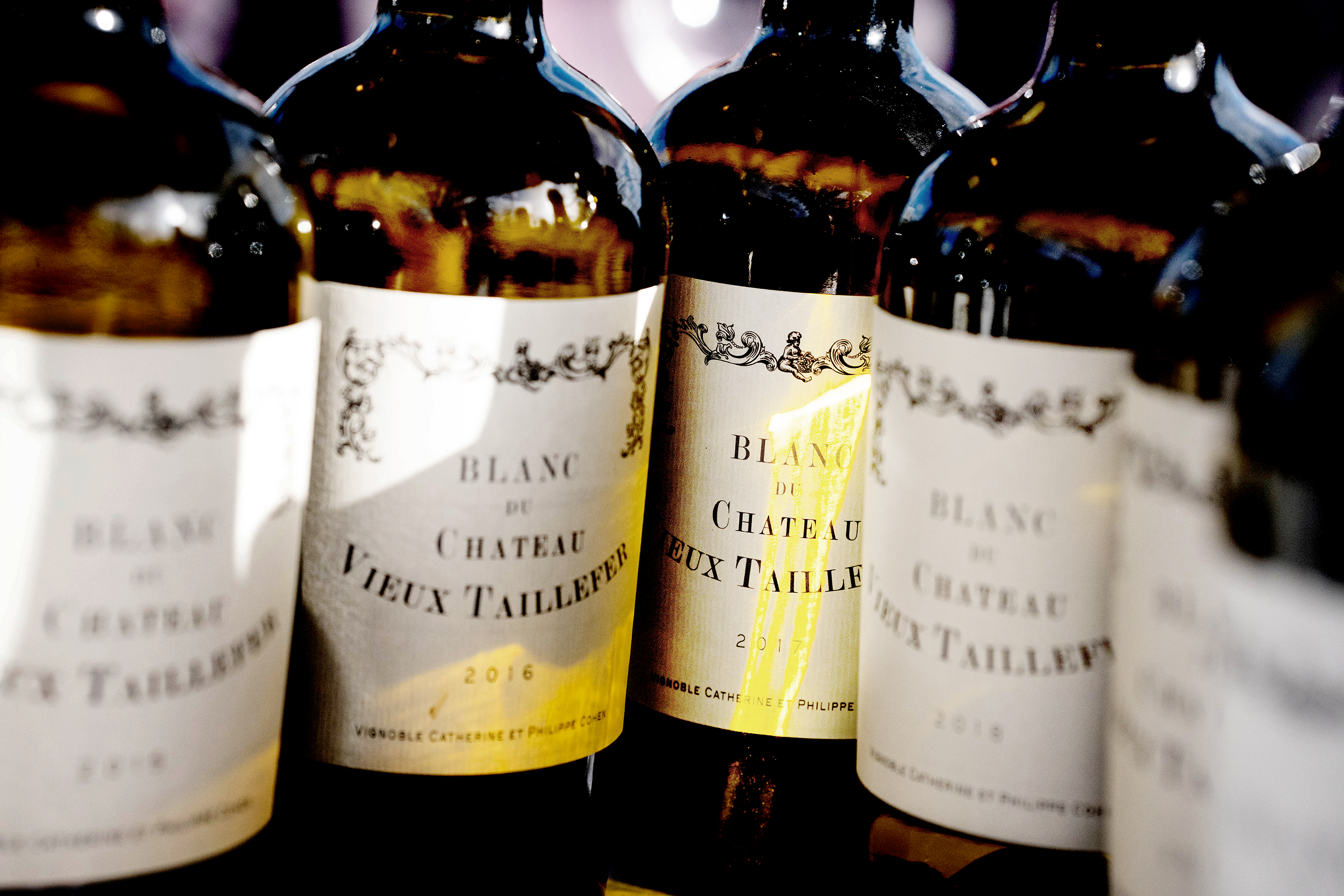
On that 0.25-hectare parcel, with vines over 75 years old, grew something that had no business existing by the logic of modern Saint-Émilion: five white varieties, planted decades before anyone thought to ask whether white wine belonged here at all. Merlot Blanc (70%), Sauvignon Blanc, Sauvignon Gris, Sémillon, Muscadelle, and Chasselas.
The story of the Blanc du Château Vieux Taillefer had just begun.
The Blend: A Masterclass in Historical Depth
Let's take a closer look at each variety — because this is where the story gets genuinely fascinating.
Merlot Blanc — the most unexpected, and the most local
Merlot Blanc is not a white mutation of Merlot. It is a distinct variety — a crossing of Merlot and Folle Blanche, first identified in 1891. Its connection to Saint-Émilion is direct: Merlot is the foundational grape of the appellation, and here, at Taillefer, its white sibling survives in what may be the only remaining vines of its kind within the entire appellation zone. Think of it as the white mirror of the region's red soul.
Sémillon — named after this very place
The word Sémillon is linguistically derived from Saint-Émilion — first documented in 1736 under the name Sémillon de Saint-Émilion. The paradox is almost cruel: a grape that literally carries the region's name in its own is today far more associated with Sauternes and Graves. At Vieux Taillefer, it returns to its point of origin.
Sauvignon Blanc and Sauvignon Gris — Bordeaux classics
Standard white Bordeaux varieties, present in the region for centuries. No particular Saint-Émilion provenance — but entirely natural components of any right bank white blend, and here a counterpoint to the weight of Merlot Blanc.
Muscadelle — the aromatic thread
Often overlooked in discussions of Bordeaux whites, Muscadelle is the variety that brings fragrance to the blend — floral, sometimes musky, with a softness that rounds the ensemble. In Sauternes it plays a supporting role; here, in this unusual assembly, it adds a dimension that no other variety in the blend can provide.
Chasselas — the wildcard
Geneticially, Chasselas belongs to the alpine arc — related to Nebbiolo, Lagrein, Altesse, Viognier. No direct historical link to Saint-Émilion. And yet in France, Chasselas has long served as the benchmark variety for measuring ripeness — when something is said to ripen "X days before or after Chasselas," it is used as a universal calibration point. Its presence here feels appropriate: a variety that exists to measure time, in a wine that is itself a measure of how much time this place has forgotten about itself.
The Bottle
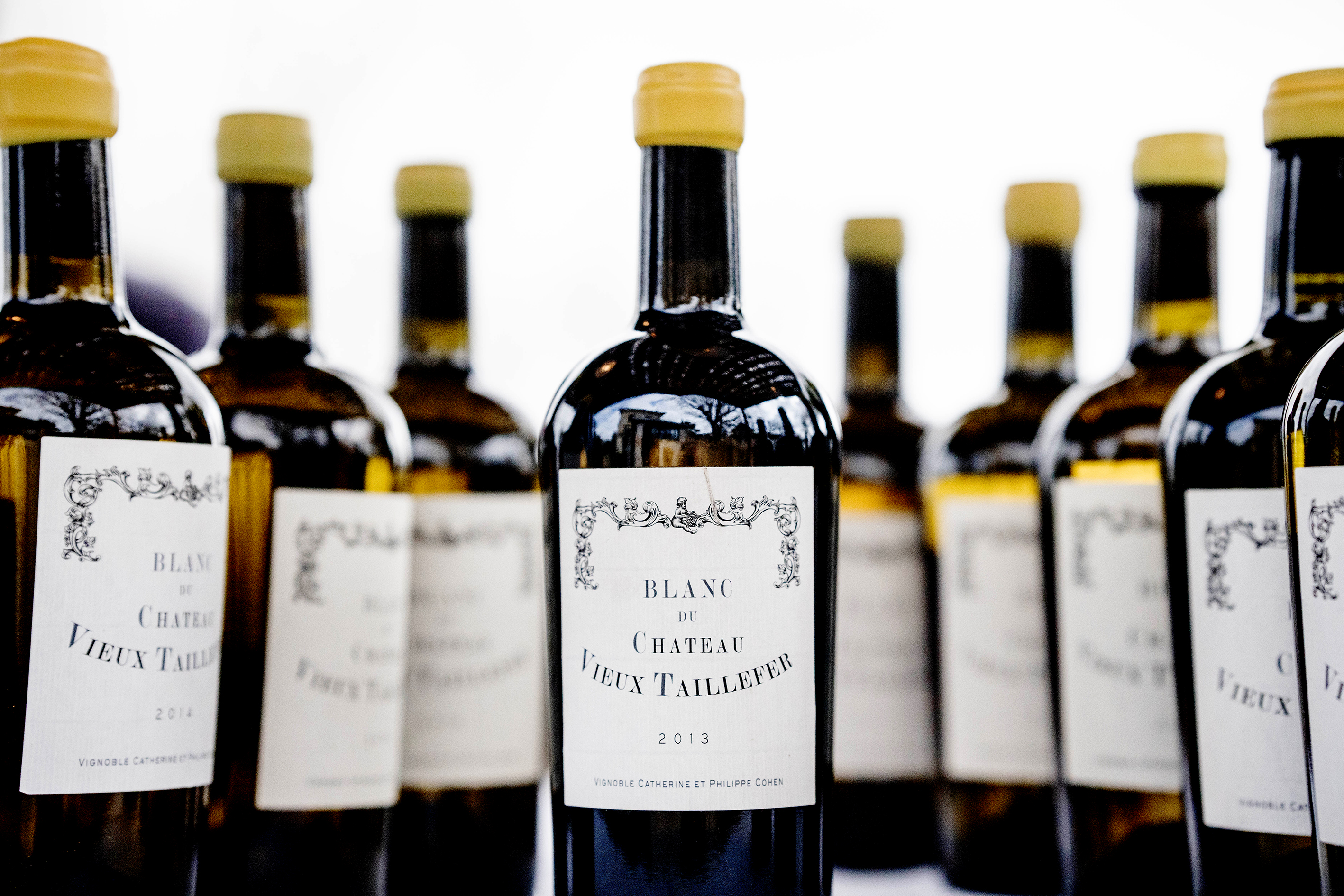
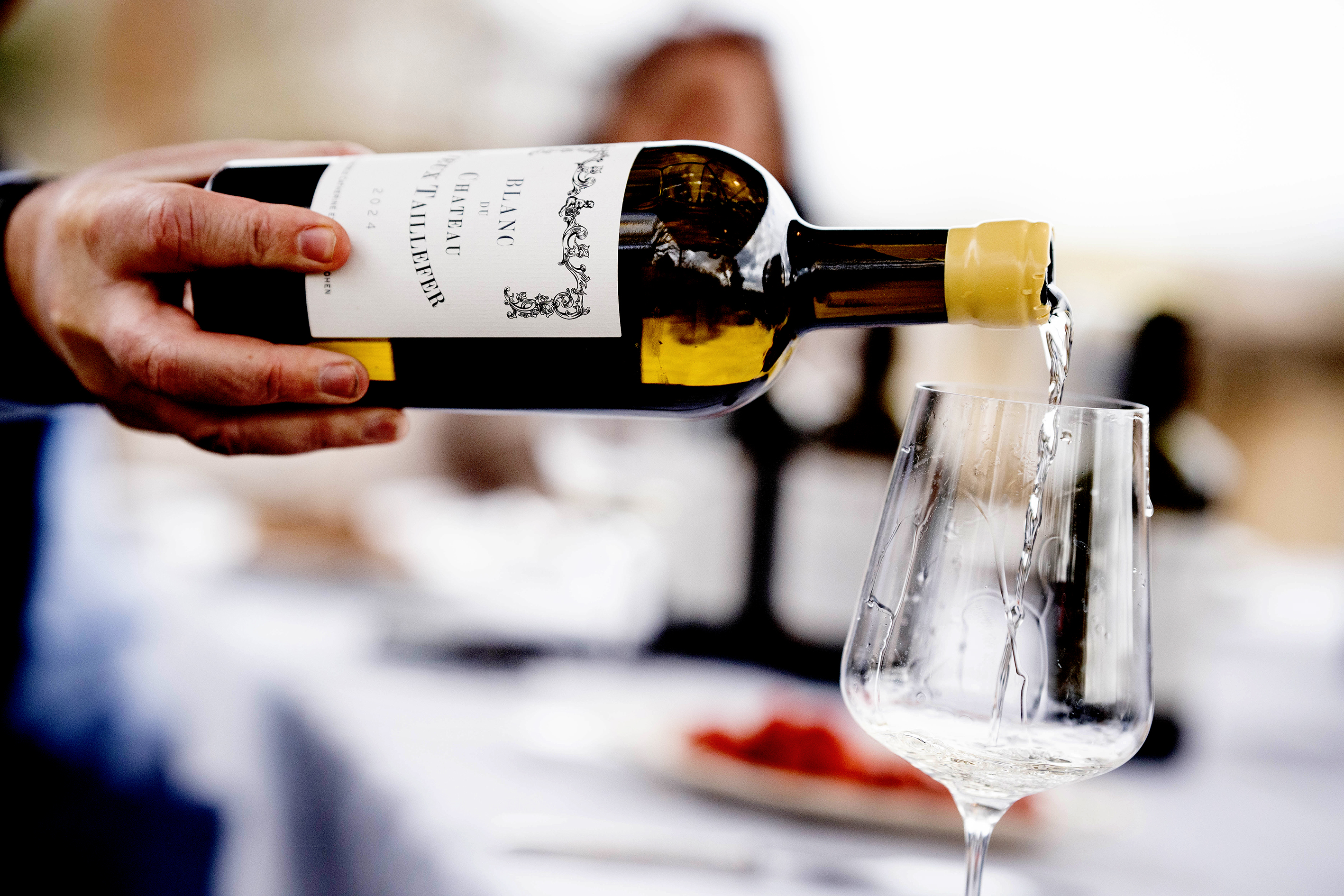
After lengthy discussions with regulatory authorities over the appellation status of their white — and ultimately being refused even the designation Vin de Bordeaux, due to the unusual varieties in the blend — the label now simply reads Vin de Table.
Philippe and Catherine decided to lean into it.
They wanted to use the clavelin — the iconic squat bottle of the Jura. It turned out that, like so much else in French wine, the clavelin is protected: it can only be used for wines from that region.
Undeterred, the Cohens found olive oil producers in Italy who use a bottle of similar shape and character. They bought their entire stock. That is what the Blanc du Château Vieux Taillefer now comes in — an olive oil bottle, repurposed for a wine that doesn't fit any box the system has available.
In the Glass
I had the rare opportunity to taste thirteen vintages in sequence — 2013 through 2025.
What struck me most was how difficult it was to pin down a single, consistent style. Some vintages were markedly different from others. Which is, in a way, entirely understandable. Catherine and Philippe are still relatively early in their relationship with these vines and this variety. The white is a work in progress — an ongoing conversation rather than a finished statement.
Then again — knowing the Cohens — perhaps that is precisely the point. Perhaps they will do what they have always done: ignore the expected path and make each vintage its own unrepeatable thing.
- Article and Reviews by Aleksandr Fedutinov
- Photography by Johan Berglund

PRODUCERS IN THIS ARTICLE
> Show all wines sorted by scoreMore articles
Château Le Dôme 1997-2022
10th Sep 2026
9 tasting notes
Bordeaux 2024 Revisited
03rd Sep 2026
69 tasting notes
Château Jean Faure 2004-2023
10th Jul 2026
10 tasting notes
Bordeaux 2025 En Primeur
07th May 2026
382 tasting notes
Show all articles