31st Jul 2025
Pomerol estate Clos du Clocher celebrates its centenary with the 2024 vintage, having been created when the négociant Jean-Baptiste Audy purchased a small parcel of vines in 1924. In this report Chris Kissack sits down with modern-day proprietor Jean-Baptiste Bourotte and technical director Mathieu Bonté, to dive into its one hundred years of history, tracing the origins of the Audy-Bourotte family from Corrèze through to modern times, all seen through the eyes of past vintages.
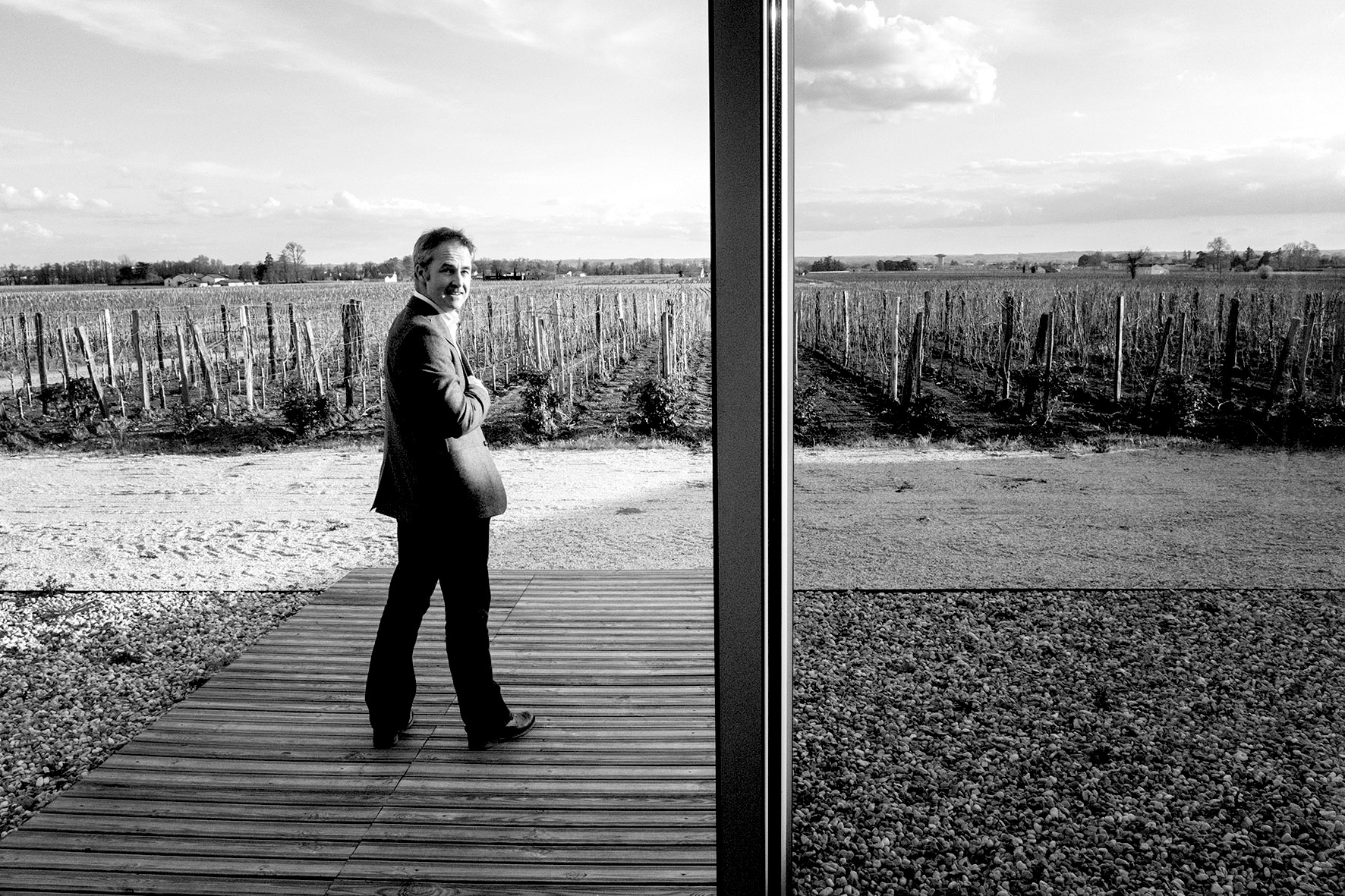
For Whom the Bell Tolls
They talked, laughed, poured wine, stretched out their legs, and drank the clean, sweet liquid from the greasy, sawdust-covered glasses.
- For Whom the Bell Tolls (1940), Ernest Hemingway
There is no suggestion that Hemingway, perhaps better associated with Paris, Spain and Cuba than with Corrèze, ever passed through this isolated region in south-west France, but if he had I think he would have felt at home here. Long regarded as one of France's most charming and admired regions, it is rich in historic villages, often nestled in narrow wooded valleys, or perched on rocky outcrops on the edge of high plateaus, looking down into the Gorges de la Dordogne. At least half a dozen of these villages are regularly ranked among France's most beautiful, among them Collognes-la-Rouge, a network of medieval cobbled streets, castle and fortified towers built from red sandstone, and Beaulieu-sur-Dordogne, with its ancient abbey and homely properties which sit aside a river most of us probably associate more with Bordeaux than with this corner of France.
Part of the region's appeal is that it remains largely undeveloped, and therefore unspoilt. Its terrain, a high craggy plateau scarred by deep valleys, has deterred the builders of railways and roads from venturing here, isolating it from the 20th-century tourism which so often led to whitewashed modernism. Today this isolation is worth celebrating; in the 19th century, however, it hung round the region's neck like a noose.
Two centuries ago Corrèze was a byword for impoverished subsistence living, a densely inhabited region of people who struggled to survive. Meanwhile the rest of the country was enjoying a post-Revolutionary golden age, a time when railways began to connect one city to another, and Paris underwent a breathtaking modernisation under the direction of Napoleon III; alleys were widened to create leafy boulevards, and squalid neighbourhoods were demolished to make way for elegant apartment buildings.
The bright lights beckoned, and any Corrèzian with a skill - masons, carpenters, sculptors and more - left for Paris, Bordeaux and France's othr big cities; in this 19th-century exodus the population of Corrèze declined by 150,000 inhabitants. Among the emigrants were the Moueix ancestors, who first headed to Paris before moving to Bordeaux, and - as you will have noticed if you read my recent twenty-vintage vertical from Domaine de la Noblaie - the Manzagol family also originated from here.
As did, as it happens, the Audy family, who landed in Libourne, and to whom we owe the existence of Clos du Clocher.

The Audy Bloodline
It was Antoine Audy (born 1826), his young wife Marie (born 1834), and their even younger son Laurent Philippe (born 1859), who left Corrèze in search of a better life; they soon arrived in the Bordeaux region, and they seem to have made a success of it. Evidence for this comes from their acquisition of Château Jonqueyres, an imposing château in the style of a fortified rural farmhouse, situated in Saint-Germain-du-Puch, in the heart of Entre-Deux-Mers.
They settled here in 1881, the year after Laurent Philippe had married. He had four children, although only two are relevant to this story; the first is his daughter Adélaïde Audy (1890 – 1986), who retained control of Jonqueyres, and it remains with her descendants today. Another son, Jean-Baptiste Audy (1882 – 1961), made his mark on the quayside of Libourne; here in 1906 he established a négociant house under his name, and he was soon trading in the local wines, forging a strong reputation as he did so.
Jean-Baptiste Audy married well, his young wife Hortense Demathieu (born 1890) having come with a dowry, and she was from a well-connected family of négociants and proprietors. The business boomed, and within two decades Jean-Baptiste found himself in a position where he could purchase some vines of his own.
Clos du Clocher Begins
It was in 1924 that Jean-Baptiste first acquired a parcel of vines on the Pomerol plateau, within site of the towering spire of the Église Saint-Jean. Standing in the vines Jean-Baptiste could hear the toll of the bells loud and clear, and like Hemingway he was inspired (although happily in Audy's case the bells rang for mass, while for Hemingway they signified death, not quite the same thing); his first vintage was that same year, and he christened his new domaine and its wine Clos du Clocher (clocher being French for bell tower). Subsequent purchases expanded the domaine, with the acquisition of a second parcel in 1931, and he also acquired a stake in Château La Cabanne, which he later sold. In 1940 he bought land on the outskirts of Catusseau, again a stone's throw from the church; here there were vines, but also space for cellars.
The Clos du Clocher estate was complete; these three parcel of vines constitute the estate today, and the Clos du Clocher cellars occupy a prominent roadside position. Here Jean-Baptiste Audy regularly blended a traditionally styled Pomerol, dominated by Merlot, but always partnered by a healthy proportion of Cabernet Franc.
Jean Audy
This was the status quo up until Jean-Baptiste's passing in 1961, after which the responsibility fell to a grandson, Pierre Bourotte, who made the 1961 vintage. Pierre accepted his new role but with time developed itchy feet, leaving in 1973 to follow his own dreams, and in the interim the wine was made by an uncle, Jean Audy.
"So it was Jean Audy who was responsible for the three oldest vintages here, 1976, 1982 and 1989," opined my host for this tasting, the current proprietor of Clos du Clocher, Jean-Baptiste Bourotte. Jean-Baptiste presented the wines with help from his technical director Mathieu Bonté.
"The 1976 vintage was marked by good weather during spring" continued Mathieu, "with no frost, and a good flowering period. Then from June to September it was very sunny, with no rain, and at this point it was the driest vintage since 1945." Of course, 1945 was a great vintage, so such comparisons should cause us to prick up our ears. "Then, sadly," continued Mathieu, "from the 10th to the 15th September there was heavy rain, with the potential to induce botrytis and damage grapes. The saving grace was that the vines were advanced in Pomerol, certainly in Clos du Clocher, and so we were able to pick before the rain."
Sight of the 1976 vintage on a label is not one which usually sends shivers of anticipatory excitement down my spine, but there was in truth much to admire in this 1976 Clos du Clocher, the texture soft and sweetly evolved, with plenty of tertiary development. If you are in the market for a 50th anniversary wine for 2026, don't be afraid to take a chance on this one (although tracking down a bottle for sale might be a challenge).
Moving on to 1982, Jean-Baptiste was unsurprisingly rather more effusive (this might be an understatement). "This was an enigmatic vintage for the property," he continued.
Mathieu gave a run-down of the season. "The life cycle in the vineyard was perfect; the budding - perfect; the flowering - perfect; the véraison - perfect. The spring was dry and warm, then July and August were sunny, not too dry though, as there was a little rain now and again, in each case just when it was needed." This continued until the end of September, and the stage was set for a perfect harvest. Importantly, though, there was also a new attitude in the cellars of Pomerol at this time; many estates were coming under the direction of a younger generation, who understood that maturity of the grape at picking was key, and that it was only through picking ripe grapes could you make the best wines.
"My father was one of that generation," intoned Jean-Baptiste, "as was Jean-Michel Arcaute at Château Clinet. They understood the ripeness they were seeking, and they waited for the right moment to start the harvest."
The sudden mention of Jean-Michel Arcaute, for many years the proprietor of Château Clinet, might come as a surprise given this is the story of Clos du Clocher. His tenure there has not in general been regarded as the strongest, but it was Jean-Michel who would kick-start the estate's turnaround, a revival which would be the foundation upon which the current proprietor, Ronan Laborde, would build. He crops up here because Arcaute was married to Anne-Marie Audy, and they inherited the property from her father, Georges Audy. They were Corrèzians, and close family.
Now the 1982 Clos du Clocher does send shivers down my spine. At over forty years of age it impresses with a forthright and confident aromatic profile, evolved and yet dark. It is a delight to drink now, but still clearly has decades in it. How fortunate we are that such bottles exist in our time!
The third and final vintage from Jean Audy to be poured was 1989. "The 1980s were a beautiful decade," continued Jean-Baptiste, introducing the vintage, "with 1982 of course, but also 1985 and 1988, and then we have another representative here, 1989."
"This was a year of early budbreak, followed by warm weather and an early and homogenous flowering," continued Mathieu Bonté. "After a little rain there was a hot summer - July and August were just beautiful - with some summer rainstorms which held off any serious hydric stress. The crop was huge though; the 1980s was the decade when green-harvesting really began to take hold in Bordeaux, and it certainly helped in 1989." These are interesting comments when viewed in the context of my two recent Pontet-Canet reports, on the 1994 and 2004, Alfred Tesseron having undertaken his first green harvest in 1994.
Revisited at well over thirty years age, the 1989 Clos du Clocher is holding up quite well at first, although it initially showed a marked fungal character, with a rather grainy core of tannins. Sadly with time the nose developed a little cork taint, so this bottle certainly was not at its best. Perhaps I will encounter a more representative bottle in the future.
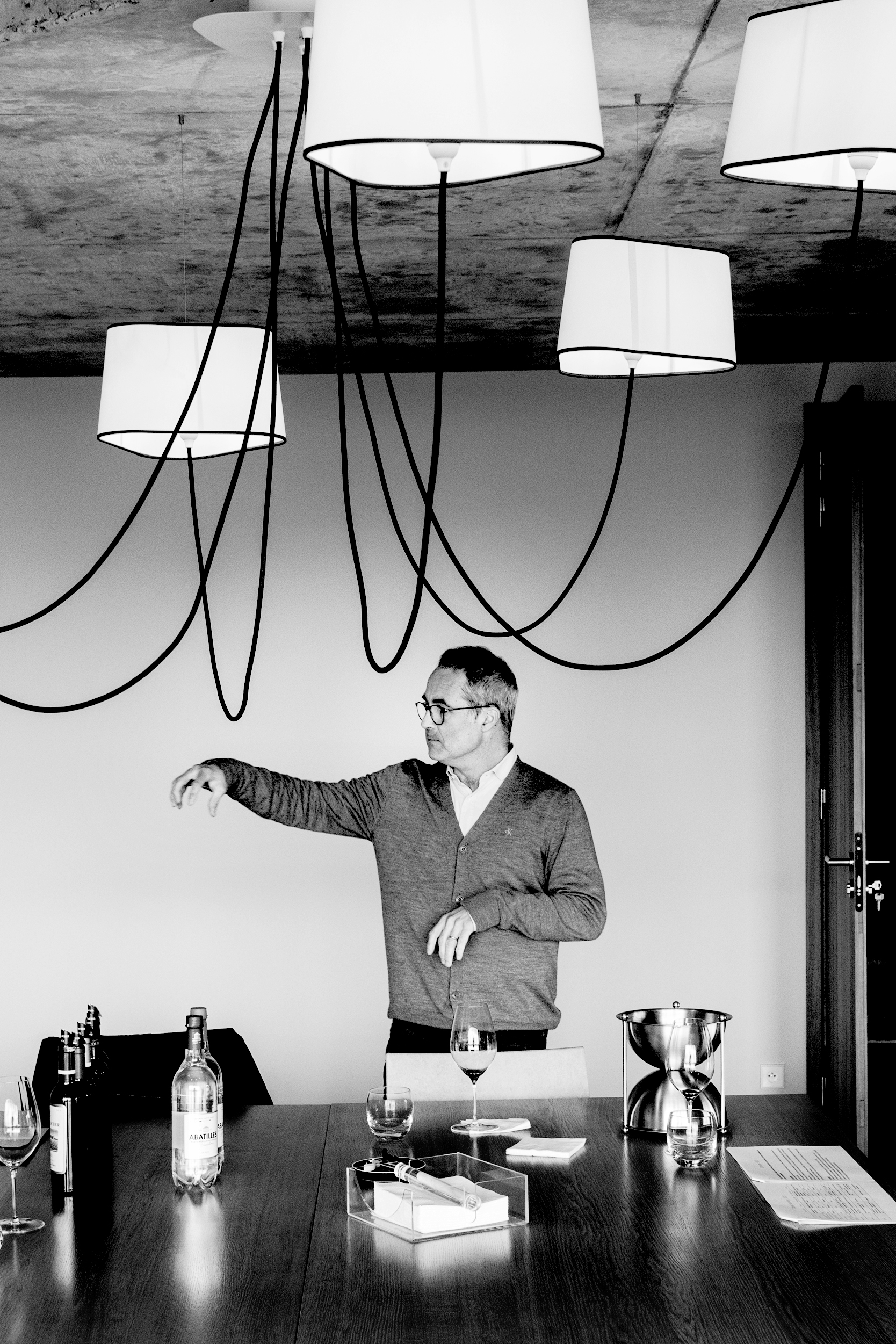
Pierre Bourotte
With the passing of time Jean Audy became ill and eventually passed away; the running of the property officially fell to his daughter, but by this time Pierre Bourotte was back on the scene. He returned in 1991, initially as a consultant, but with time he would take over the running of the estate entirely.
The 1998 vintage was the one where he would make his mark; first, he purchased half of the property from his Audy cousin, giving him some authority and a degree of autonomy over its running. Secondly, this allowed him to separate a parcel of vines on lower and more sandy slopes behind the Clos du Clocher cellars from the main blend creating Château Monregard La Croix in the process. Thirdly, he took on Michel Rolland as a consultant; both of these latter steps would ameliorate the quality within the wine of Clos du Clocher, as well as increasing the percentage of Cabernet Franc (as the Monregard La Croix parcel was, and still is, 100% Merlot).
"This was an early vintage," remarked Mathieu Bonté, "with a warm winter and early budbreak. During April it rained, but it was warm, followed by dry weather in May. The flowering was early, fast and homogenous. The véraison followed the same schedule, in August. The harvest began on or around September 25th, under good conditions."
The 1998 Clos du Clocher was the only vintage poured here which originated from Pierre Bourotte's era, and it put on an impressive show, with taut fruit, very correct grip and a precise frame; this is a Clos du Clocher which can be enjoyed now, or left in the cellar for another decade or two, with confidence. The choice is yours.
Jean-Baptiste Bourotte
Pierre's son Jean-Baptiste originally left home to study business, before he took up a post with the luxury watch manufacturer and jeweller Cartier, spending many years in their South American office. Evidence for this can be seen in Jean-Baptiste's collection of elegant Cartier timepieces - if you ever have the good fortune to meet Jean-Baptiste, check out which one he has chosen to wear that day. In 2003, however, he returned to the fold, helping his father in vineyard and cellar. His first vintage in charge was 2005.
It was a challenging time for Jean-Baptiste, as he recounted to me a few years ago, during the course of a prior visit to Clos du Clocher. While he took the lead during the harvest, his father was always in the background, and many of his team would naturally gravitate towards the older Bourotte, who had stamped his authority on the estate during fifteen years at the helm. Eventually Jean-Baptiste had to ask his father to take a back seat, and leave room for him to take the lead. This he did, and subsequently the transition went smoothly.
As did the season and harvest. "This was my very first vintage," Jean-Baptiste reminded me during this more recent tasting.
"It started with a cold and dry winter, yet the budbreak was quite early," explained Mathieu. "It rained during April and May, but then the end of May and June were sunny and dry, so we had a good flowering, quick and homogenous. There was a little hydric stress in July and August - the vines did not suffer, but there was an early véraison. The berries were small, as a result, and we picked from September 25th. The Cabernet Franc, in particular, was of good quality."
The first of the 'modern era' vintages to be poured, the 2005 Clos du Clocher seems to mark a new beginning for the estate, with an explosive palate and rich aromatic profile. I wish I had a few bottles tucked away in my own cellar.
Then came a sequence of three more recent vintages with which many readers will be more familiar. Quality within this trio was very high, testament to the efforts made by Jean-Baptiste, and his ability to apply recent advances in viticultural knowledge and vinifications.
Starting with 2010, Jean-Baptiste recalled the story of the season with almost wistful longing. "It was a difficult winter, with a little rain, with a later budbreak on April 10th, more like the 1980s than current times. May, though, was dry and warm, and the vines soon started to catch up. The flowering came on June 5th, and it went well, with just a touch of coulure, what we call 'natural yield management'. Thereafter the weather was great, July was dry and hot, inducing a good hydric stress, with véraison in September, after which there was good weather, and we could wait for the best maturity."
The 2010 Clos du Clocher seems to me to typify the vintage. And having visited Bordeaux several times recently, to taste more 2010s (and other vintages!), this particular vintage is looking stronger and stronger, and increasingly superior to 2005. That is the case with a few other tastings recently, and it is a significant shift in opinion given that I have long been a fan of all things 2005.
Then came 2016, another significant vintage, in more ways than one. It was not just that this was the strongest vintage since 2010, perhaps since 1982, it was also the year in which Jean-Baptiste acquired full ownership and control of Clos du Clocher. While he had taken his father's share, the other half was in the hands of a cousin, a descendant of Jean Audy; the cousin offered to sell, and Jean-Baptiste bought him out.
As for the season and the wine, this has to my mind always been a slow burner, a vintage which has revealed its merits over time. Indeed, the season started in an inauspicious manner, with a mild winter and early budbreak followed by a damp spring, resulting in a later flowering, in June. "We were saved by the summer weather," said Mathieu, "which was hot and dry, at first accelerating vine growth, then ushering in hydric stress and a véraison in early August. A smattering of showers of rain in early September helped the vines to ripen the grapes, with picking starting in the middle of the month."
The resulting wine, the 2016 Clos du Clocher, is dark, dense and focused, and clearly needs time to reveal its full potential. Another one or two decades is my prediction.
Finally, we finished with the 2020 vintage. This was the first vintage in this tasting which comes after the appointment of Mathieu Bonté in 2019, the outgoing technical director Cécile Dupuis having left to take up a position with Ducru-Beaucaillou. They began planting cover crops in the vineyard, and switched to more organic practices in 2021 (the estate has subsequently gained organic certification in the 2024 vintage).
"Like 2015, 2016 and 2019, the winter was warm and dry, with an early budbreak, on March 23rd. April was warm and humid, and the vines grew quickly," Mathieu told me. "There followed an early flowering in May, and with hot weather from mid-June to mid-August, and no rain for much of this time, the vineyard flirted with blocage [cessation of photosynthesis, the vine 'shutting down' in response to the drought], so the rain in mid-August helped the vines to pick up the pace again. September was good, not too hot, and we started picking on September 10th for the Merlot, September 20th for the Cabernet Franc."
The 2020 Clos du Clocher is a superb wine, exotic and concentrated, but like the 2016 and 2010 it demands cellar time. Leave all these younger vintages well alone, for now.
This was an invaluable look back at a handful of older vintages from Clos du Clocher, as well as a chance to revisit more recent releases. The tasting demonstrated not only the fine capability these wines have to develop in bottle, even when looking back as far as the 1970s, but it also made plain how much the quality of the finished product has improved here in recent times, a consequence of the direction and drive given to the estate by proprietor Jean-Baptiste Bourotte and his technical director Mathieu Bonté. May they enjoy many more years here, tending their vines, and listening in peace to the toll of the bells.

PRODUCERS IN THIS ARTICLE
> Show all wines sorted by scoreMore articles
Château Le Dôme 1997-2022
10th Sep 2026
9 tasting notes

Bordeaux 2024 Revisited
03rd Sep 2026
69 tasting notes
Château Jean Faure 2004-2023
10th Jul 2026
10 tasting notes
Bordeaux 2025 En Primeur
07th May 2026
382 tasting notes
Show all articles