16th Jan 2025
I recently tasted Colgin’s 2021 and 2022 vintages with co-founders Ann Colgin and Joe Wender and director of winemaking Allison Tauziet. 2021 was the more classic growing season, while 2022 was notoriously challenging due to the heatwave in early September. Yet the wines from both vintages are classic Colgin, a testament to the team as much as the terroirs. There was also news to share about the exciting new “east side” development at IX Estate—a project that has been in the making since the purchase of this singular parcel on Pritchard Hill.
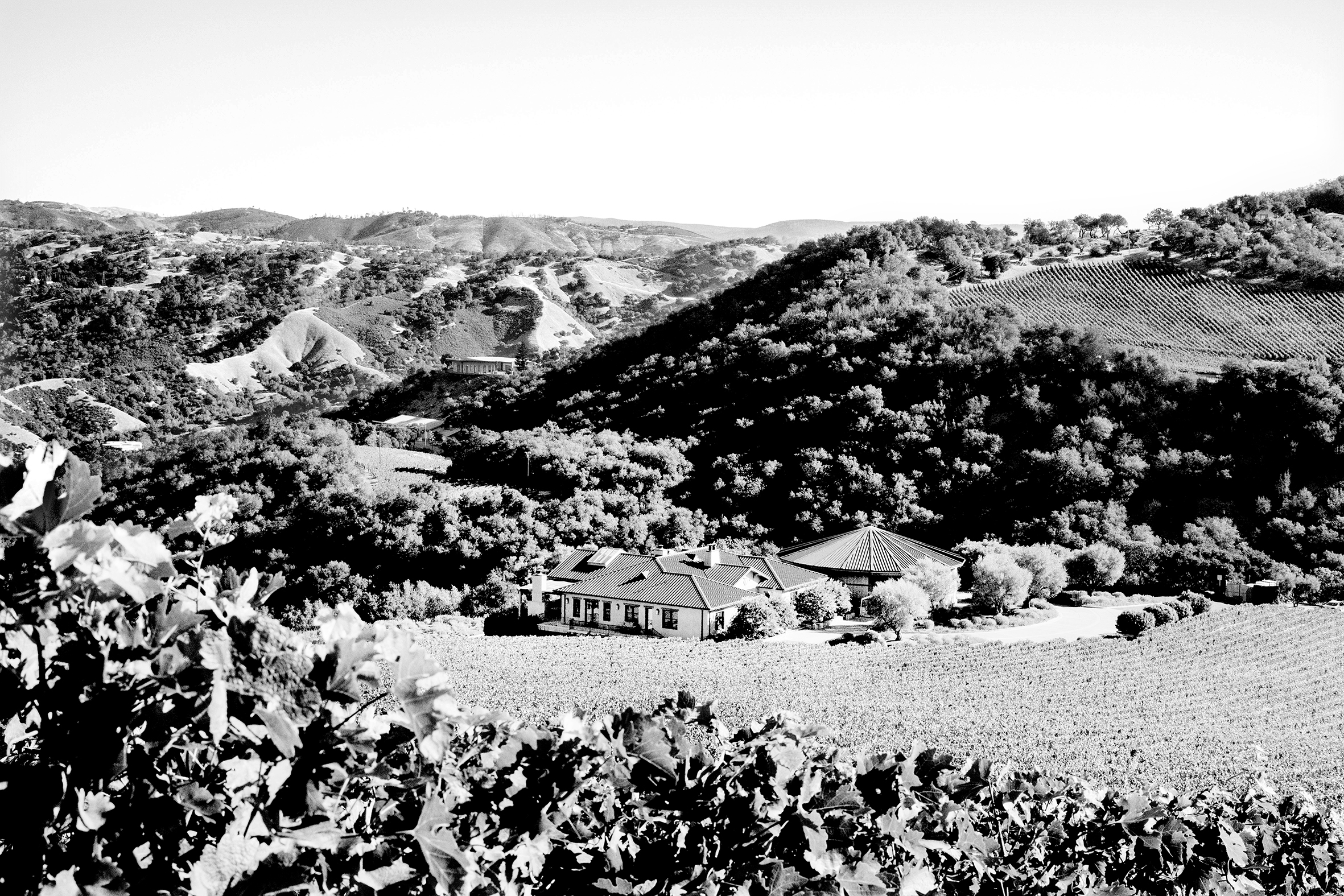
Classic Colgin
“2022 has more story and drama than 2021, but what's on the table is really classic,” said Allison. “Once the 2022 wines were in the bottle, you had a really good idea of what the vintage was. Most of the rain came at the very beginning of winter. The energetic start to the winter brought great energy to the vines. There was a lot of potential for more energy from the beginning.”
As I’ve mentioned in my recent report on the Napa 2022 vintage, the growing season was tracking to be classic and relatively effortless, until the defining heatwave of that year came into view.
“The heatwave was forecasted to be a three-day heatwave, but once it was clear it would be longer, we had to act fast,” Allison said. “I called the picks for Tychson Hill and Cariad that week. We were bringing in the fruit mid-way through the heatwave. Fortunately, the fruit had ripened very quickly through that period. It didn't get as hot up on IX Estate (on Pritchard Hill). It was very consistent here, from block to block. At IX Estate, we picked the Syrah on 11th of September. The Cabernet Sauvignon and Cabernet Franc came in about a week after the heat. Then, a little bit of Cabernet Sauvignon and Petit Verdot were picked after that small rain event. We were all in by September 17th. The fruit up here at IX Estate was in really good condition. Up here, the grapes mature through the night. The days aren’t as hot, but the nights are warmer than the floor. We had just bought more picking boxes and an optical sorter before the harvest in 2022. We also have misters on select blocks.”

I’ve been tasting a lot of later-released 2021s recently, which generally display more substance, brightness, and structure than their 2022 counterparts. Yet, the differences between the vintages are less stark for a few estates. Colgin is one example.
“The 2021 vintage certainly deserves its fair share of discussion, I’m so glad you asked for added insight,” said Allison. “Now that it’s been in bottle for a year and a half, my understanding of the vintage is evolving. Where I usually focus quite a bit on the impact of the winter leading up to the growing season, I’m beginning to feel that it was an important part of the vintage, but less so than the growing season itself. Granted, rainfall was about 60% of normal, which limited the vine growth in the spring and ultimately set the stage for smaller, more concentrated berries, the moderate nature of the spring/summer/fall is something to really be addressed in reflection on this vintage.
According to my notes, during the growing season, we had but two major heat events, one just prior to the summer solstice and one at the beginning of July. At that stage, the heat really just served to taper or halt the growth of the vines and the berry size. Moisture stress at that very moment is also key to the creation of flavor and color precursors. Really, an ideal moment in the season if you were to hope for stress in the vineyard, which was much like how 2024 played out, interestingly.”
As for sunshine hours and warmth, 2021 was Napa business as usual, with a welcomed heat boost toward the end.
“The summer of 2021 was very classic weather,”” continued Allison. “We had a streak of repeated trends of fog in the morning and heat in the afternoon. That being said, with early moisture stress, the rate of sugar accumulation was really rapid, and phenolic maturity was not far behind. I noticed flavor and color peaking and was surprised as its timing was far earlier than I had predicted. As a result, we were already picking Cabernet Sauvignon in St. Helena on September 11th. At the IX Estate, we began on September 9th with Merlot, followed by Syrah on September 16th. Cabernet Sauvignon and Franc were hastened by a mini heat wave in the second half of September, which pushed everything along enough that we wrapped up most of our picking by the end of September that year. The fruit was loaded with flavor, and extraction was fairly easy. Due to the small berry size, I tended to minimize the intensity of extraction and shorten the time on skins. I didn’t want to concentrate the seed tannin. I preferred instead to retain freshness and ensure the structure was harmonious.”
Indeed, 2021 was a classic great Napa vintage, and Colgin’s lineup this vintage is right up there with the best vintages ever made.


Meanwhile, the recent development of the new vineyard section on the east side of Colgin IX Estate has started to bear fruit.
“Developing the new 11 acres on the east side was part of our original plan,” Ann Colgin pointed out.
Allison shared a Chronology of the Past 25 Years at IX Estate:
1998: Colgin receives permits to plant east and west areas of the parcel
1999: Colgin develops the western acreage and prepares it for planting
2000: IX Estate is planted
2002: The winery at IX Estate is complete, and the first vintage of IX Estate is crafted
2013: Weather stations installed on the rugged east side of the property
2016: Analysis of 3 years of weather data sparks excitement and green lights the exploration of soils on the east side, confirming it mirrors the west side and has excellent potential
2019: Colgin begins vineyard development of the east side
2021: First phase of the east side planted to Cabernet Sauvignon, Cabernet Franc, and Syrah
2023: First crop harvested at the east, very low-yielding crop from just young vines with spur positions
2024: First vintage of legitimate fruit from east side vines, which now have canes supporting their fruiting positions
Of course, upon hearing that the first fruit was harvested from the east side development, I had to ask: What are the wines from the new plantings like?
“Although I can give you an idea of the timeline that’s gotten us to this point, as far as inferring what the site and the wines will bring, I feel the need to let that process unfold organically, without any pressure on predicting their identity,” Allison said. “To be honest, I’m over the moon with the wines from the east side in 2024, our first legitimate crop. These wines have so much flavor, character, and charisma, it’s incredibly gratifying to see the fruits of our labor at such an early stage. Yet, I still need some time to figure out how to best craft them into a blend. Ann and Joe are particularly amazing in that they’ve provided loads of creative freedom. Taking advantage of that freedom feels most appropriate. By deciding their future bottling now, it feels akin to picking what college my child should go to when they’re just a toddler. If parenting has taught me anything, it’s that I know nothing until I have some hindsight on the situation!”
Although I know Colgin fans are anxious to know what IX Estate’s “east side” has in store, Allison’s point is fair. I agreed to meet with her again at the estate this spring to talk more about the elements that make the terroir unique and what she, Ann, and Joe are learning so far about the intellectual contrast of the east vs. the west side of IX Estate.
-
Article & Reviews by Lisa Perrotti-Brown MW
Photography by Johan Berglund

PRODUCERS IN THIS ARTICLE
> Show all wines sorted by scoreMore articles

Château Jean Faure 2004-2023
10th Jul 2026
10 tasting notes
Bordeaux 2025 En Primeur
07th May 2026
382 tasting notes
Château Vieux Taillefer 2013 - 2025
26th Mar 2026
13 tasting notes

Château Ducru-Beaucaillou 1904-2017
12th Mar 2026
34 tasting notes
Show all articles