01st Aug 2024
In 1961, Joe Heitz and his wife Alice purchased a small winery and vineyard in St. Helena and established their Heitz label. A protégé of André Tchelistcheff, Joe Heitz became one of Napa Valley’s most legendary figures, helping to build the region’s reputation today. He was the first to put the name of a single vineyard on a label of a Napa Valley wine—1966 Heitz Martha’s Vineyard. Today, vintages of the wines he crafted are among the world’s most sought-after collectibles. In 2018, the Heitz family sold Heitz Cellar to agricultural magnate Gaylon Lawrence. This would be the first in a series of historic winery purchases by the Lawrence family, reviving struggling family estates and ushering in a new era of family farming.
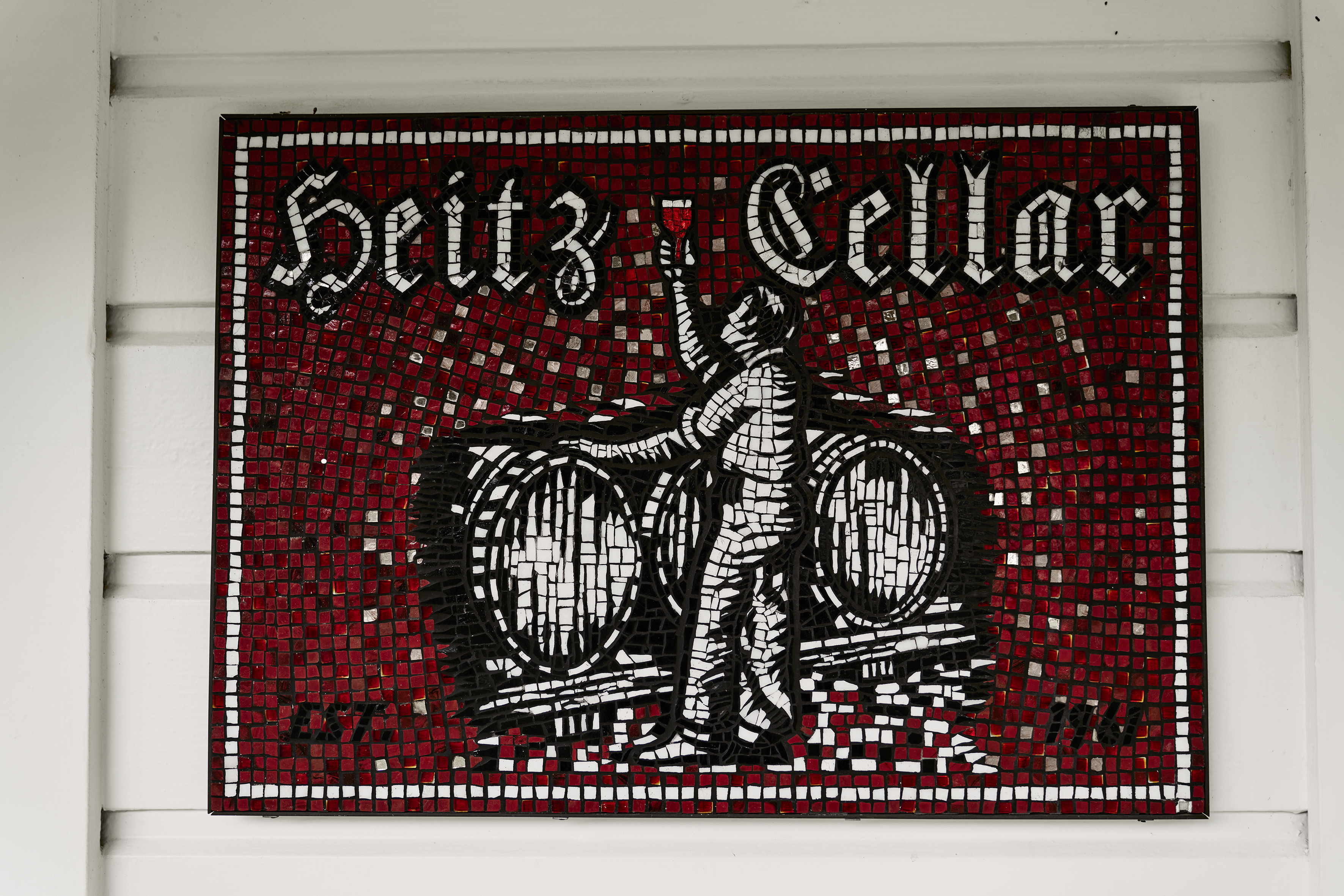
Farmer to Farmer
Joe Heitz grew up on a farm in Illinois. After being stationed with the Army Air Corps near Fresno, California, in the early 1940s, working in his spare time in local wineries, he decided to stay in California. He studied enology and viticulture at U.C. Davis, was one of the early recipients of a master’s degree from there, and then spent the next few years working in various wine-related roles, including a stint at Gallo and as a professor of enology at California State University, Fresno. For the better part of a decade, he worked at Beaulieu Vineyards in Napa Valley as André Tchelistcheff’s assistant winemaker.
Eventually, Joe and Alice Heitz scraped enough money together to purchase the "Only One" vineyard just south of St. Helena, which included a very small, basic winery set-up. The vineyard was a little over eight acres and mostly planted to Grignolino. From these humble beginnings, Heitz Wine Cellars was born in 1961.
In the early years, much of Heitz Wine Cellars’ production came from forging relationships with growers and buying fruit. One such grower was Tom May, who had recently purchased a vineyard from Bernard and Belle Rhodes. Tom’s site was located to the south of Oakville, across from the UC Davis experimental vineyard, nestled in the foothills of the Mayacamas mountain range. (Roughly between To Kalon Vineyard and what would become Harlan Estate.) Twelve acres of Cabernet Sauvignon and fourteen acres of Riesling had been planted by Bernard Rhodes in 1959, purportedly using budwood from the UC Davis vines. The vineyard was bordered by eucalyptus trees, which has long been debated as the source of Cabernet’s distinctive minty character. Tom also bought the land next door and increased the Cabernet Sauvignon plantings, naming the combined vineyard after his wife, Martha.
Joe Heitz made an exclusive deal with Tom May to buy his Martha’s Vineyard Cabernet Sauvignon, starting with the 1965 vintage. The 1965 fruit was blended into Heitz’s “regular” label. In 1966, the quality and singularity of Martha’s Vineyard inspired Joe to do a separate bottling with the vineyard name on the label—the first Napa Valley vineyard designate.
There is a wonderful account by British wine merchant and writer Harry Waugh of his visit to “Heitz Wine Cellars” in February 1970 in his book, “Diary of a Winetaster,” published in 1972. Harry and Joe are joined by Bernard and Belle Rhodes to taste verticals of 1966-1969 Pinot Chardonnay (Chardonnay) and his two Cabernet Sauvignons at the time, the “regular” and the Martha’s Vineyard. The Martha’s Vineyard is clearly the winner over the regular bottling in Harry’s eyes. He concludes: “It is sad that there are only twelve acres of this outstanding vineyard.”
As for obtaining bottles of Heitz’s wine, Harry Waugh bemoans:
“If a merchant wishes to obtain any stock at all of these rare birds, it is necessary for him to join what I call the Joe Heitz Club! In fact, as with any good club, one has to get on what is virtually a waiting list! A fortnight before, when I was in Washington. D.C., Marvin Stirman, of the Calvert Wine Shop, told me he had received his ‘membership’ allocation, which, in his case, amounted to only five dozen! There is not much a successful business one can do with five cases, but no doubt there are some deserving throats around!”
Thus, in the case of mailing lists, too, Joe and Alice Heitz were ahead of their time. In Charles L. Sullivan’s book "Napa Wine, A History," there is a very telling photo of the early demand for Heitz wines, featuring a sea of people gathered outside the winery, captioned: "Wine lovers line up at the Heitz Cellar tasting room to buy their allocation of 1985 Martha’s Vineyard Cabernet Sauvignon."
The Heitzs’ success led to impressive expansion. In 1964, Joe Heitz purchased the former Spring Valley Ranch property at the end of Taplin Road, including a good-sized winery built in 1868, which was completely refitted by the Heitzs. This came with 160 acres of land. Another major land purchase occurred in 1989 when Joe bought 200 hundred acres on Howell Mountain’s Ink Grade. By the time of his death in 2000, at the age of 81, Heitz Cellar was one of the largest landowners in Napa Valley, with more than 400 acres under vine. Much of this fruit was sold to other wineries, yet by 2018, production was at the high end for Napa Valley at around 50,000 cases per year, overseen by Joe’s and Alice’s children, Kathleen Heitz-Meyers (CEO) and David Heitz (winemaker).
Family owned and farmed since 1961, in April 2018, Heitz Cellar was sold to another farming family—the Lawrences from Memphis, Tennessee.
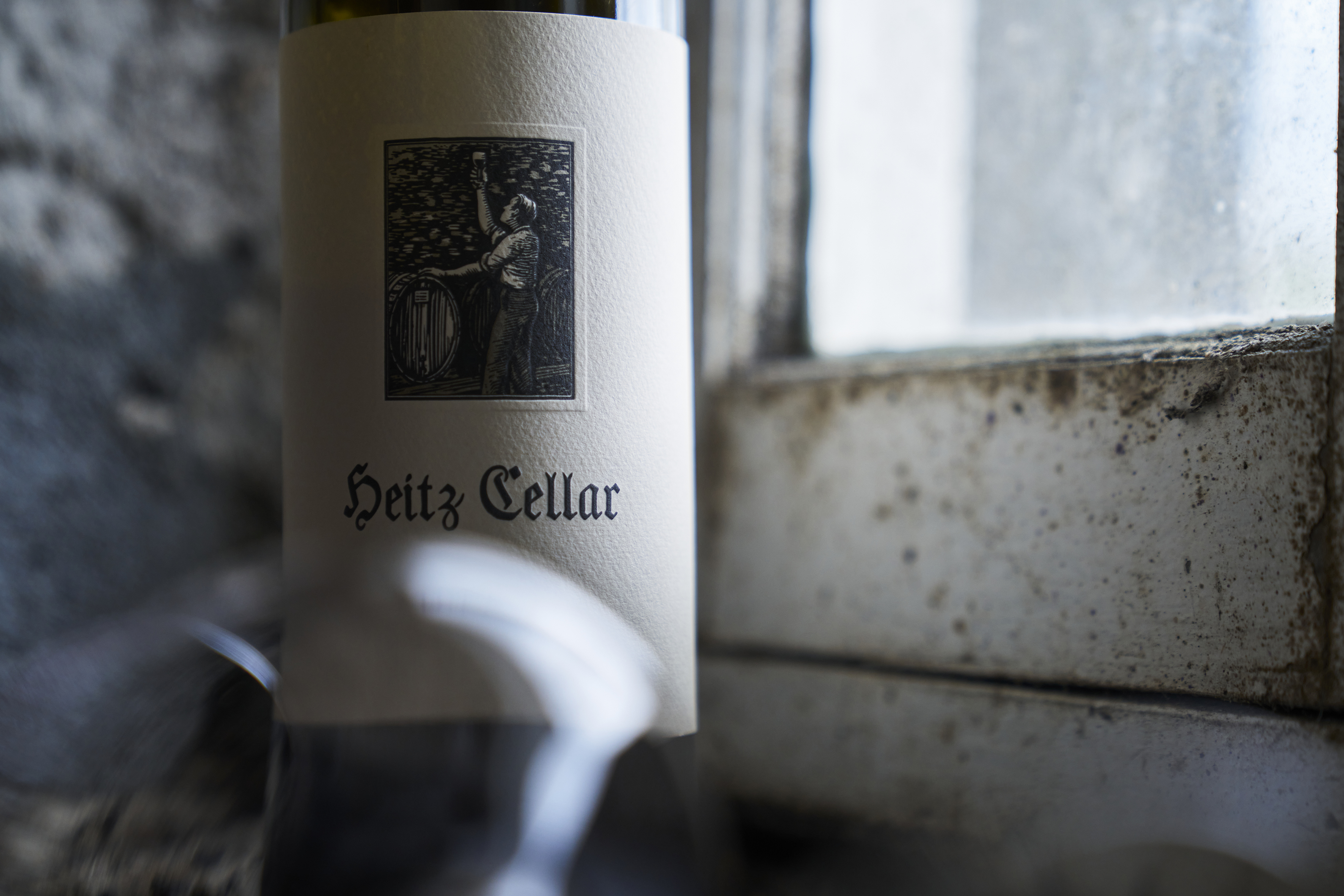
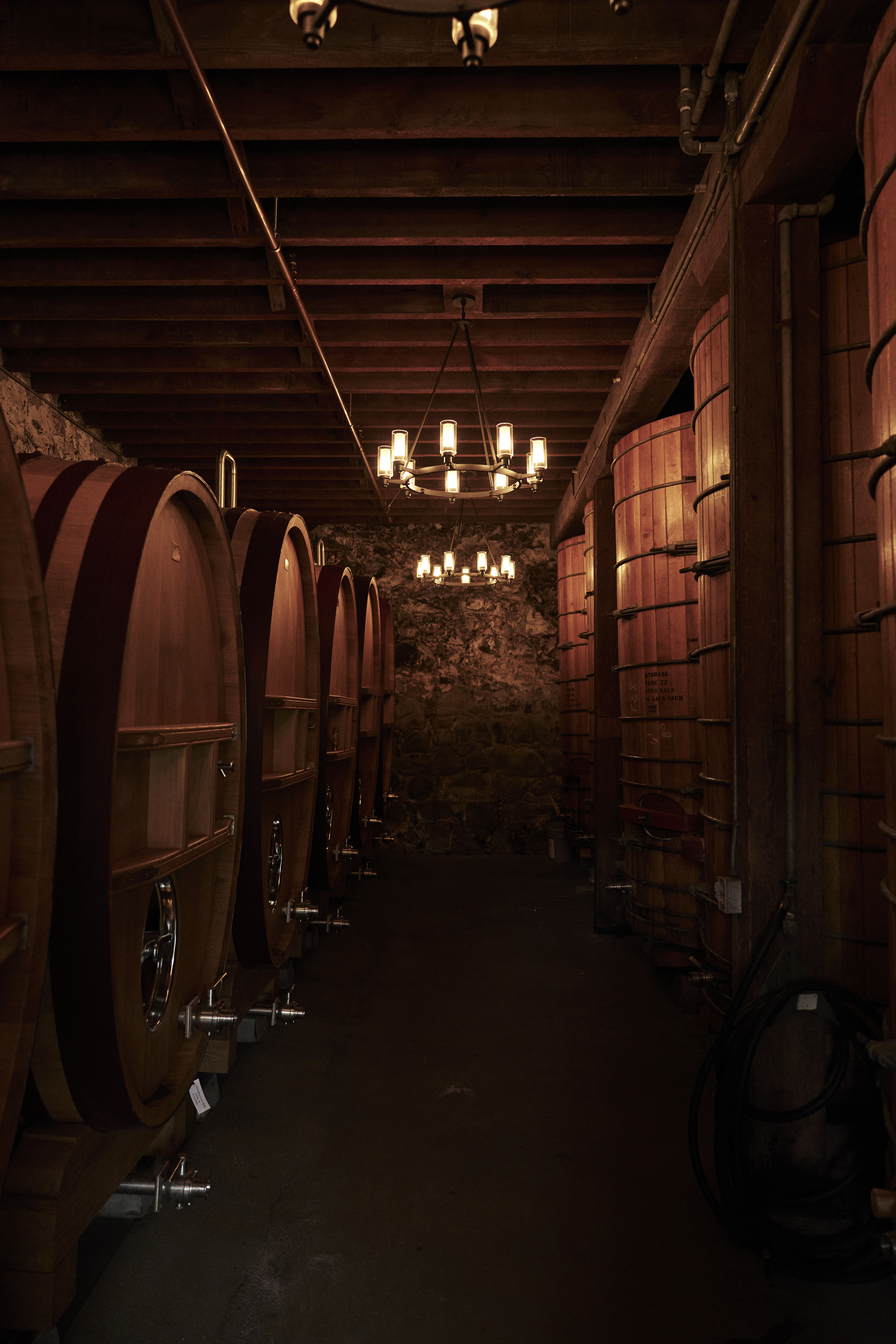
Headed by Gaylon Lawrence, the Lawrence family owns farmland in Missouri, Illinois, Mississippi, Arkansas, and Florida.
“I grew up in agriculture, and it’s been the foundation of my family for generations,” Gaylon explained.
Gaylon developed an interest in wine, and when his daughter, Westin, moved to Napa, he saw a synergy.
“Family has always been my top priority,” he said. “When my daughter moved to St. Helena, I began searching for a vineyard and winery to purchase to bring us closer together in her new home. We were excited when Heitz came to us. I have always loved heritage wines, so this was a dream. After partnering with Carlton McCoy, we both decided that we wanted to focus on these older estates that we loved.”
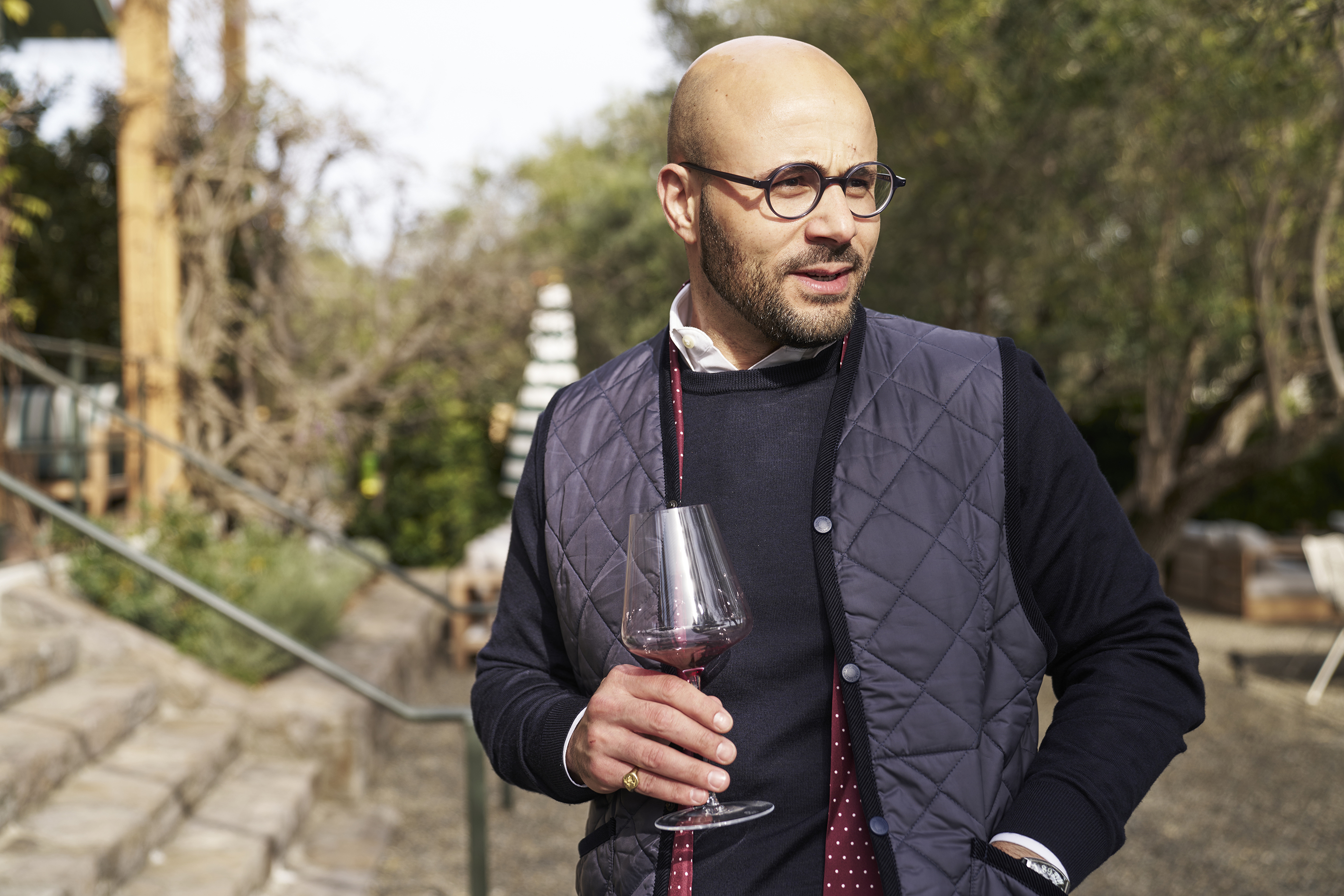
Master Sommelier Carlton McCoy is relatively new to Napa Valley but not the USA food and wine scene. I recently spent a day with Carlton, touring the Lawrence family’s collection of wineries—Heitz, Haynes Vineyard, Stony Hill, Ink Grade, and Burgess Cellars—all of which Carlton now oversees as CEO and managing partner.
“My journey in wine actually began in the kitchen,” Carlton said. “I was introduced to wine at Culinary School and was a chef for a while before I went full-in on wine. While working in the dining room at Per Se, I began sitting in on wine classes and studying deeply. I moved to D.C. to work with Eric Zeibold and took my wine studies to the next level through the Court of Master Sommeliers and became a full-time sommelier.
Before he moved to Napa in 2019, Carlton lived in Aspen, Colorado, and worked as the wine director at The Little Nell, one of Aspen’s most exclusive luxury ski resorts, which boasts an impressive wine cellar. Meeting Gaylon there was kismet.
“We met in Aspen,” recalled Carlton. “He was in town and visited The Little Nell. We hit it off and drank many great bottles together that night. We kept in touch, and he would occasionally call for advice as he was exploring opportunities in Napa.”
In fact, when he found out Heitz was for sale, Carlton was one of the first people Gaylon called.
“Gaylon called me when he was offered Heitz Cellar,” Carton said. “I flew to his home, and we spent a few days discussing the potential of Heitz and what it would take to return to its former glory. This gave Gaylon the confidence to move forward, and I joined him shortly after the acquisition, as I needed to plan the transition at The Little Nell.”
Carlton became the CEO of Heitz Cellar in December 2018. I asked him what it was about Heitz that compelled him to recommend the purchase to Gaylon and make such a big life change.
“The wines,” he said. “For me, it was always about the wines. Through the modern era, Joe and his family never swayed from what they believed. They never changed to appease critics. They understood that these beautifully elegant, aromatic wines that they crafted would cellar gracefully and continue to gain complexity in the cellar. I loved that about the estate and feel honored to continue that legacy. I felt strongly that Heitz deserved to be on a pedestal and counted amongst the greatest estates in the world. It deserved investment, the same investment that is often reserved for new flashy startups. I deserved our full attention.”
One of the major changes since the Lawrence family and Carlton McCoy took over Heitz was tightening the portfolio and reducing production.
“When we purchased Heitz, the portfolio of wines had really grown as did the volume,” Carlton pointed out. “I made the decision that we would return to producing the wines that were always great, not just good. When I arrived, Heitz was producing over 50,000 cases. We immediately cut the production in half and refocused the energy on wines that could age gracefully for decades. That’s what Heitz is.”
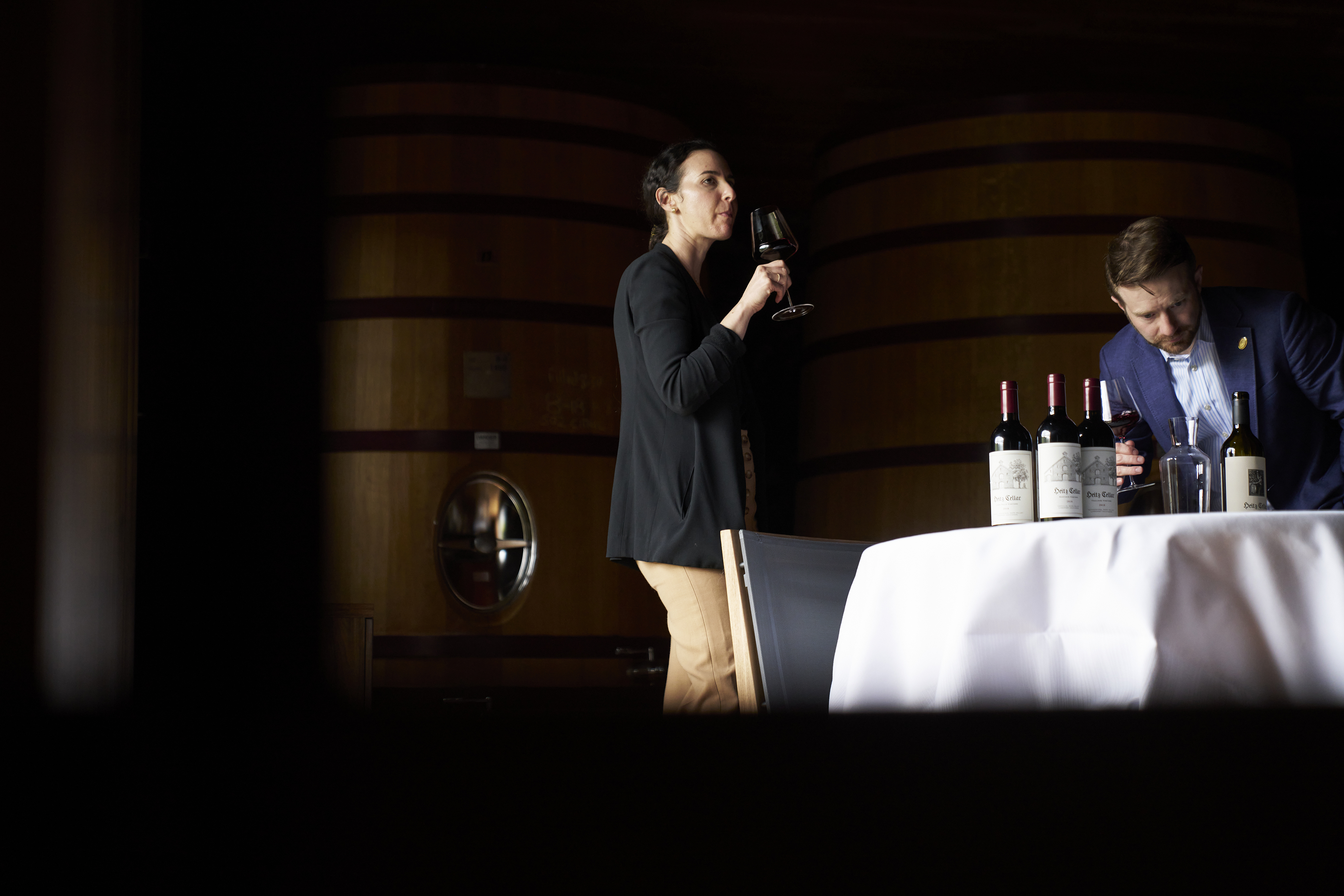
I tasted the line-up of current releases with Carlton and winemaker Brittany Sherwood, who has been with Heitz since 2012.
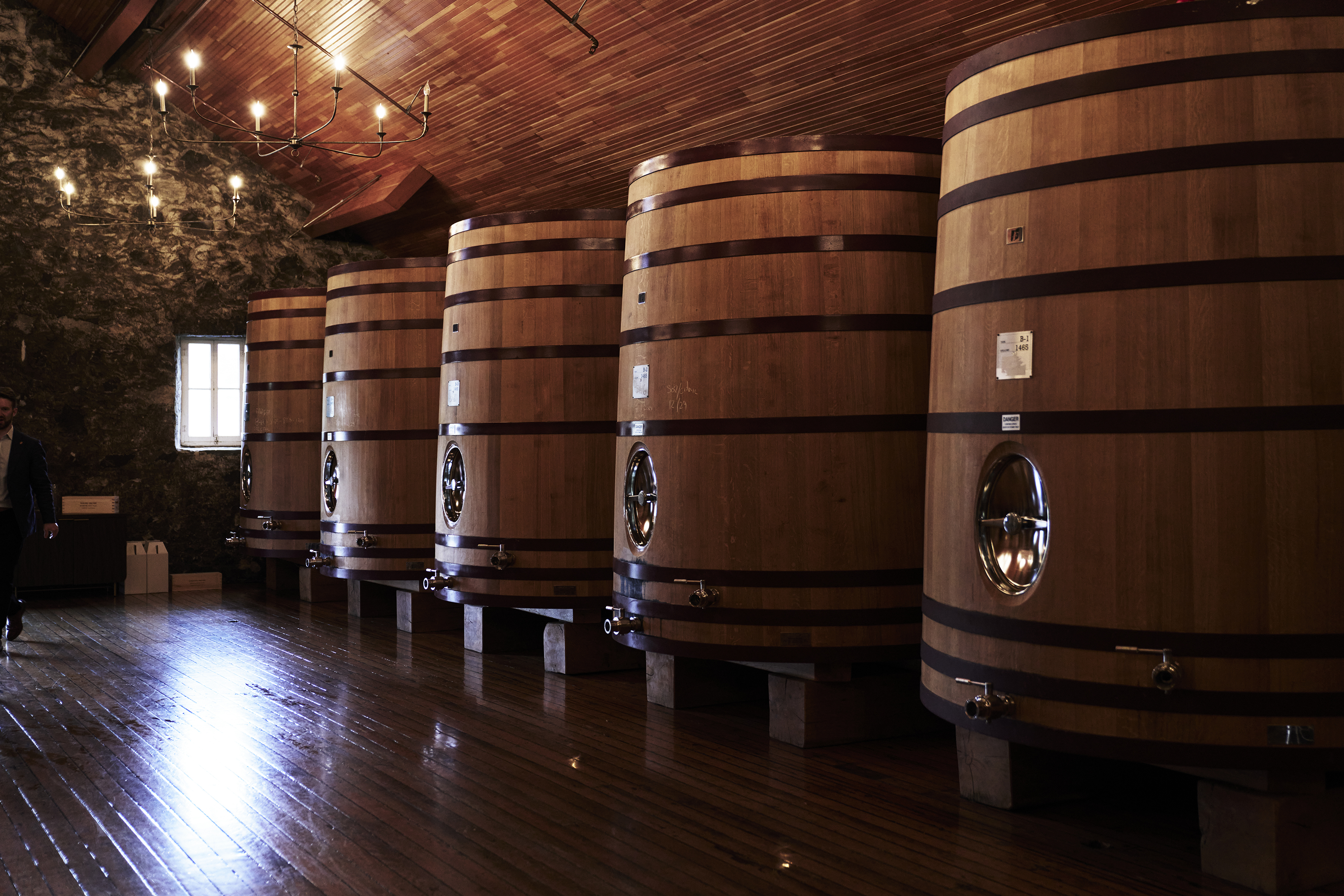
“The change for me was a renewed focus on who we are and where we have been,” Brittany said. “I was here before and after the sale. I’m relieved that we've reduced the production at Heitz. We now sell about 60-70% of the fruit we grow, and we allow our buyers to use Trailside Vineyard and Ink Grade Vineyard on their labels. There have also been improvements in the winery. We are reevaluating the use of new oak. In 2020, we purchased more large, upright oak casks for aging, so we now have eighteen of these.”
As for their iconic Martha’s Vineyard label, Heitz’s agreement with the May family to purchase fruit remains. The 2018 Heitz Martha’s Vineyard I tasted with Carlton and Brittany maintains its classic DNA of a structured, elegant style, albeit with the intensity and purity dialed up. And it still has that distinctive minty character.
So, I had to ask about the eucalyptus trees: Are they still there?
“Yes,” Brittany smiled knowingly. “Martha's Vineyard still has the giant eucalyptus trees.”
As it should.
This Heitz Cellar article is the first in a series of Lawrence Wine Estates articles to come, which will include features on: Haynes Vineyard, Stony Hill, Ink Grade, Burgess Cellars, and Château Lascombes.
–
Article, Reviews and Photography by Chris Kissack

PRODUCERS IN THIS ARTICLE
> Show all wines sorted by scoreMore articles
Château Le Dôme 1997-2022
10th Sep 2026
9 tasting notes

Bordeaux 2024 Revisited
03rd Sep 2026
69 tasting notes
Château Jean Faure 2004-2023
10th Jul 2026
10 tasting notes
Bordeaux 2025 En Primeur
07th May 2026
382 tasting notes
Show all articles