17th Apr 2025
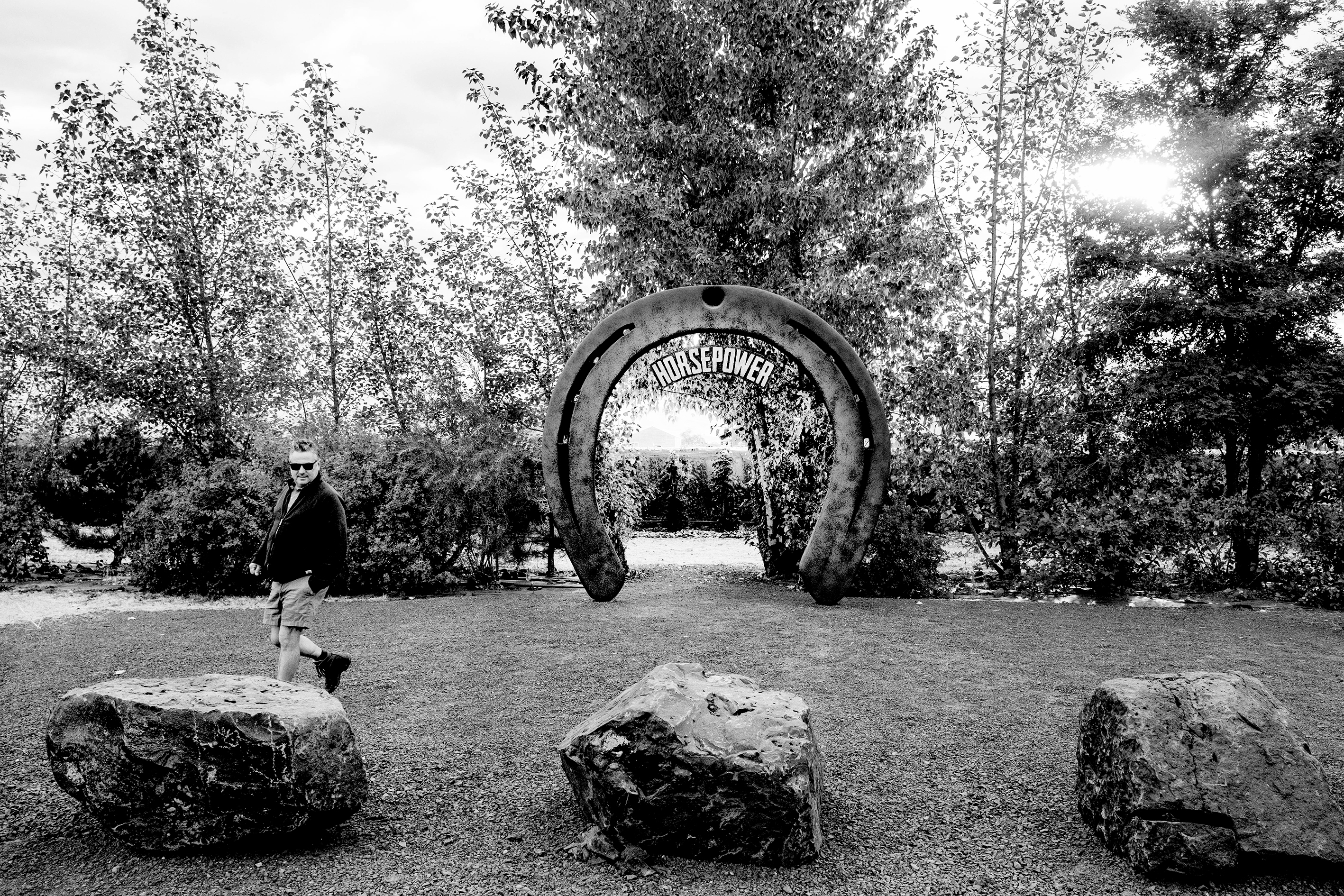
In our modern, technology-driven world that’s increasingly intent on not looking back to where we’ve come from, it’s refreshing to find a wine project that embraces history. Visiting Horsepower on the Oregon side of Walla Walla is like stepping into a land that time forgot. At the core of this project are Leopold, Red, Bijou, and Fuego, four draft workhorses. The vineyards dedicated to this label are entirely cultivated by these magnificent animals—living engines driving the wines of Horsepower.
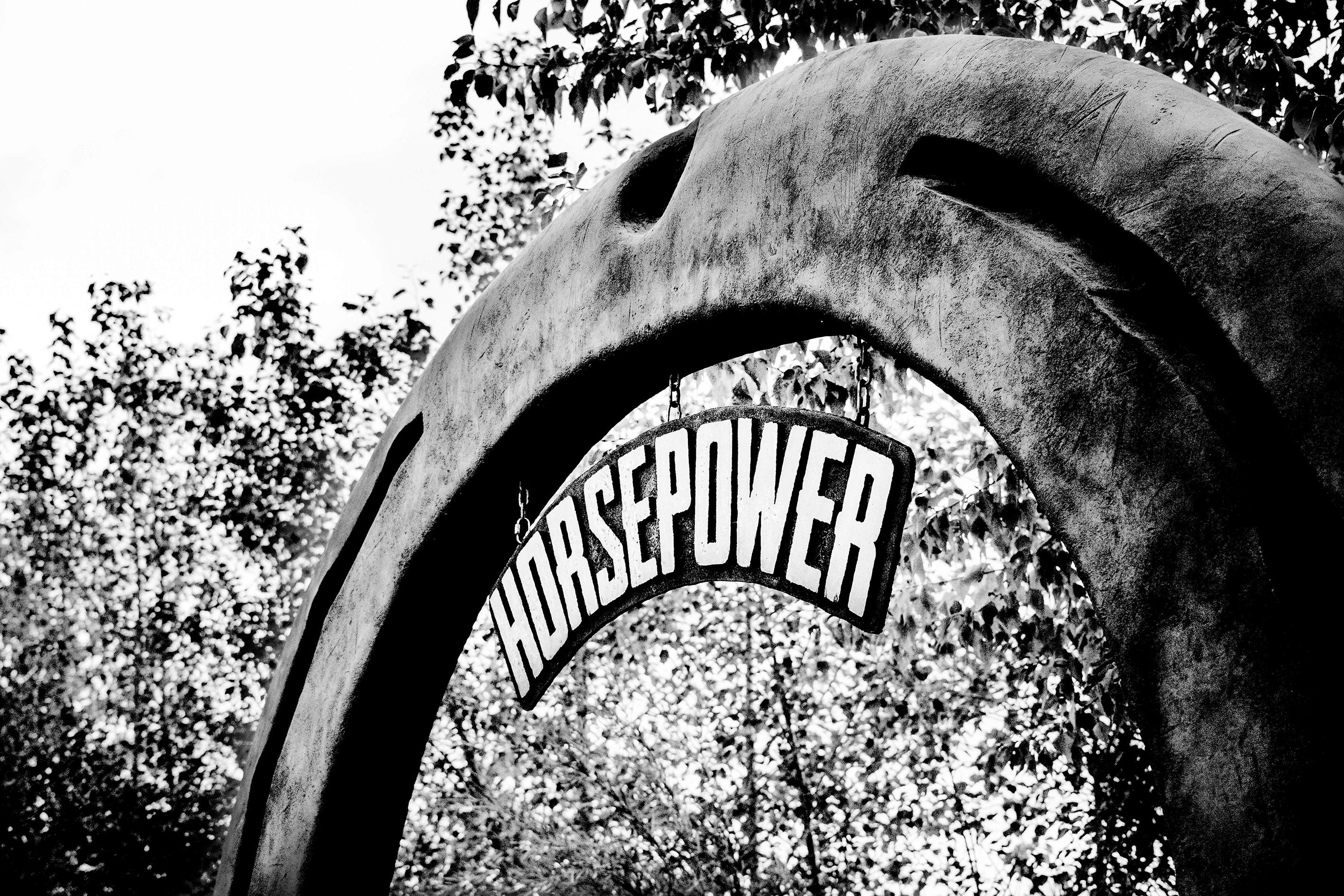
Life-Driven
“My grandfather was my inspiration for Horsepower,” says owner Christophe Baron. “Like all the vignerons back in those days, there were no tractors. Until 1956, my grandfather farmed only with draft horses.”
Christophe Baron is perhaps best known as Walla Walla’s OG Rhône Ranger.
He launched his Cayuse label in 1997, and it has since become one of America’s most sought-after labels, specializing in Syrahs and Grenaches with jaw-dropping perfume and finesse. His iconoclastic Bionic Frog Syrah label is a cult classic, for want of a better term. Yet he was born and raised in Champagne, where his family has been growing grapes for generations.
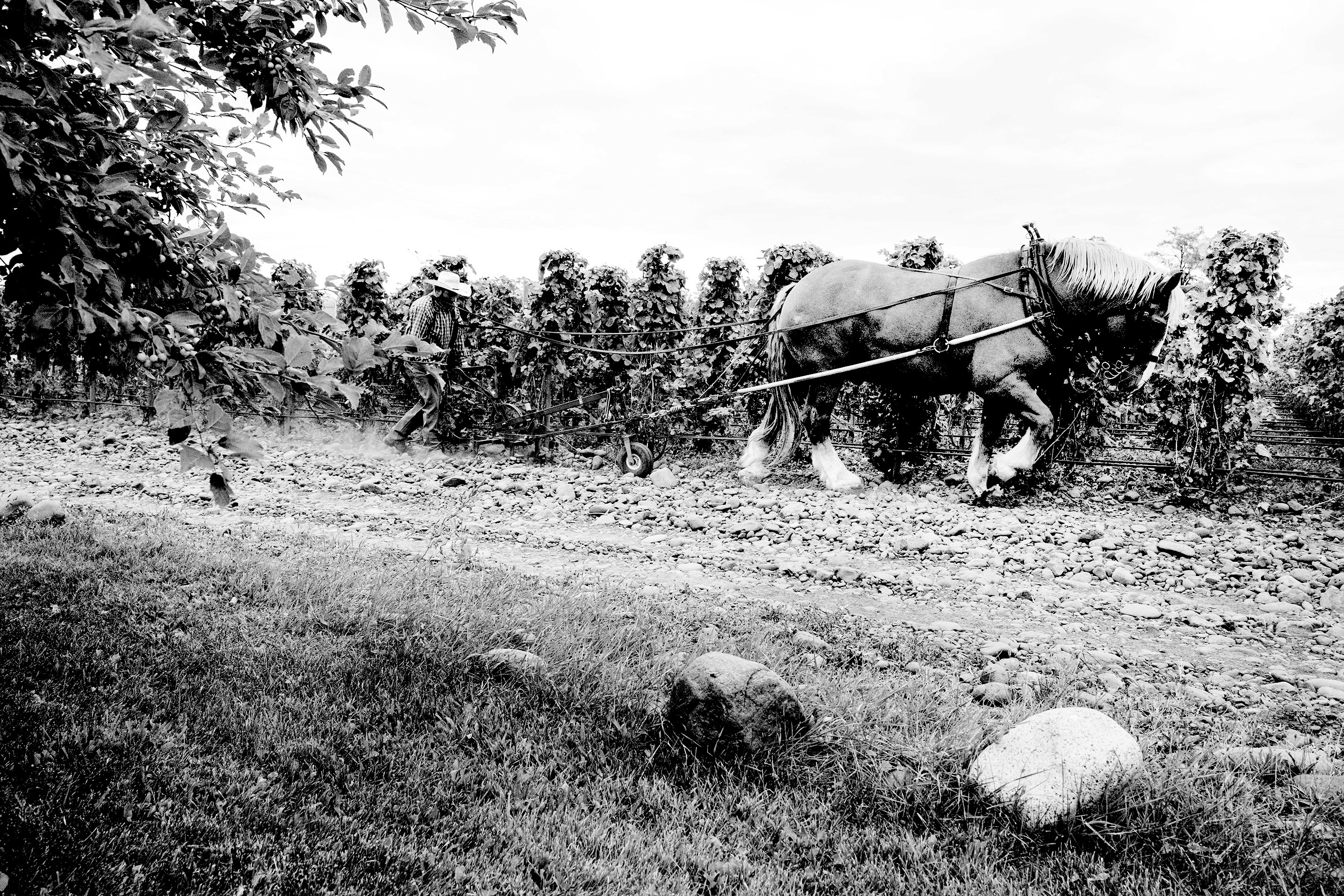
In 2002, Christophe was the first wine producer in Walla Walla to pioneer biodynamic vineyard management. A few years later, he planted vineyards specifically for farming by horse and plow. This meant he could plant vines far closer together than vineyards farmed by tractors, which require wider spacing due to their size. The first vineyard, Sur Echalas Vineyard, has three-foot by three-foot spacing, equating to 4,840 vines per acre. This two-acre vineyard of Syrah and Grenache has the highest density planting in the Walla Walla Valley and is one of the highest in North America. Similarly dense vine plantings are a requirement in the highest-quality regions of Europe, including Grand Cru Burgundy vineyards. It creates competition between vines for nutrients and water, forcing the roots to search deep in the soil, resulting in more intense flavors in the berries.
"We noticed that as we were planting vines closer and closer, we got more structure in the wines" says Christophe, referring to the improved levels of tannins and acidity.
In total, there are around ten acres of Syrah, Grenache, and a little Tempranillo planted across four vineyard locations contributing to the wines of Horsepower. The vines are planted in the traditional “sur echalas” method, meaning there are no trellises or wires, just a wooden pole to support each vine. The most significant benefit of planting sur echalas is, according to Christophe, aeration.
“With this planting method, we have aeration all around the vines,” he explains. “Air movement like this means that disease pressure is minimized. The poles are 5’ 6” tall because that is my height. I had my vineyard manager cut all the poles to my height. Another benefit is the shade; all the fruit is protected from extreme sun exposure and sunburn. This helps to obtain ripeness at lower sugar levels. The fruit ripens later—seven to ten days later. This is more time for the stems to lignify, and you can do more whole cluster. We perform fermentations for both the Syrah and the Grenache with a lot of whole clusters and very little or no new oak. Horsepower is all about tradition.”
Typical yields are only around 20-25 hectoliters per hectare (2 tons per acre)—smaller than most Grand Cru Burgundy.
“You have to leave 3-5 clusters per vine only,” says Christophe. “Which is less than what we do for Cayuse. It takes 5-7 plants to produce a bottle of wine. There’s a reason why these wines are more terroir-driven!”
And how are horses better than tractors?
“Leopold, Red, Bijou, and Fuego, these animals on the property, it’s a feeling that radiates to the team,” says Christophe. “It’s so peaceful working with the horses. A horse can feel that something is snagged on a vine, and it will stop. A tractor would not, and it would destroy the vine. Horse hooves are better for the soil than tractor wheels; they do not compact the soil.”
I asked Christophe about the style of Horsepower and what differences he sees compared to the wines of Cayuse.
“These wines are very savory and minerally,” he says. “They’re all about undergrowth and mushrooms, yet still have nice pure fruit. But it’s also the sensations of salinity and tension, those fine-grained tannins. Horsepower is very wavy.”
I like his term “wavy,” which sounds odd until you taste the wines. These are wines with movement and energy—life-driven in every sense.
-
Article & Reviews by Lisa Perrotti-Brown MW
Photography by Johan Berglund

PRODUCERS IN THIS ARTICLE
> Show all wines sorted by scoreMore articles
Château Jean Faure 2004-2023
10th Jul 2026
10 tasting notes
Bordeaux 2025 En Primeur
07th May 2026
382 tasting notes
Château Vieux Taillefer 2013 - 2025
26th Mar 2026
13 tasting notes

Château Ducru-Beaucaillou 1904-2017
12th Mar 2026
34 tasting notes
Show all articles