22nd Nov 2026
A porcelain family from Limoges. A cellar with almost no back vintages. A frost that took 97% of the son's first harvest. And a question the house no longer wants to answer: how much new oak?
Every year, says Caroline Decoster, a wine estate releases an album. So let's play this one from the first crackle.
The Flip Side
Before the Needle Drops
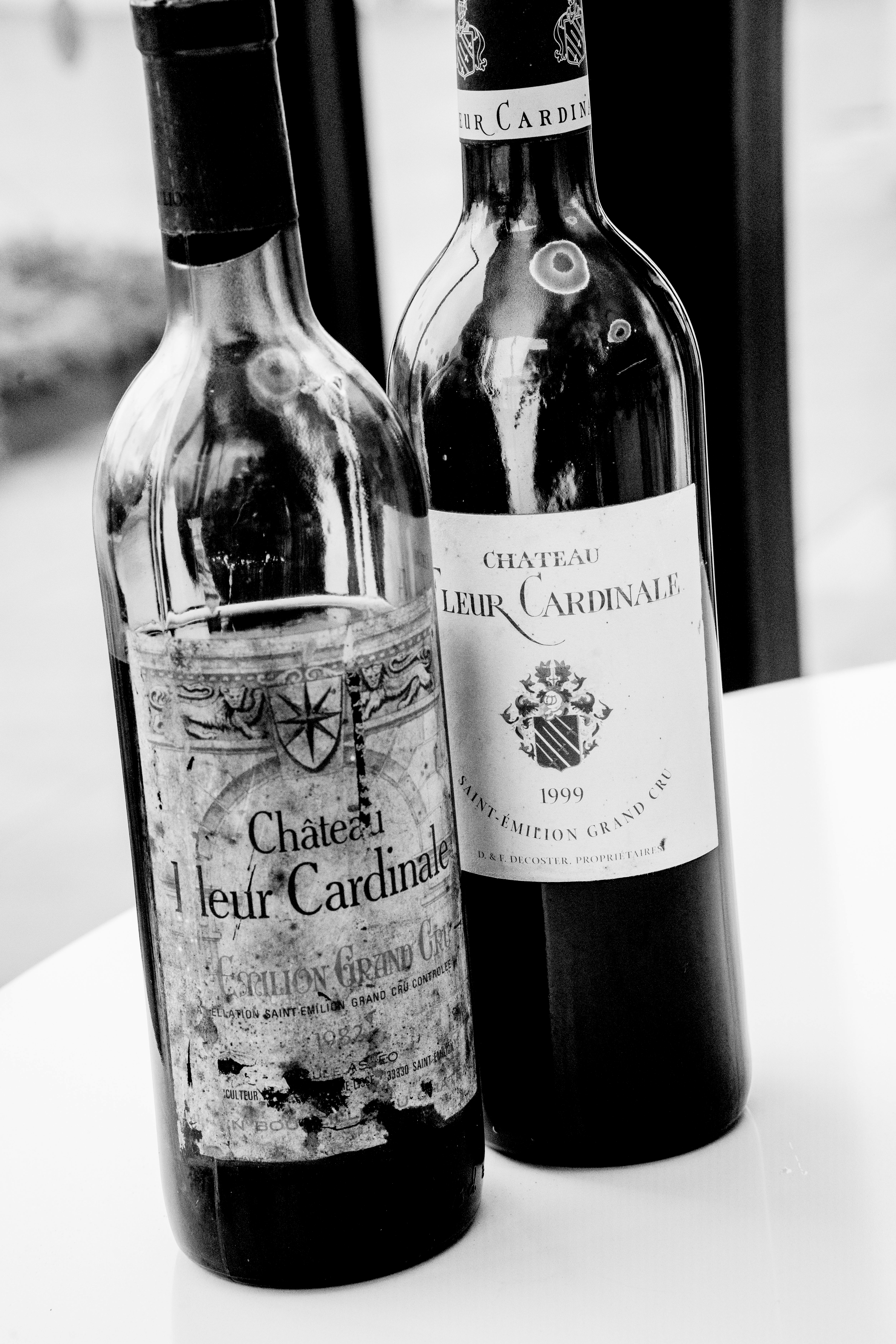
I arrived at the estate with a bottle older than the family's whole history there: a 1982 Fleur Cardinale, bought at auction. Even its label was a small surprise to Caroline. The few 1982s left at the château were dressed later in the label of the 1990s, with the vintage written in by hand. Mine had kept the one it was born with.
Beyond the label, Caroline knows almost nothing about this wine. She went looking in the records and came back without even a harvest date. "The sad thing is that I can't say anything about this vintage."
The label says Saint-Émilion Grand Cru, with no "Classé" yet, and names Claude Asseo, viticulteur at Saint-Étienne-de-Lisse. 1982 is the oldest vintage the family holds. When the estate stopped selling its wine in bulk and began bottling it, nobody there can say exactly. Even the name is fairly young: the estate was once Clos Bel-Air, and became Fleur Cardinale only in the 1970s, apparently in honour of two racehorses.
The land is older. Caroline begins her story with the Napoleonic land survey of 1819, where some plots appear in exactly the shape they have today.
The Asseos, whose son Stephan would go on to found L'Aventure in Paso Robles, looked after the vineyard well until 2001. What they didn't leave behind was a library. People still write in to ask how their 1976 is drinking. Caroline has never tasted it.
"So open it and write to us and tell us."
Side A:
Dominique & Florence,
2001–2016
A1. Plates to Bottles
Dominique Decoster had owned Haviland, the Limoges porcelain house. After selling it, he found retirement hard, and it was his wife Florence who suggested wine. The family, as Caroline puts it, simply changed what they put on the table: first plates, then bottles.
In 2001 they bought some 18 hectares on the eastern edge of Saint-Émilion. It was meant to last a few years. Then Jean-Luc Thunevin of Valandraud, who had nearly bought the estate himself, became their adviser. His first piece of advice was to tear down the old winery and build a new one.
A family trying wine for a few years does not knock down the winery.
The first vintage in the new building, 2002, nearly ended the experiment. Florence went out to pick, and one evening fell asleep so exhausted that she woke still in her work clothes.
I have confessed before to a weakness for Bordeaux's outsiders. In Limoges, the Decoster name meant something. Here, says Caroline, "nobody knows you." They started from zero, with enthusiasm and rigour, and she believes it was contagious: it is why she and Ludovic are here today.
A2. Beanies and Scarves
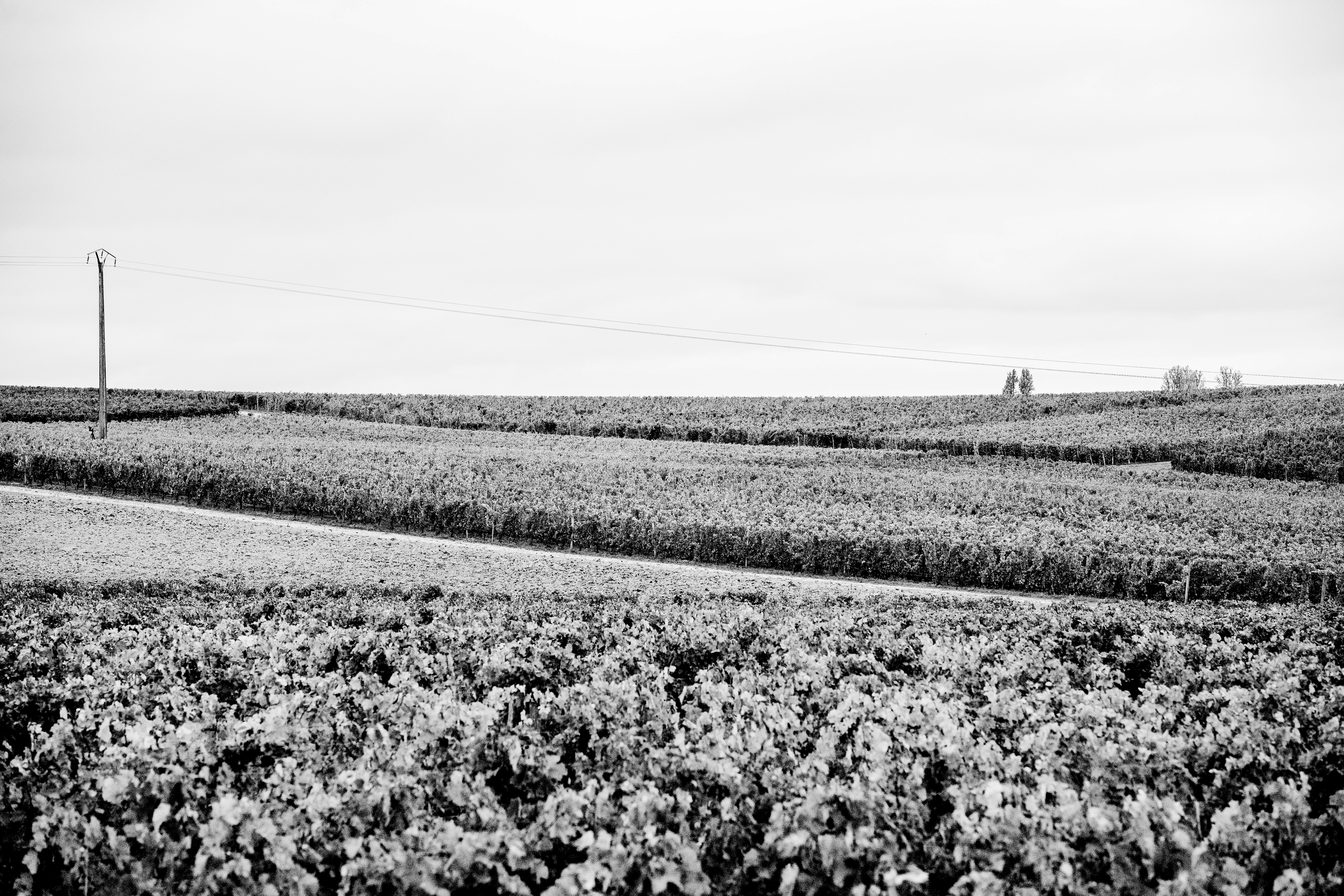
Fleur Cardinale sits at the cool end of the appellation, on a north-facing limestone slope surrounded by forest. Twenty years ago, that freshness was a commercial problem. The Cabernets took forever, harvests ran late into October, and the pickers worked in beanies and scarves. The trade assumed the family was picking late on purpose.
"It was just that if we harvested before, it wasn't ripe, in fact."
The climate has since turned the argument around. In hot, dry summers, earlier sites shut down while these vines keep going. The estate once accused of picking too late now sometimes finds itself ahead.
In 2006, five years after Limoges, Fleur Cardinale became a Grand Cru Classé, the first in this corner of the appellation, as Caroline tells it. She is quick to share the credit. The tasting looked back at vintages the family had barely touched: "We benefited from their work to make the estate shine."
A3. Featuring
In 2011 a neighbour came up for sale: Château Croix Cardinale, eight hectares on the same north slope, its plots woven between Fleur's. Dominique bought it with a long game in mind. One day, he thought, a classification would let those vines join Fleur Cardinale.
In 2012 it seemed too early to ask for everything, so the family asked for half. It was accepted. The other half carried on as Château Croix Cardinale, a Merlot-dominant wine with a yellow label and a red cross.
The rest had to wait. Between classifications everything froze, and the last plots joined Fleur only with the 2022 classification. By then the family owned a name the trade still remembered, and no vineyard to put it on.
That story continues on the other side of the record.
A4. One Song
Those years had one formula: one wine, around 70% Merlot, 100% new oak. And it worked. The technical manager of the time, Caroline says warmly, had a gift: you couldn't feel the oak.
Years ago, at a tasting in Belgium, a man told her he had stopped drinking Bordeaux. She poured him the 2009 anyway. He loved it, then explained what he hated about Bordeaux: 15 degrees of alcohol and 100% new oak.
She told him what was in his glass: 15 degrees of alcohol and 100% new oak.
He wrote to her every Christmas for years afterwards.
For Caroline, 2016 closes that era. Then the side ran out.
The Flip: 2017
Ludovic, the son, joined in 2015, starting as a worker in the vineyard and the cellar. 2017 was to be his first vintage. Three days before the frost, Dominique gathered the team to thank them: the vineyard was really, really pretty.
At around 6.30 one morning, a worker called Ludovic and told him to come. When he got there, he called Caroline: don't come, this is so sad. She went anyway, straight to the most sensitive plot. Everything was brown and burnt, as if someone had gone through it with a flamethrower.
Then Florence called from the house at the top of the hill. She could see green leaves; surely it wasn't that bad? Caroline told her to walk down the slope. She stayed on the line and watched this very elegant woman, who never uses bad language, reach the line where green turned to brown, and stop.
"Oh, shit."
At noon, Dominique gathered everyone again. Some of the workers were crying. They had lost a lot, he told them, but nobody had died.
Ninety-seven per cent of the vineyard was damaged. Nobody died.
The vats were now far too big for what was left, so everything was vinified in barrels. At the end, Ludovic counted about 2,000 bottles, and had an idea: 2,000 bottles is 1,000 magnums. His parents signed every one by hand.
"That would be our revenge"
That November, looking at an empty barrel room, Dominique decided it was time to rebuild the winery for the future. The frost that erased Ludovic's first vintage cleared the ground for everything that followed.
2018 became his first real vintage. The record had turned over.
Side B: Ludovic & Caroline, 2018–2024
B1. The Mixing Desk
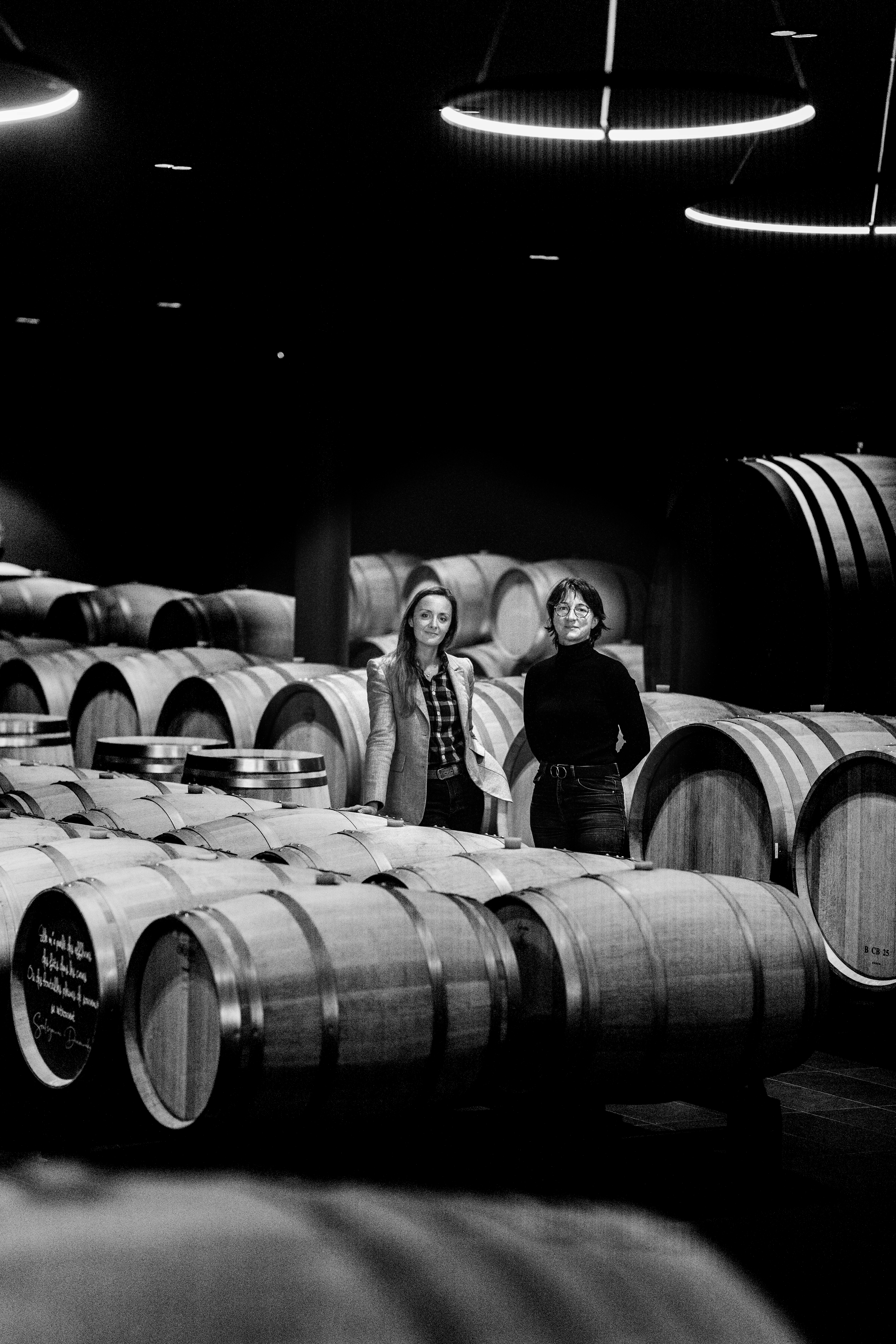
"Every year we release an album," Caroline says, "in a context, which is the context of the vintage." The cuvées are its songs, so don't ask her which is better, Intuition or Fleur Cardinale. You wouldn't ask that of two tracks.
It is also an exact description of the cellar, where Fleur Cardinale is now assembled like a record: every lot tracked separately, mixed at the very end. What interests me is the order of the questions that got them there.
Which oak? Ludovic left the 100% new oak alone at first and went deeper, matching barrels to lots. It worked like a tournament: one Merlot, one terroir; first the cooper, then the origin of the oak, then the toast. The coopers had to come back and taste their own results against their rivals'. Seven remain.
Does it need oak at all? Amphorae arrived in 2020. Old Merlot went in and came out "okay but not great. So what's the point?" Only Cabernet Franc stayed. They tried something fashionable, kept half, and said so.
How big? The first foudre arrived in 2022, in search of delicacy, and more followed. In 2023 came Ludivine Chagnon as technical director, after Sancerre, Chile and eight years at Château Laroque. Since then, barrels of 500 and 600 litres have taken a growing share of the wine.
When to blend? Always last. This is what Caroline calls "the specificity." Each lot goes into the vessel the team believes will suit it, and only at the end of ageing does it learn which song it belongs to.
"What is the percentage of new oak?" is now a question with no useful answer.
In 2016 there was one answer: 100% new barriques. In 2024 new wood still makes up most of the Fleur, but part of it now comes in 600-litre barrels, beside one-year barrels, foudres and terracotta amphorae. "It's over, that kind of discussion". Even the figures on a technical sheet shift until the last tasting, when the team decides which lots go to Fleur and which to Intuition.
She is pointed about what this means for people like me. Between 2016 and 2023, she says, the wines are two different universes, and yet some tasting notes read as though nothing happened.
All this has one aim: two words the team chose for Fleur Cardinale and promised never to revisit, delicatesse and depth.
B2. Double A-Side
About eight years ago, Ludovic told Caroline to put her boots on: he wanted to show her something. "But the boots are not a good signal."
He took her across the plateau to a small, steep, south-facing vineyard of about four hectares. The family bought it and replanted it. Same forest and hedges as Fleur, nearly everything else reversed: south instead of north, steep instead of rolling, Cabernets instead of Merlot.
That left the name. Croix Cardinale, by now, was a brand with no vineyard. Caroline wanted a new name for the new slope. Ludovic pointed out that a future classification would ask for ten vintages under one name. So they kept Croix Cardinale and moved it.
Same name, different slope, different grapes, different wine.
"I don't know if it's still the right decision," Caroline admits.
A double A-side is a single with no B-side: two songs with equal billing. That is how she wants Croix understood, not as a second wine, and she even pours it after Fleur. In July she tasted the 2023 blind among classified Saint-Émilions, recognised limestone and guessed Pavie Macquin. Then the bottles were revealed.
B3. Field Recording
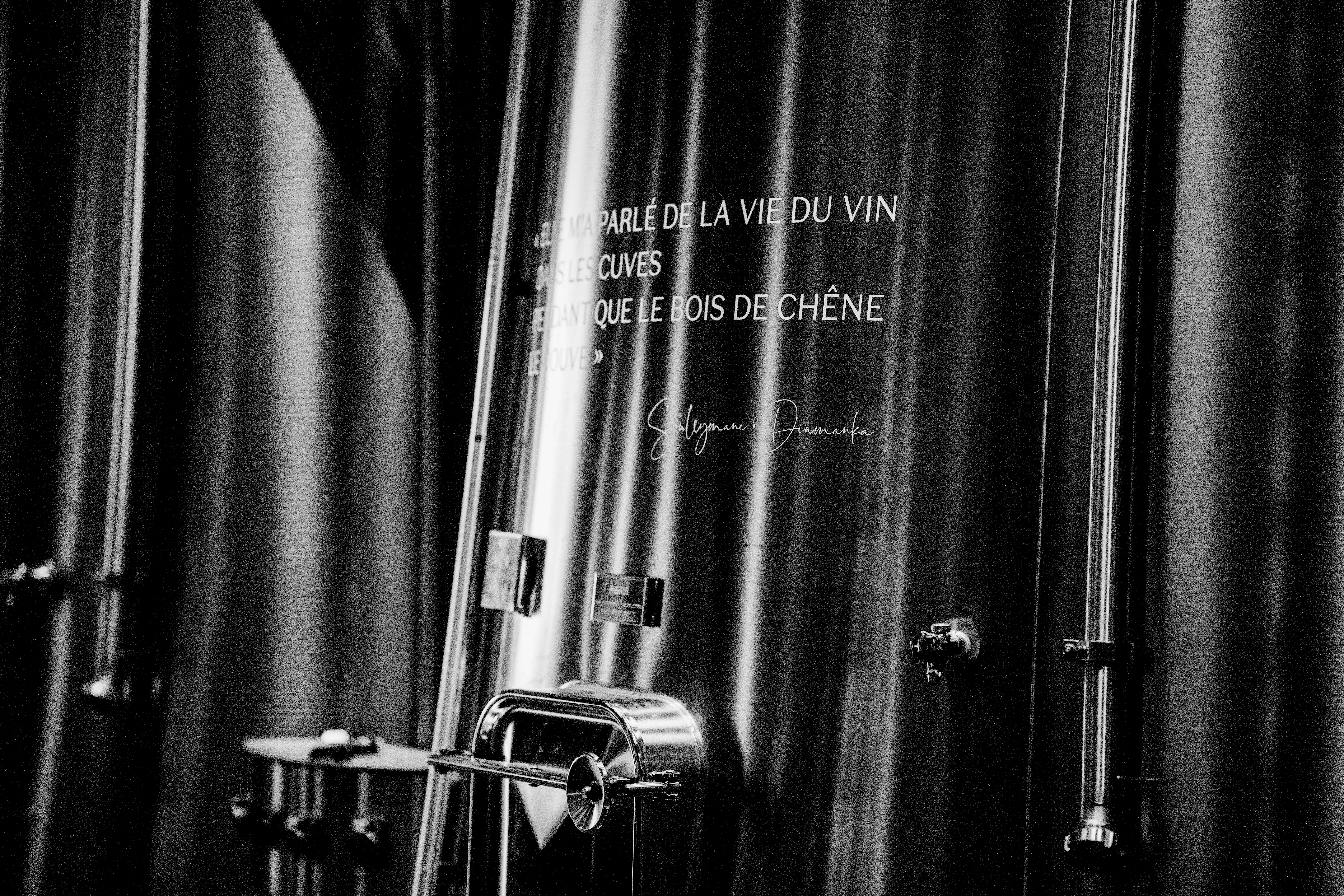
For a year, the estate employed a sound engineer to record its seasons, from pruning to harvest. The recordings now play in a corridor where the light changes with the seasons. Caroline built it against everything she had disliked as a visitor: the cold white room, the sheet of numbers, figures where you came for emotions.
Music runs through the house. Ludivine says she can tell what sort of day it will be from the music in Caroline's car. Our bottles were opened to Green Day. In six years the estate went from three red cuvées and no visitors to six cuvées, seminars and different events. "So crazy, just crazy, in six years what we did."
B4. Bonus Track
Every good album hides something at the end. This one was made almost in secret.
Caroline and Ludovic wanted a white, and Dominique wasn't keen. So they quietly prepared the whole case, then presented it.
"If you want to make white wine, well make some white wine."
They planted just over two hectares at the coldest edge of the north slope, beside the red vines, with Sauvignon Blanc, Sauvignon Gris and Sémillon. Caroline was born in the Loire, and Ludivine brought ten years of Sancerre. The aim was texture and tension rather than aroma, never a mini-Graves. The first Fleur Cardinale Blanc came with the 2023 vintage: a few thousand bottles, in a traditional Bordeaux bottle. Sommeliers tasting it blind, apparently, won't believe where it is from.
Like the best bonus tracks, it changed how you hear the rest: that tension in white now feeds back into the reds.
Run-out Groove
For the past two years, Ludivine has been obsessed with what lies beneath the slopes. A soil specialist she knew from Sancerre found more variety than even he expected. Then, on a single hectare of very old vines, they found two different clays, one at the top of the hill and one at the bottom.
When that hectare is replanted, a new path will run between them, separating the two clays for the first time.
I keep thinking about that path. At the start of the visit, Caroline showed me a survey from 1819, with borders that have survived to this day. Here is a new one, drawn by a family that arrived from Limoges in 2001.
I came with a bottle whose harvest date nobody could tell me. Outside the window, the same estate now knows where one clay stops and the next begins.
The needle lifts. The next album is already in the studio.
- Article and Reviews by Aleksandr Fedutinov, Photography by Johan Berglund

PRODUCERS IN THIS ARTICLE
> Show all wines sorted by scoreMore articles
Clos Fourtet 1945 and 1950
30th Oct 2026
2 tasting notes
Bordeaux "6" Retrospective, 1906-2016
29th Oct 2026
67 tasting notes
Château Le Dôme 1997-2022
10th Sep 2026
9 tasting notes
Bordeaux 2024 Revisited
03rd Sep 2026
69 tasting notes
Show all articles