20th Mar 2025
The Cadence of the Seasons
by R.H. Drexel
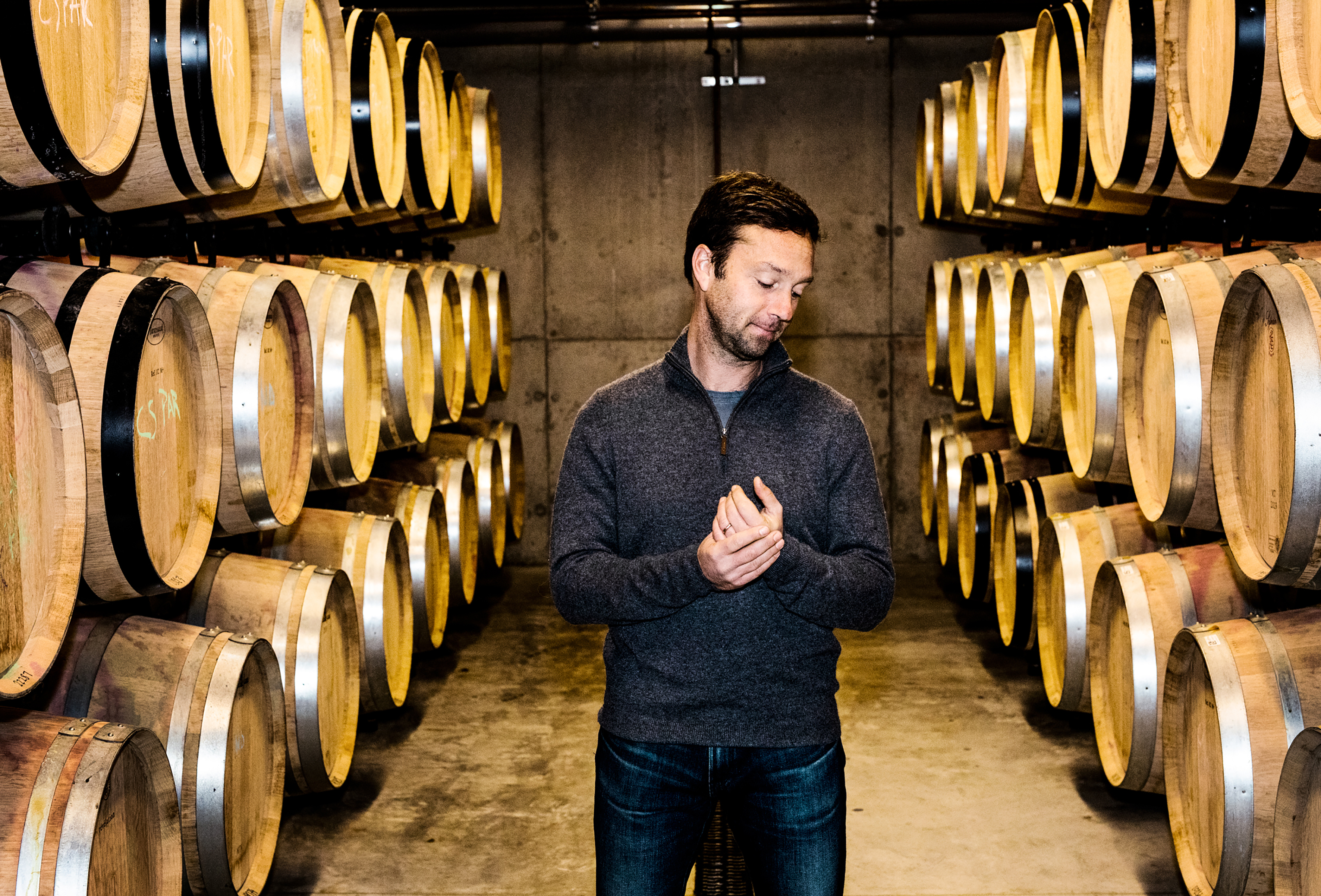
It’s a brisk January day when I enter the Dees family household in the oceanside town of Santa Barbara, along California’s Central Coast. The entire house smells like apricots and rain, and I don’t realize why until I walk into their kitchen. Any counter space is hidden beneath rows and rows of fragrant golden chanterelles. Recently foraged, they are spread out to dry, though we’ll be having some for dinner in a couple of hours.
Matt Dees, who is considered among the wine cognoscenti to be one of the top winemakers in the United States, has gathered this abundant bounty of chanterelles from out behind The Hilt Estate in Sta. Rita Hills, where he is the winemaker. He’s also the winemaker at the Jonata Estate in Ballard Canyon. Both estates, located in Santa Barbara County, have only ever known one winemaker: Dees. He’s been at Jonata since 2004 and at The Hilt since 2008. Both properties are owned by American businessman Stan Kroenke, who also owns Screaming Eagle in the Napa Valley and holds a majority stake in Burgundian house, Domaine Bonneau du Martray.
"Understanding a property through another organism that happens to just grow out of the soil is remarkable," Dees says.
“It made me view the Chardonnay from the Hilt in a different way. Harvesting those big golden chanterelles, it’s like gold coming out of the earth. There’s a kinship between the chanterelles and the Chardonnay at Bentrock. They’re intimately related. They’re growing on a faultline out behind the property. You can tell you’re stepping into a place that is keenly aware you’re there. It’s teeming with life.” The Hilt Estate is comprised of three distinctive sites: Puerta del Mar, Bentrock, and Radian. Though Dees and his close-knit cellar and vineyard team have been making The Hilt wines since 2008, they didn’t move onto the estate property until 2019, when The Hilt winery was completed.
Dees is unique among winemakers. He’s never been formally educated in enology or viticulture. No degree from U.C. Davis for him. Instead, he obtained a degree in Plant and Soil science from the University of Vermont and has dedicated much of his life thus far to deepening an intimate relationship with the natural world. “I have always been into plants. For as long as I can remember. I thought I was going to be a tree person for a long time. Trees and plants are everything to me. I understand them. They make a lot of sense. Sometimes more than people. Plants are incredibly logical. They’re incredibly adaptive to their environment in ways that we are not. Just the communication that goes on between them in the fallow land is breathtaking.”
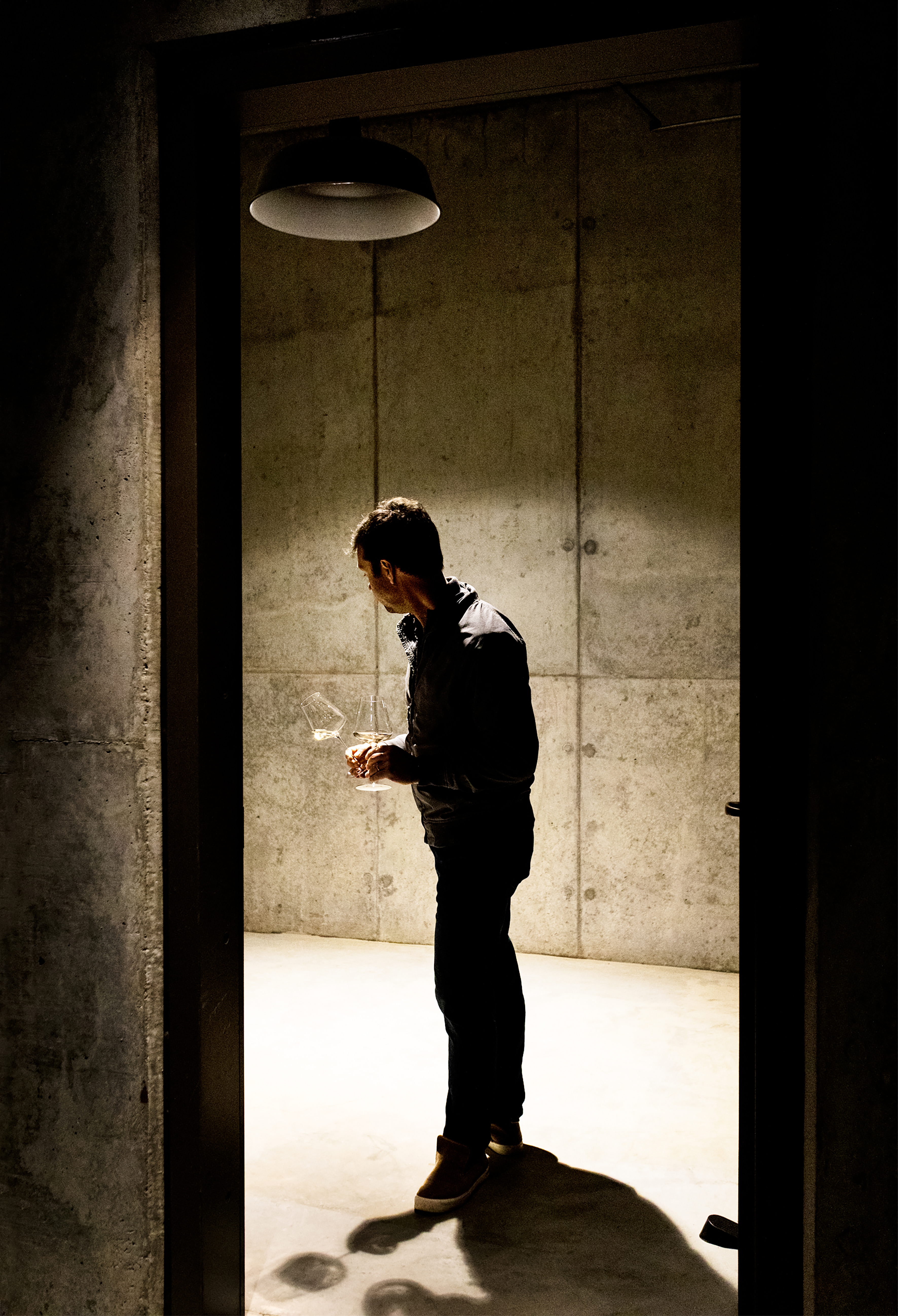
“Not only is Matt a dedicated and driven winemaker, he is also a student of the game. He wants to learn, wants to get better, and wants to experiment. Even if he were to make the greatest wine in the world, he would never change his humility. The thing I love most about tasting wine with him is that he believes in the good. A wine can be a complete mess, and Matt will somehow find the good, somewhere hidden deep in the blur. Passionate, dedicated and driven all with a glass half full vibe is Matt Dees.”
- Chad Melville, Owner, Winemaker, Vineyard Manager / Melville Vineyard & Winery
Dees, 46, was born in Kansas City, Missouri. Growing up, he entertained himself by caring for newts and salamanders in a bathtub loaded with soil. “It would scare anyone using the downstairs bathroom in our Kansas City house.” In 1998, when he was just 19 years old, Dees partnered with a mentor to plant a vineyard in Shelburne, Vermont. Shelburne Vineyard. “He’s still there and kicking ass. He’s one of the unsung heroes of American viticulture. Ken Albert. Really dedicated and cool guy. I learned the ropes from him.” From there, he traveled to South Australia to attend a six-month course at the University of Adelaide. “That is a remarkable institution. Six golden months of my life,” he says.
By 2001, Dees was making wine in the Napa Valley. He inserted himself into the rarified Napa Valley firmament the old-fashioned way…by writing letters and making calls. He phoned up Shari Staglin of Staglin Family Vineyards after finding their phone number on the back of the bottle of wine. She answered the phone and, following an in-person interview, Dees was hired. He ended up working alongside the esteemed winemaker, Andy Erikson, who was the winemaker of note at Staglin at the time. “The giants were still walking among us at that time,” he says. “I met Mr. Mondavi a bunch of times. And Al Brounstein.” Before landing the job at Staglin, he recalls reaching out to Robert Mondavi, who, while not having work for him at the time, sent him a hand-written letter wishing the young aspiring winemaker much success with his career. Today, that letter is framed and hangs in his office.
In the early aughts, keen to keep learning, Dees would travel back and forth to New Zealand while maintaining a foothold in the Napa Valley. There, he studied under Doug Wisor and Adrian Baker at Craggy Range. "I learned a tremendous amount from these people. They were a team, real teammates. And that’s how Drew and I are."
Drew Pickering, the associate winemaker at Jonata and The Hilt, has been with him since 2009.
“I learned how to foster a culture at a winery that is long-lasting, thriving, and impactful. The culture adds to the wines. The greatest thing I ever did here was bring in people and allow them to grow. And finding exceptional talents and finding ways to raise the ceiling so they can stay. I like people who show up early and give a shit.”
When I tell Dees that I find it poignant that he speaks too fondly of his mentors along the way, he says, “Coming from the Midwest, being humble is really valued. A lack of cockiness. It’s in our DNA. I have always sat at the feet of the masters. I chose to learn at the feet of people I admired.”
In 2004, Dees got a call from Andy Erikson about a job in Santa Barbara County. He landed at Jonata, a “wild, wooly place” in the Ballard Canyon sub-appellation, which brushes up against the picturesque town of Los Olivos. “I will be here for as long as they’ll have me. I knew these grapes when they were babies. We share memories. If you share memories with something, that’s a profound relationship. A lot of people bounce around, thinking there’s a common parlance between projects and I don’t think there is. If you know anything about the beginning of languages…the Hilt and Jonata are so unique. One is a giant sand dune. The other is a giant mound of diatomaceous earth very close to the ocean. And they survive and thrive on tension. They’re freakishly unique.”
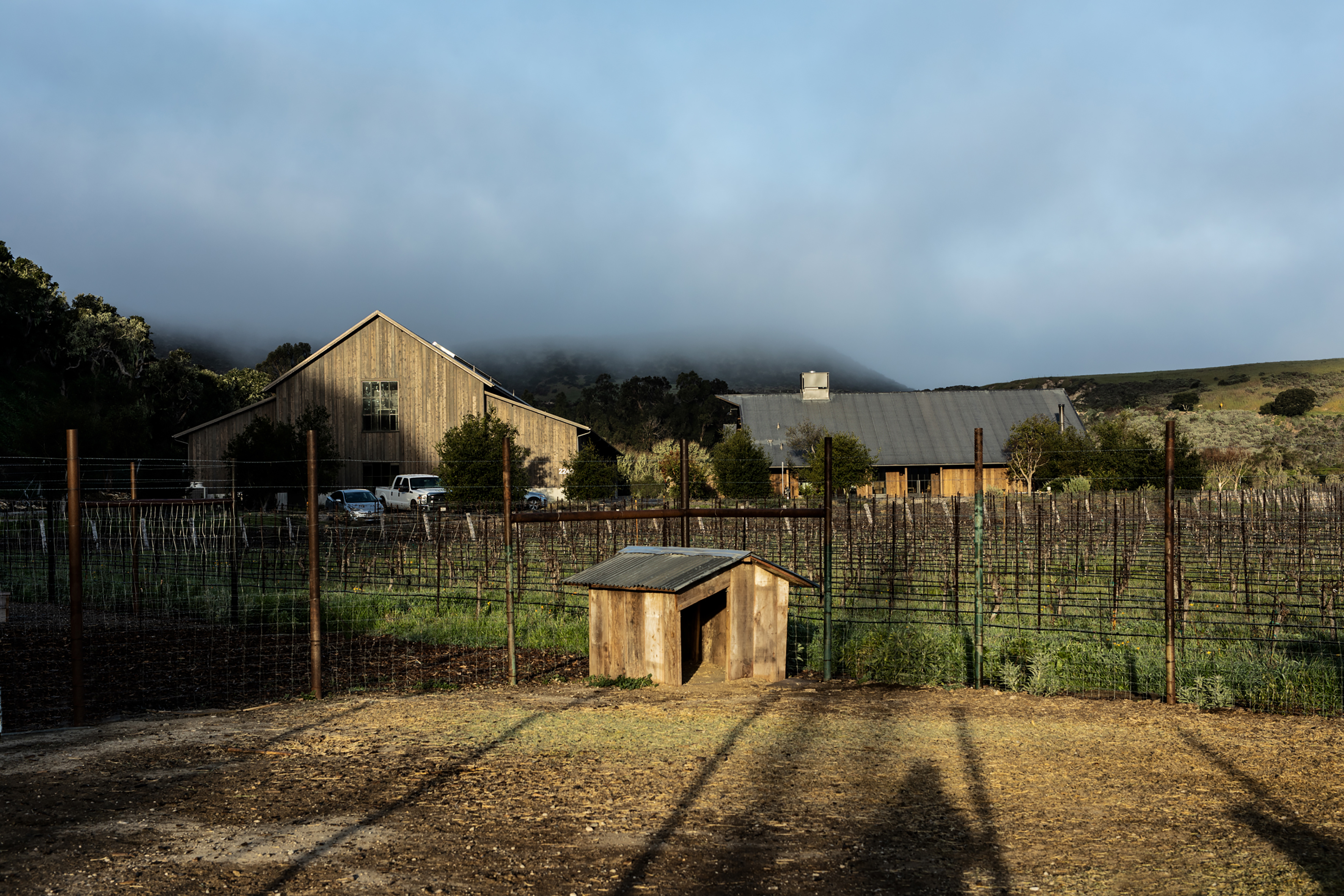
When I first met Dees, about 15 years ago, he was making wine in a too-crowded warehouse space in the outskirts of Buellton, a strip mall town at the gateway to the Sta. Rita Hills appellation. Dees explains that the culture of Jonata and The Hilt suffered from the frantic pace of working in such a crowded space. Today, he and his team pursue wines of consequence at the Hilt Estate, off the Santa Rosa Road corridor in Sta. Rita Hills, where both The Hilt and Jonata wines are made and raised. It’s a striking property, with a small herd of goats and sheep greeting visitors as they come through the main gate. Dees and his team can dial down and focus on winemaking and elevage without having to navigate groups of tourists or visiting members of the trade, who instead receive a warm and elegant experience inside The Hilt’s well-appointed tasting room, comprised of numerous private rooms and designed by architect Howard Backen and interior designer Amber Lewis.
“This place was built with efficiency and celebration in mind. And with respect for the grapes we harvest. We farm very well, and we own vineyards that are exceptional. We were given our own incubator. It’s a celebration, not a punishment to make wine,” he tells me. “It is also a job. But like Robert Frost said, ‘My object in living is to unite my avocation and my vocation.’ I’ve been really blessed to do something I love and to have found that when I was very young.”
“Personally and professionally, Matt is one of the great people in this world. Perhaps that is because he is from the Midwest or it’s because he has incredible lived experiences. He is a witty and skilled artisan, yet so humble at the same time. In a craft where it is easy to become complacent, he is always looking to move the ball forward and progress our region. I have had the pleasure of knowing Matt for almost 15 years now and I still get as excited as ever to spend time with him. You can always count on Matt for an educated opinion on winemaking or a good laugh when you need it most. He cares deeply about the Santa Barbara community and we are lucky to have him.
- Pierre LaBarge IV, Founder / LaBarge Winery
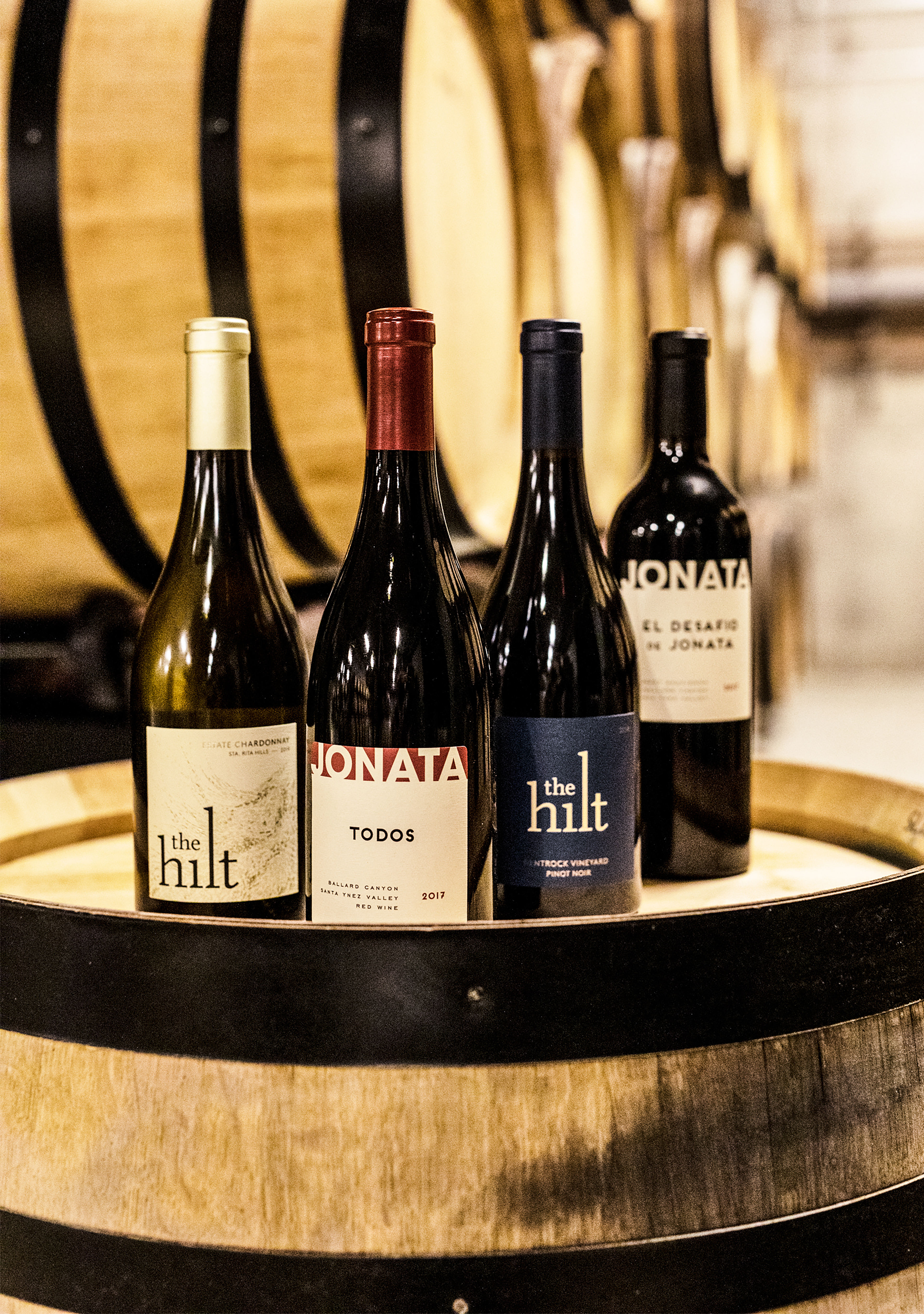
The culture of the Jonata and The Hilt are vital to the profile of wines and to the team. For Dees, the spirit of the team and their environment directly informs the resulting wines. He defines the culture of both sites through the prism of the natural world and the spirit of the people who tend the vines and barrels.
“Back in 2005, we decided to stop importing compost. We made our own. We got chickens so we’d be more sustainable and responsible. We got 400 chickens. Mobile coops. 400 birds is 2,000 eggs a week. So, we had too many eggs. We supplied all of our employees with eggs and traded the rest. Dynamite eggs. True free-range eggs. We traded what we couldn’t eat ourselves for a bunch of goats. For lawn mowing and fire protection. For meat, milk and cheese. We eventually got lamb and then a Berkshire sow. We started to make prosciutto. None of these were sold. This bounty was all for the team and the culture. A guiding light. We now have turkeys, chickens, pigs, and olive oil production. We have a 60-tree orchard. It is for all for the team. All in-house culture,” he says.
It’s fashionable among many winemakers to proclaim that they practice non-intervention or minimal intervention winemaking. When I ask Dees if he falls into one of the above categories, he says, "A lot of love goes into the bottle. I’m not saying the winemaker isn’t involved. The winemaker is massively involved, and we change things completely based on our love and focus."
For some winemakers, Dees explains, they view each harvest of grapes as a piece of marble they hammer away at, to get to what they want.
“‘I want this to taste like Burgundy.’ Or ‘This is supposed to be a cool climate Syrah, not a warm climate Syrah.’ And, they hammer away in the cellar to direct their wines towards a certain stylistic signature. We’ve always been of the school that instead of a big chisel and hammer, we approach things with sandpaper. Very fine grained. You can sand little pieces that maybe are not compatible with equilibrium or balance. We’ve always been giant sandpaper people, ultimately believing that we’re expressing the vineyard’s flavors, nuance and character. In my early years, I was idealistic to an obnoxious fault. But what’s the point of being young if you can’t be idealistic? Terroir to me was how do the roots interact with the soil? How do the leaves interact with the atmosphere? How does the sun strike your parcel? How quickly does your vineyard soil dry, warm, soak? What’s your filtration rate? Like, nerdy, technical things that you could put on a chalkboard to make students fall asleep. And, I mean, that is the foundation of what we do. I thought that was what 97% of winemaking was, and then 3% was the people and the winery. Now, I realize it’s probably closer to 50-50. People matter. In some vintages, it’s more about the people than the place. There are vintages we made here as a team where we came together, put our heads together and really helped the grapes along their journey because they were insufficient in certain areas. Then there are other vintages where we shepherded them and stood back with our arms crossed, just smiling. The kind of vintage where everybody wins. I’m parity on that now…50% people and 50% place.”
“Sometimes I’m jealous of the skill and understanding that my good friend Matt Dees has developed with all of his experiences in this industry. When someone has such an intuitive depth of knowledge, and no pretense about it, I find it disarming, maybe a little unnerving. He makes winemaking look easy—not because it is, but because he operates on a level where instinct and experience are completely natural. Beyond his talent in the cellar, Matt has an incredible ability to build and inspire a team. The people around him reflect his standard of excellence, but also his kindness, generosity, and sense of camaraderie. Matt is a man who approaches wine work with passion, curiosity, humility and humor. He’s generous with his time and spirit. He would be my one phone call if I were arrested, but outside of that - Matt's one of the best people I know to share a bottle with.”
- Dave Potter, Owner, Winemaker / Municipal Winemakers
It's extremely rare for a winemaker to stay with the same employer for 21 years.
Unless they’re the owner, winemakers often move around, asserting themselves and their capabilities by trading up to higher-profile projects as their careers grow. Dees, on the other hand, has “No fomo. There’s only so much we can do in a lifetime. I like the focused approach. I could fly and make wine all over the world, but this is my place. This will keep me challenged enough where I can be balanced and still give 100%. If you lose the ability to give 100%, then you’ve kind of lost the plot.”
He is required to work in the marketplace, domestically and internationally throughout spring and early summer. “Travel is what it is. The older I become the less fun it is. I had a Bar Mitzvah when I was 13, which to me made communication with anyone, anywhere, under any condition, including jetlag, not an issue. If you can sing in a radically foreign language backwards in a cracking voice due to full-on puberty in front of all the girls you have crushes on, all your friends and your parents, and everyone you know in your small 13-year-old world, then flying to Korea on one hour of sleep and giving a big presentation is easy. Communication is easy for me because A) I’m speaking about things I believe, and that I know intimately and that I love. And B) because I had a Bar Mitzvah.”
He does, however, enjoy travel to France, which he undertakes a few times a year due to Stan Kroenke’s majority stake in Domaine Bonneau du Martray. “I go to France to exchange ideas. To learn and to offer advice. Because all of a sudden that continent is hot and sometimes dry. And sometimes under hydric stress and sometimes with high alcohol. These are things we know intimately here in California. My European journeys have been amazing. You get to meet your heroes, you get to talk to heroes, and then year after year after year, I take part in a tasting event in Burgundy in February and you get to become a peer and have fun with your heroes. I get to speak in French and confuse the word ‘hot’ with ‘lonely.’ Years ago, I was giving a speech about how 2015 was so hot and sunny, but I said isole instead of soleil. Which sounded like I was saying that for me, a young man, 2015 was very hot and lonely. After which, one of my heroes said to me, ‘sometimes when you’re a man, harvest can make you very lonely.’ Traveling to France has made me a better winemaker and more understanding that there are different views out there. I don’t always agree with them, but they inspire me to question what I know. They soften my edges.”
Though it’s customary for winemakers to be highly social, Dees isn’t often in attendance at large industry events, or at cool kid industry get-togethers.
“I’m kind of a hermit. I don’t spend a lot of time with winemakers. Outside of work I kind of do my own thing. I spend a lot of time at home with the family doing things that I like to do. Music is a big part of my life. You can’t make wine without music. It’s my passion. I’m a mediocre musician at best. It wasn’t in the cards for me. I sure wish it had been. I find the most inspiration from music and occasionally a transcendent bottle of wine. Winemaking is creative, certainly, and it’s an outlet for artistic energy. And literature and poetry and massive for me. I’m a history buff. I love history. I love the progress of humans. And I love that I’m friends with Bryan Babcock, Richard Sanford, Rick Longoria, Lane Tanner, Alison Thomson, Ketan Mody, Greg Brewer, Chad Melville, Pierre LaBarge, Dave Potter, Lizzie Vianna. The giants among us in Santa Barbara County and beyond. These are people I know and love and admire. I’m so proud to know them and I’m proud to be part of a generation that has the baton with them.”
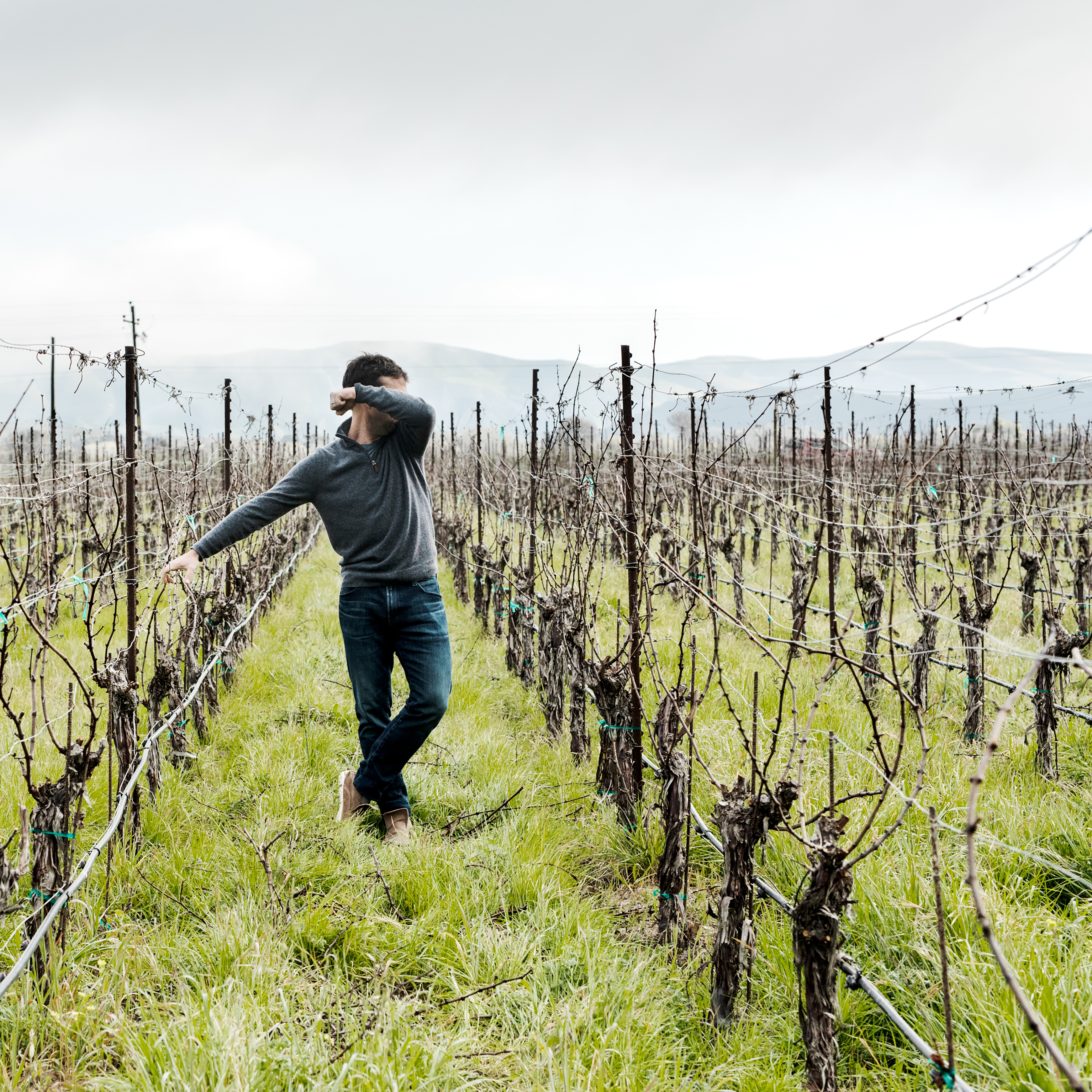
While I’m working on this story, I visit with Dees often over the course of a year and a half and throughout that time he references the “cadence of life” and how important cadence is to how he lives his life, both professionally and personally. He talks about the rhythm of the seasons, how in January, there’s quiet at the estate; a reflective period of planning and gearing up for the coming year. In the spring, he’s off traveling and working the marketplace. From early summer onward, he’s in the vineyard constantly while also prepping the cellar for harvest. In the winter, it’s about the early days of elevage and getting the winery clean and tidy after a bustling harvest. When he's not on the road, he’s in the vineyards on a daily basis, assessing their health and communing with the vineyards and the land around them.
“I like being a part of that seasonal rhythm. It’s my cadence. The cadence in my life that keeps me sane-ish is getting in step with that rhythm and being a part of the rhythm. And it’s not an escape. It’s not a surrender. It’s an open embracing of a very specific schedule. Without this cadence I’d feel somewhat untethered to the world. Wine is a unique blend of agriculture and art. A shared intent between Mother Nature and ourselves. We embrace vintage variation to an extreme degree. We embrace that natural swing. If it was really hot, these wines will be bigger. The joy of this is that these are time capsules of memories. The good and the bad. Remember that asshole intern? That guy’s in that bottle. Remember that time it was so hot we couldn’t walk outside so we played cards and drank margaritas? That’s in that bottle. Remember the earthquake? Remember the time it rained for 10 days? All of that is in the bottle. It’s a recording. It’s a phonograph…a recording of twelve months.”
“A fine needle is thread when one maintains a deliberate point of view while still purely availing oneself to other avenues and perspectives. It requires not only confidence but also profound humility and a heightened awareness of surroundings. Matt Dees walks this tight rope with the most thoughtful and kind demeanor of any colleague I have ever known. As a direct correlation to his skillset and personality, the resultant wines are always spherical, calm and composed. Our entire appellation has been uplifted over the past twenty years since his arrival here in 2004 and I am confident that his future efforts here will transport our industry to entirely new heights. He is an inspiration.”
- Greg Brewer, Winemaker, Founder / Brewer Clifton, Diatom, Ex Post Facto
Many of us who have been in the wine space for many years have found ways to achieve a healthy work and life balance. The wine business is unique in that it’s highly social and steeped in hospitality, but also often very solitary. Much of it takes place outside, in nature, and the lucky ones among us carve out time to find solace there.
But, for many others, especially winemakers in high profile positions, maintaining one’s sanity is harder. How does Dees do it?
“Home cooked meals,” he tells me, without hesitation. “Eating dinner every night with my family. And I have a handful of friends who are very grounded and real and troubled and we’re very open with each other. The cadence of the seasons is massive. A healthy understanding that this is fermented grape juice. I take my job seriously, but I take life more seriously. Surrounding myself with exceptionally talented people helps. We are a democracy here: if I’m the president then I have a very talented cabinet. I have people on my team that are very sensitive to acid, to fruit density, or bitterness, or TCA. They’re like an orchestra and blending through that lens as a team is a democratic process. I try not to take myself seriously.”
It’s harder to maintain that balance, though, during harvest, when 16-to-20-hour days can be the norm, and hands-on winemakers can exhaust themselves perilously unless they practice some measure of selfcare. Dees agrees that harvest away from his family is “gnarly. We all have cycles we rely on. Being happily married and happily a father, it’s a cycle. The kids start school and then dad’s gone for a while. Two months. They develop time with their mom and that’s their cadence. I come back and it’s a wonderful reunion, like, ‘oh, my god, look who’s here!’ It rinses the dust off every life with dad. It freshens things and brightens things but it’s hard as hell. It’s six to eight weeks long. I’ll get home on occasion…I won’t miss a game, a recital, a performance, but it’s hard. As strange as it sounds, though, it’s just another cycle.”
"Matt is the winemaker I turn to whenever I have a question or a problem. His breadth of knowledge is vast and comes from hands-on experience, experimentation, travel, and his quietly intense absorption of all types of information around him. His approach to wine and winemaking is at the same time practical, thoughtful, playful, and innovative. He is one of the smartest people I know and is not only incredibly generous with his knowledge, but also with his kind spirit."
- Alison Thomson, Owner and Winemaker, L.A. Lepiane Wines
Though I’m very fond of the Jonata and The Hilt wines, I personally love the white wines Dees makes the most. His Jonata “Flor” Sauvignon Blanc is an arresting beauty, and his The Hilt Chardonnays are simply extraordinary. In blind tastings I host at home for friends, they’re often mistaken for a Montrachet or extreme Sonoma Coast offering. And, though Sta. Rita Hills is known for Pinot Noir, for me the most compelling wines coming from this sub appellation are its Chardonnays.
“The world is paying attention to Chardonnays from Santa Barbara County. Sea salt. Green citrus. Chardonnay is probably the international language of Sta. Rita Hills. And pound for pound, dollar for dollar, the treasure of Sta. Rita Hills pinots is their youthful exuberance and vibrancy. The Chardonnays have a capacity and ability to age. They are like the shimmering light of a school of fish. A school of fish will reshape if something interrupts them. Chardonnay is impenetrable,” he says.
Last spring, I tasted through The Hilt lineup with Dees just as he was returning from spring training. He’s a huge baseball fan and baseball season is certainly part of his cadence.
“Sports are a huge thing for me. If you grow up in Kansas City, what else are you going to do? Listen, we enjoy food because it tastes good. No frills. No frou frou stuff. It’s very much Arthur Bryant’s. Ollie Gates. BBQ. That to me is high cuisine. You show up, someone yells at you, you give them your order, a big slab of meat shows up, they put a slice of Wonder Bread on it, smash it down. Now that is fucking eating. That’s where I come from, and I love it. It’s about food and sports. We got no ocean. No mountains. But we have incredibly nice people and a slower cadence of life. I love my Midwest roots. A healthy appreciation of how things are. I cried when we won the Super Bowl twice. I watched it on an airplane and hugged the guy next to me."
"When my team won in 2020, I watched the Super Bowl on a Lufthansa flight to Frankfurt. I think I sweated through 9 shirts on that flight. I wept and then fell asleep. It’s the little things in life that make us happy."
–
Photography by Svante Örnberg
See more work from Svante at svanteornberg.se by clicking here!