11th Jul 2024
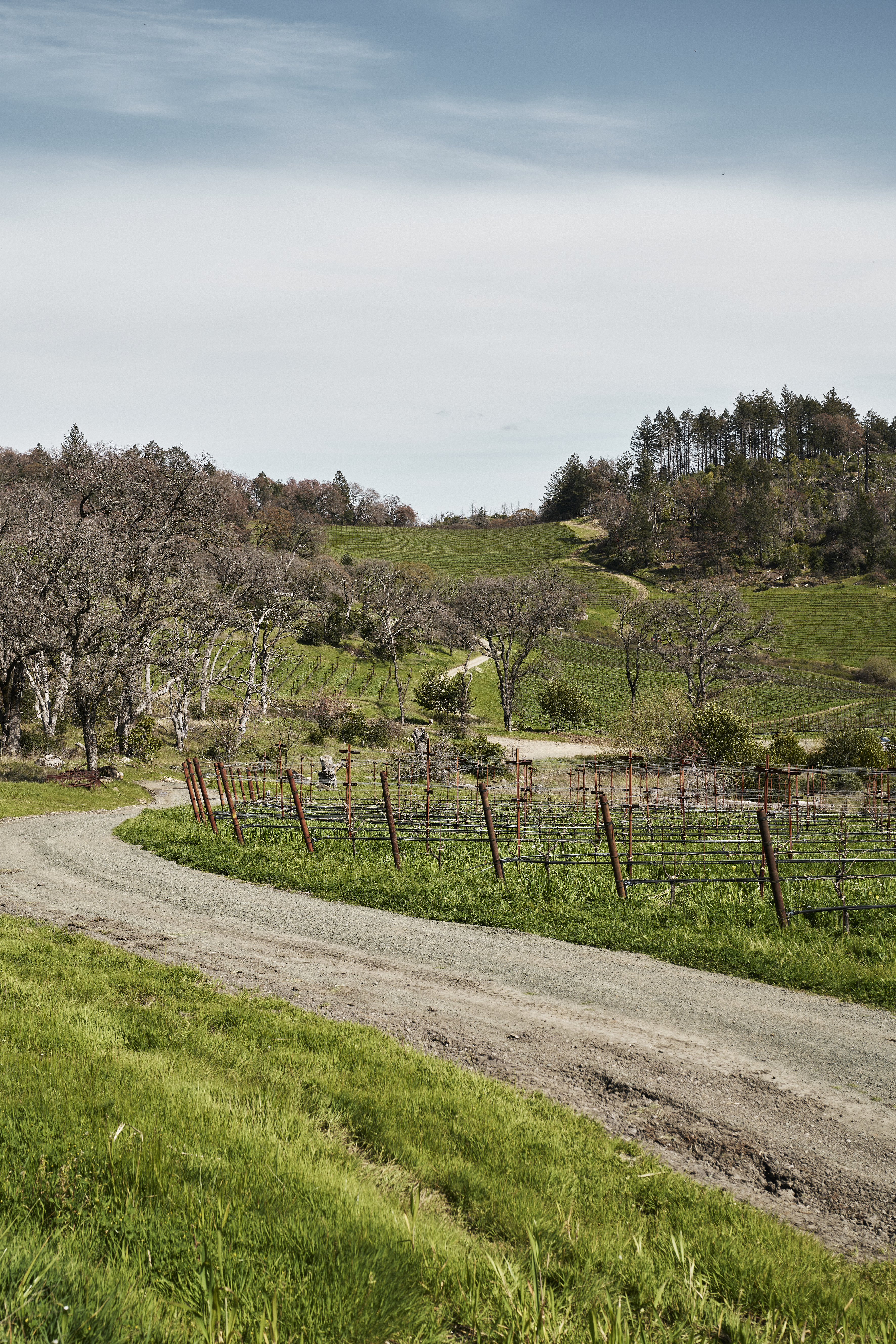
It begins to rain as I drive up Mount Veeder along Lokoya Road. From where I’ve come, down on the valley floor, it’s a bone-dry March day. Rain was not in the forecast, but mountains have minds of their own. Before long, the narrow, potholed road turns to a slurry of slick rocks and thick mud. The steep trail mists over. I cut my way through dense fog. Just when I think I’m about to careen blindly over a cliff edge, never to be seen again, I break through the fog line. An ancient stone building looms in the grey-veiled distance: Mayacamas Winery. I park and get out of my car, struggling with a seldom-used umbrella against the wind and rain, listening anxiously for signs of human activity. The mountain howls. Wisps of torn-up clouds allow glimpses of contoured rows of vines, giving way to an endless sea of trees and rolling hills below. Why would anyone have built a winery 135 years ago in this near-impossible-to-access site? And yet this remote vineyard remains, both a reminder of Napa’s past and a guidepost for the future.
The Mountain Howls
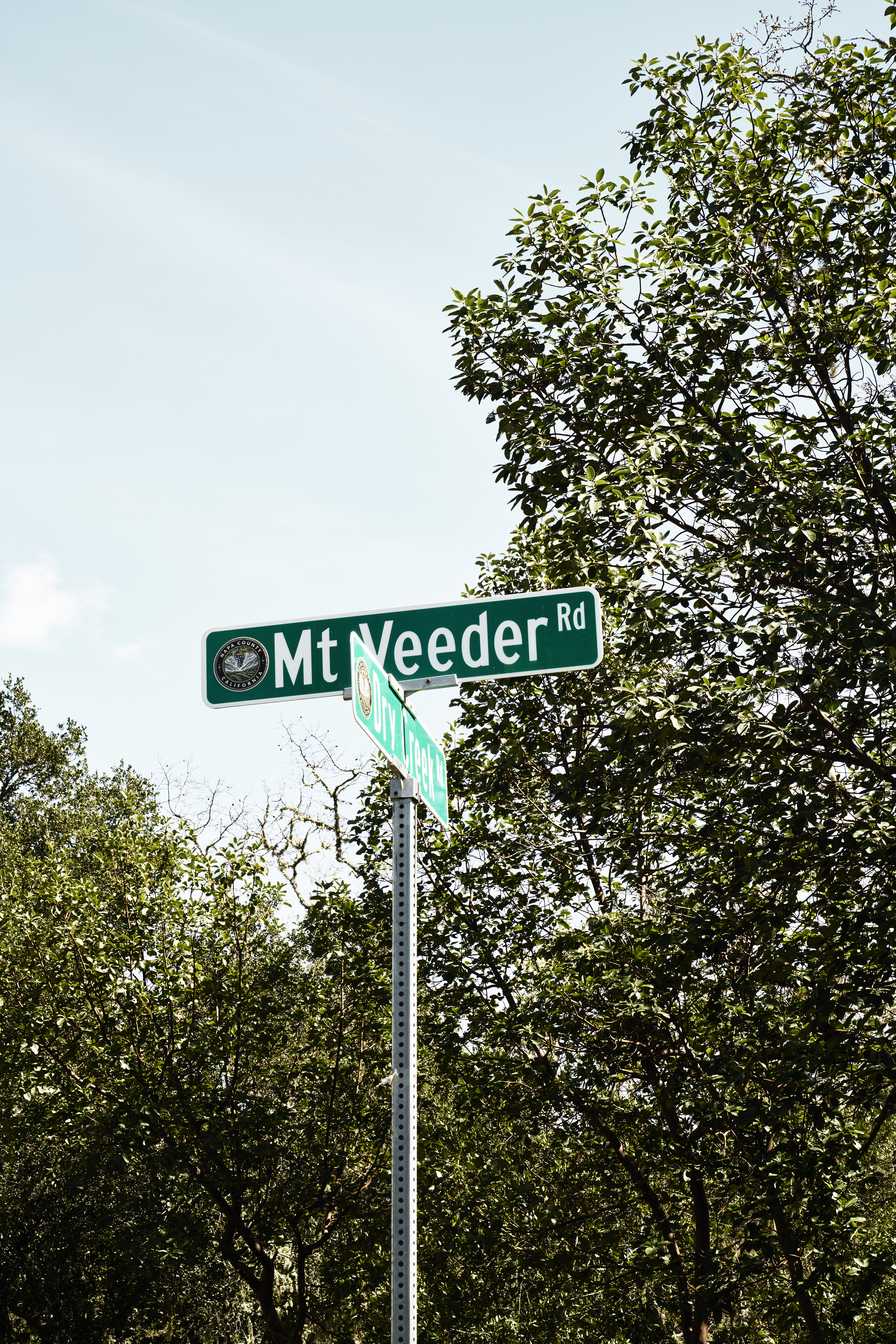
In 1889, John Henry Fisher built a winery and distillery in an isolated location high on a mountain. The mountain, dubbed by Reverend Peter V. Veeder in the 1850s as Mount Veeder, was the closest major peak in the Mayacamas Mountain range to San Francisco, where Fisher’s pickling company and other businesses were based. A handful of other wineries were already dotted about the mountain then, but you couldn’t call them neighbors. Fisher Winery was well off the beaten trail.
John Fisher planted Zinfandel, as was the fashion of the day, and transported casks of the wine down that precipitous mountain trail by horse and carriage to the Napa River, where it was ferried to San Francisco for sale. Fisher’s winemaking days ended abruptly after the 1906 San Francisco earthquake laid rubble to his businesses, forcing his Mount Veeder estate to be sold at auction. But the winery Fisher built of stones from the surrounding land stands today.
In 1941, Mary and Jack Taylor bought the old Fisher estate and renamed it Mayacamas Vineyards.
They created the iconic label used today, which features two lions within the letter “M.” The lions symbolize the word Mayacamas, which is a Wappo (the Indigenous people of northern California) term said to mean “the howl of the mountain lion.” Jack and Mary restructured the winery and replanted the vineyards with Cabernet Sauvignon and Chardonnay.
The now legendary Bob Travers purchased Mayacamas Vineyards in 1968 when he was just 30 years old.
He put the winery on the map, having made the 1971 vintage entered into The Judgement of Paris tasting, followed by an era of age-worthy Cabernets and Chardonnays that required time in bottle to be appreciated. His slow-wine-movement style appealed to those who followed the call of that tense, sturdy, wild mountain character. Many of Bob’s wines are still drinking beautifully today.
In 2013, Bob sold the estate to Jay Schottenstein and Charles Banks (a previous owner of Screaming Eagle), although the Schottenstein family now owns the property fully.
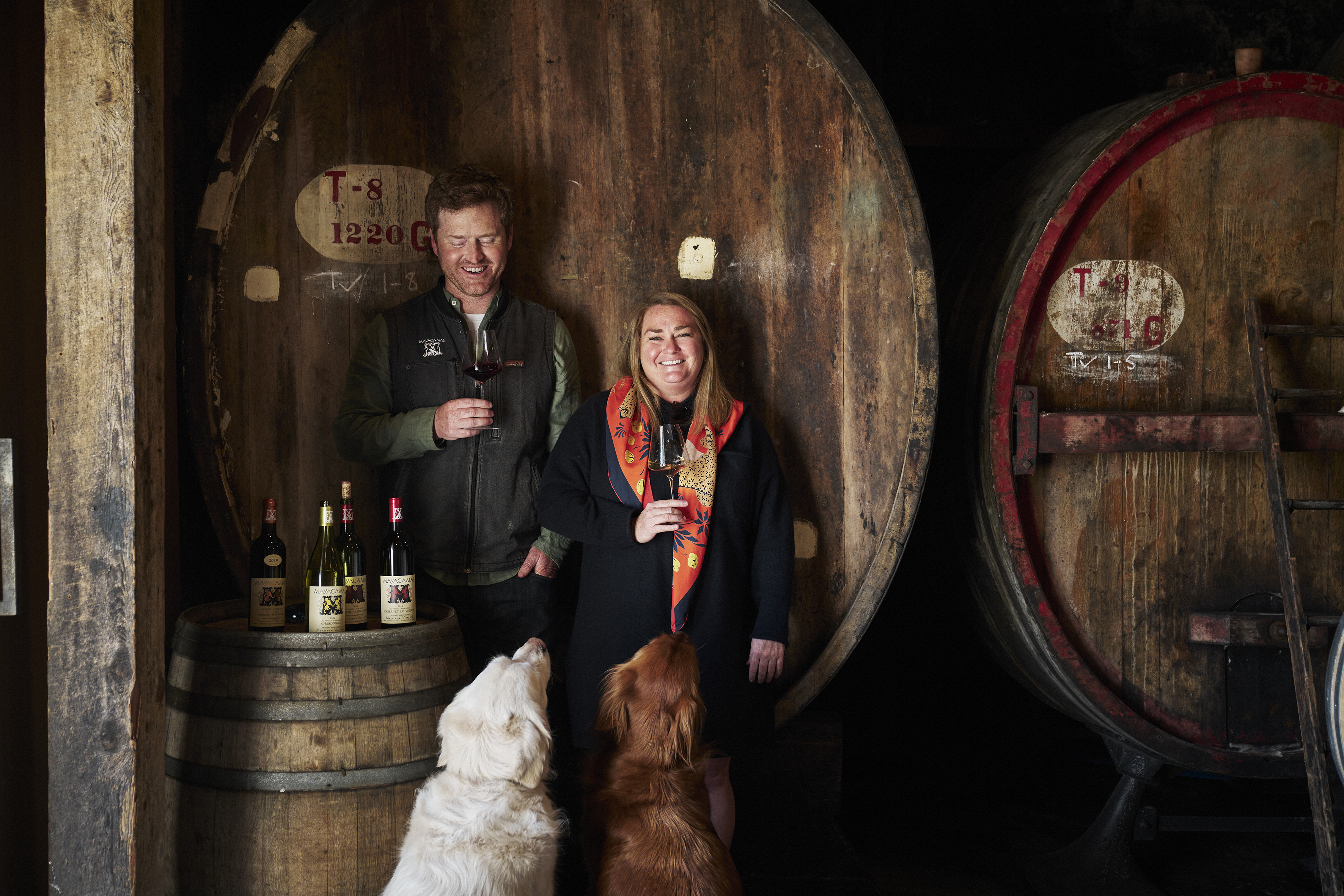
After Bob Travers left in 2013, Braiden Albrecht was hired as winemaker. He was just a few years younger than Travers was when he’d arrived. Braiden greets me from the newly built visitor center, which rocks the rustic look well. He suggests we head out to the vineyards in his 4-WD off-roader to get a lay of the land.
The top of Mayacamas Vineyards stretches to 2,200 feet in elevation. As the crow flies, this is just 400 feet above the winery, but the winding dirt paths to access the various blocks make its upper limit seem further away. The peak of Mount Veeder is 2,600 feet, so we’re not far from the top and very near the Sonoma County border.
“The entire property is 475 acres, with 49 planted,” Braiden says. “It was expanded in the 1950s by the Taylor family.”
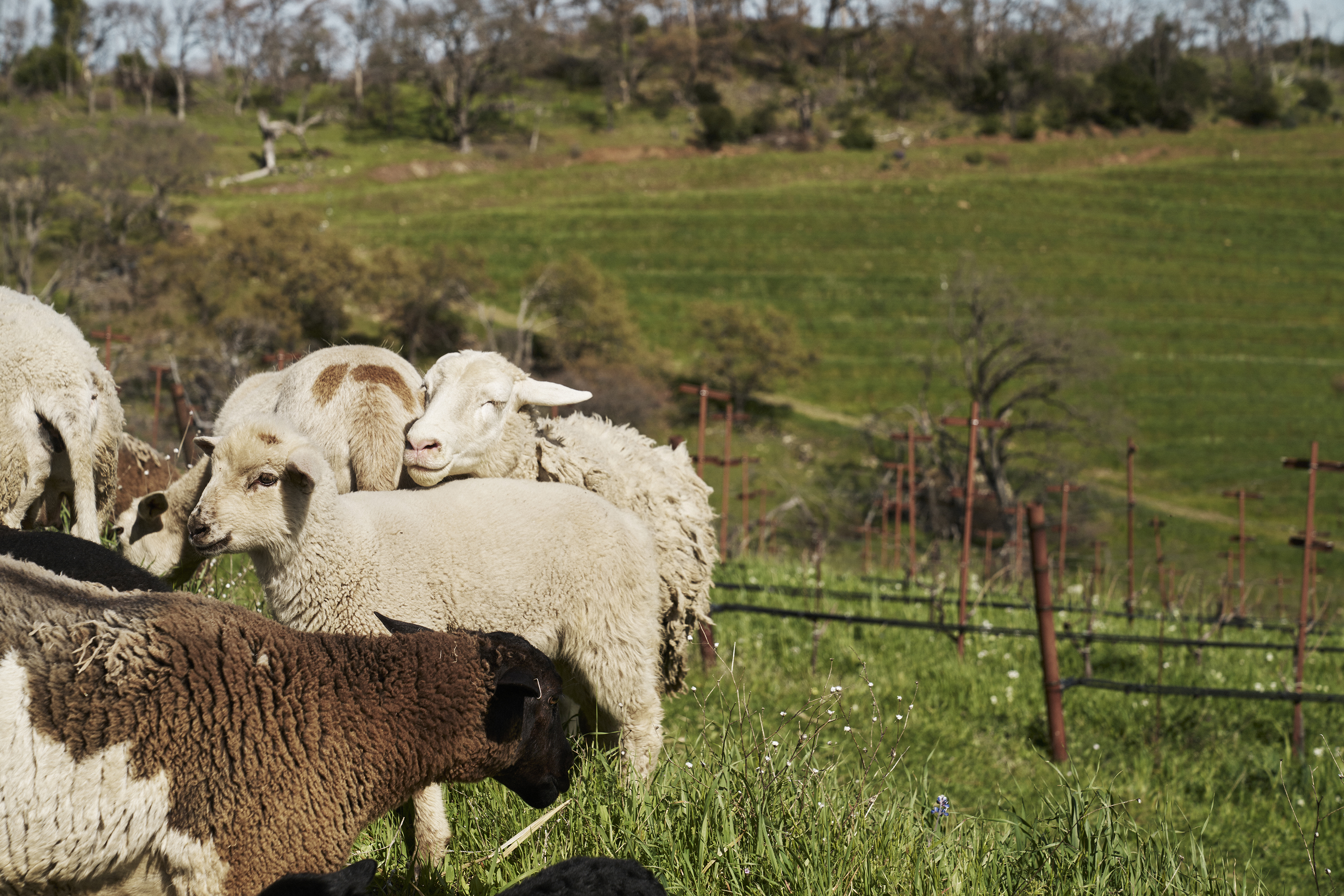
The various blocks represent a wide variety of aspects, elevations, and soil types—a challenge to grasp and manage. I expected to see more older vines, but a lot of the plantings are relatively new. Braiden explains that since the purchase, much of the vineyard has been replanted under the guidance of viticulturist Phil Coturri.
“We’ve been working with Phil to replant the ailing, phylloxera-afflicted AXR-rooted vines,” Braiden tells me. “I worked for Phil before I came here, and I was in Australia and New Zealand before that.”
Apart from replacing phylloxera and virus-affected vines, a point of the replanting was the swap over the grape variety mix.
"In 2013, the property was 68% Chardonnay," says Braiden. "Now it is 60% Cabernet Sauvignon."
Clonal selections include virus-free Cabernet selections from the estate, Shot Wente Clone Chardonnay, and some Montrachet Clone Chardonnay from Aubert.
“Because of the replanting, we have been buying some fruit for a while now, but we are transitioning more toward being estate,” Braiden points out. “In 2023, for Cabernet Sauvignon and Chardonnay, we were about 75% estate grown.”
As for harvesting, the Mayacamas style has long been on the early side, and that hasn’t changed.
“We always have an early pick,” confirms Braiden. “In 2017, we lost the tasting room, and a lot of vine damage was caused by the fires. But at least all the fruit was in.”
Winemaking remains staunchly traditional. A tour of the original winery built by Fisher reveals a collection of large old foudres, some more than a hundred years old. The use of new oak is minimal.
“The Chardonnays are aged for 12 months in barrel,” Braiden says. “We use 500-, 600-, and 1000-liter barrels for 40% of aging and barriques for the rest. New oak is always below 10%.”
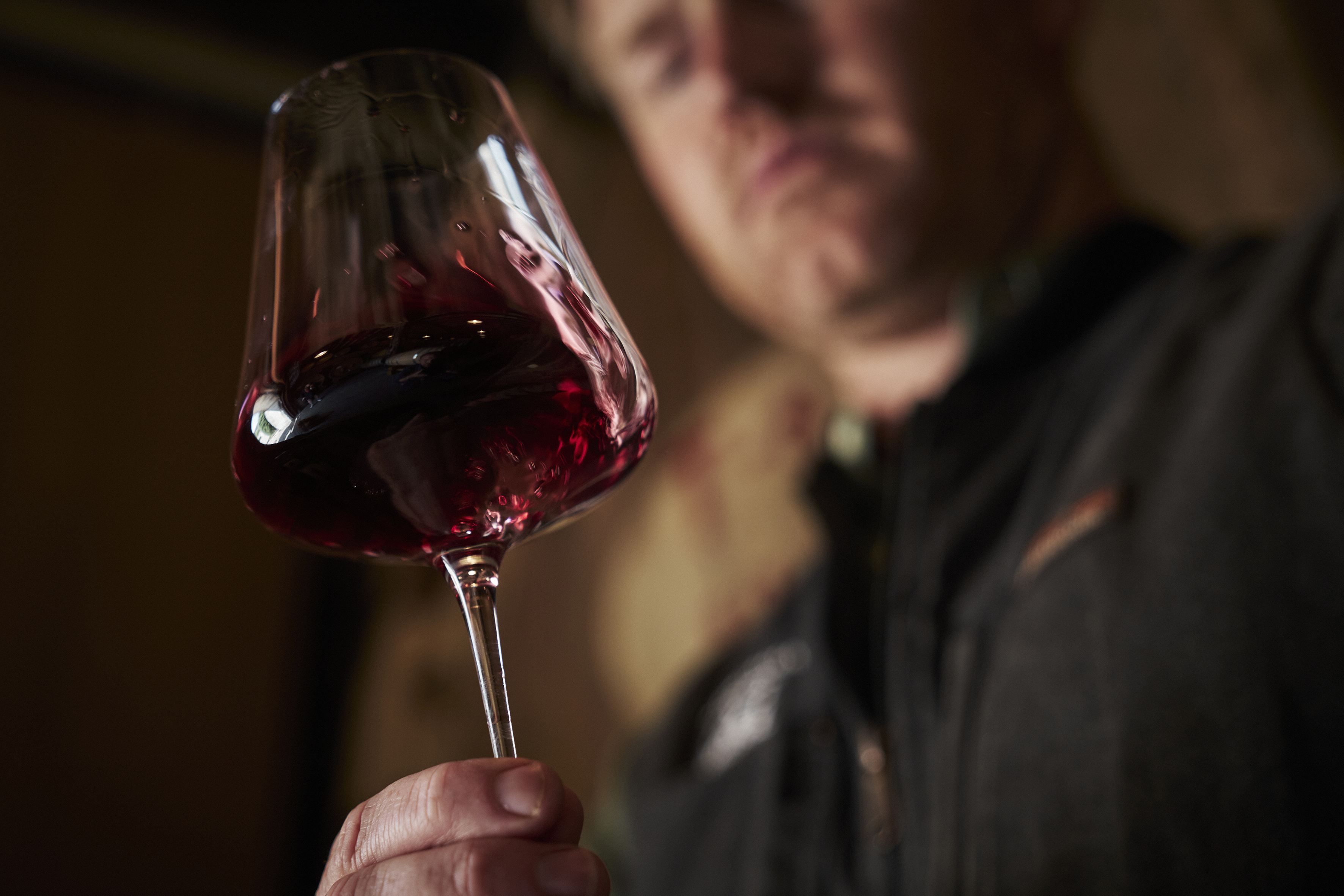
For the tasting, we look at a collection of wines made by Bob Travers before the purchase as well and more recent and upcoming releases made by Braiden. It’s an intriguing exercise.
The Chardonnay style and quality haven’t changed much since Bob’s days, which makes sense since this variety tends to be less adversely affected by viruses. Braiden has started a program of isolating select Chardonnay parcels and bottling them separately, highlighting the potential of the best plots.
The most dramatic change since the replant is the Cabernet Sauvignon, which was clearly a victim of ripeness issues, almost certainly due to the phylloxera and virus-affected vines, and the earlier harvesting probably didn’t help. The recent 2018, 2019, and 2020 vintages reveal riper tannins and more depth in the flavor spectrum while maintaining modest alcohol levels of around 14%. Critically, the style that Travers looked to achieve, capturing the brightness and energy of the fruit, remains. These recent Cabernets continue to showcase Napa’s wild side, unmistakably mountain-bred.
"Bob Travers left a lot of notes for us about what he did," Braiden smiles. "He now lives in St. Helena, and we have an open gate policy for him. He continues to visit from time to time."
I’m heading back down the perilous road, driving at a snail’s pace, rain pelting. The windscreen fogs, and I crack my window, allowing the foresty perfume to rush in, hearing the low bellow of wind coursing through the profound denseness of trees, brush, rivers, rocks, and vines. The mountain howls: it’s a calling.
–
Article, Reviews and Photography by Chris Kissack

PRODUCERS IN THIS ARTICLE
> Show all wines sorted by scoreMore articles
Château Le Dôme 1997-2022
10th Sep 2026
9 tasting notes
Bordeaux 2024 Revisited
03rd Sep 2026
69 tasting notes
Château Jean Faure 2004-2023
10th Jul 2026
10 tasting notes
Bordeaux 2025 En Primeur
07th May 2026
382 tasting notes
Show all articles