03rd Oct 2024
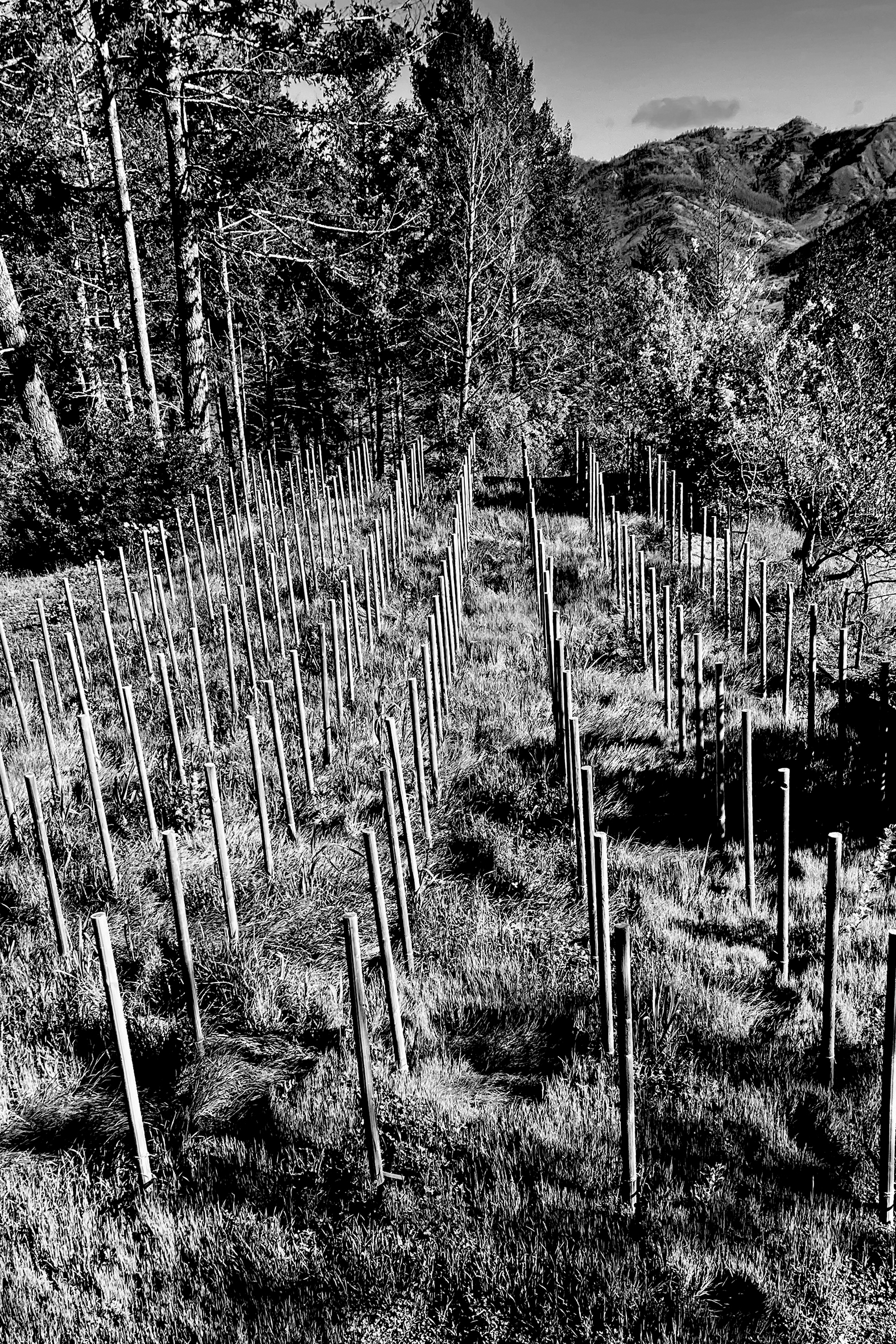
Planted in the 1940s, Stony Hill is one of Napa Valley’s oldest remaining wineries from a bygone era of trailblazers. The 160-acre parcel on Spring Mountain was purchased in 1943 by Fred and Eleanor McCrea, originally to be used as a summer home. After the war, Fred wanted to find a use for the land and decided to plant grapes. Said to be the first post-Prohibition development in Napa, the McCreas planted Chardonnay in 1948 with cuttings from Wente Winery in Livermore, along with Riesling (originating from Inglenook), a little Gewurztraminer, and a few other white grapes. Even then, it was uncommon to devote an entire vineyard to white varieties, but from the outset, it was clear that Stony Hill would march to a different drummer.
A Different Drummer
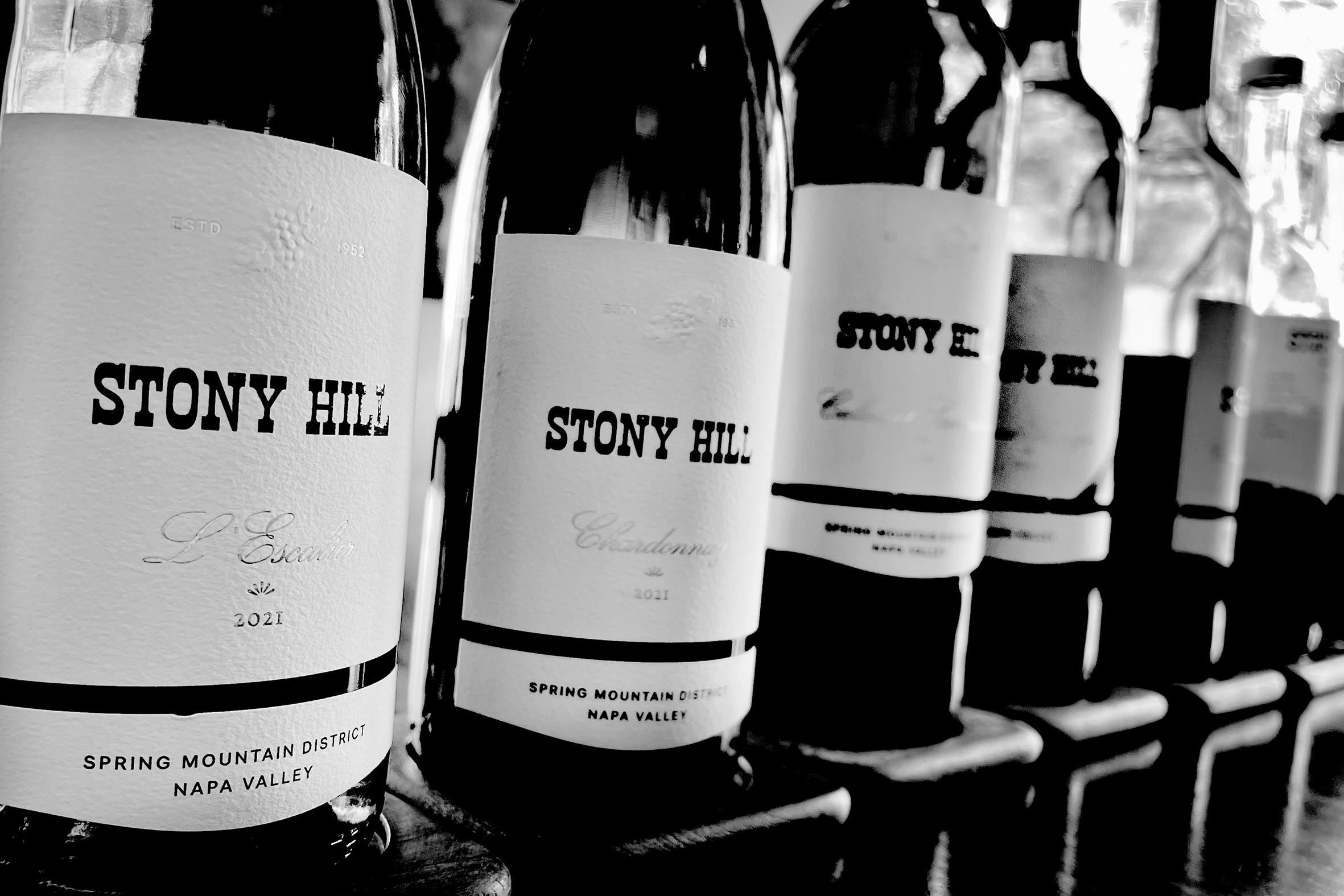
Stony Hill Winery was built in 1951, and the first vintage was 1952. Since the inaugural release and until very recently, most of the plantings and the focus have been on Chardonnay. But these were not the typical concentrated, blockbuster Napa Chardonnays—quite the subtle opposite.
The signature style of Stony Hill is contrary to the big, bold wines that have made Napa famous.
Fans have long treasured the flagship Chardonnay for its soft-spoken restraint—what some might even call austerity, at least in youth. This is partly down to terroir. The vineyard is located on Spring Mountain, with the blocks spread out at elevations between 600 and 1600 feet, mainly with a northeast exposure. Like much of Napa, the topsoil is generally volcanic, but there is shale and limestone in the subsoil. These conditions are ideal for crafting wines with natural elegance and freshness.
From the beginning, Fred’s winemaking sought to highlight the freshness coming from the site, forging wines that were designed for aging.
The grapes were harvested on the earlier side of ripeness with lower sugar levels. Malolactic was discouraged, and little, if any, new oak was used. The wines could seem thin and tight when young, but after 6-8 years in cellar, they would begin to blossom into a savory, toasty/nutty style that loyal mailing list members adored.
Mike Chelini joined Stony Hill as assistant winemaker in 1972 and worked closely with Fred until he passed away in 1977. Mike then took over as winemaker for the McCrea family until 2018, keeping to the traditional methods and style that had established this tiny production winery as a beloved anti-cult producer. The one significant change during Mike’s winemaking era was planting red varieties for commercial sale—first Syrah in the 1990s and finally Cabernet Sauvignon in 2004.
Considering the dramatic increase in the plantings of Cabernet Sauvignon in Napa Valley from the 1970s onwards, followed by the explosion in sales and prices of Napa Cabs in the 1990s, it seems astonishing that the first vines of this variety weren’t planted at Stony Hill until 2004. The first Stony Hill Cabernet Sauvignon to be released was the 2009. Like the Chardonnay, this was produced in a lighter, refreshing style that embraced the terroir and philosophy that had made Stony Hill famous.
In 2018, the McCrea family sold Stony Hill to the Hall family, who own Long Meadow Ranch. In December 2020, Lawrence Wine Estates, headed by Gaylon Lawrence, Jr., and managed by Carlton McCoy MS, subsequently bought it.
“Of the 160 acres in total, 43 acres are currently planted,” Carlton informed me when I visited the estate earlier this year. “Apart from Chardonnay, all the Bordeaux varieties are planted, as well as Riesling, Gewurztraminer, Sémillon, and Chenin Blanc.”
The vineyard has been certified organic since 2019 and is now being farmed biodynamically.
The vineyard maintains some of the original Chardonnay and Riesling vines planted by Fred McCrea in 1948. “The original Riesling vines are among the oldest in California,” said Carlton. “They only give us about one ton per acre.”
A lot of renovation and replanting has taken place since the purchase. The most radical change is in the varietal make-up. Now, instead of this being mainly a white grape estate, the emphasis is on Cabernet. Since most of the new Cabernet vines are not ready to be used in production, in 2021, a couple of Cabernets were made from fruit from other Lawrence Wine Estates vineyards, including Ink Grade Vineyard and Linda Falls Vineyard (owned under the Heitz umbrella).
The 2020 Napa wildfires swept through Spring Mountain, destroying several neighbors, but Stony Hill was largely spared. Still, because of potential smoke taint, they could only make white wines that year.
In 2021, Reid Griggs was hired as the new winemaker, who has been refining Stony Hill’s signature style without altering the DNA.
“This 2021 Chardonnay comes from vines planted in 1988 on AXR rootstock,” said Reid as we sat down to taste. “We get about a ton to a ton and a half per acre. This is planted on an outcrop of white shale soils. With Chardonnay, you need to allow it to have contact with oxygen. It needs lees and air. We don't add any sulfur until later. We're trying to be more minimalist in our approach. We now allow the Chardonnay to go through malolactic, which did not happen before. So, there is oxidative handling and long aging on lees. It was aged on lees for 24 months in a small percentage of new oak and mainly larger, 500-liter barrels.”
All the wines are currently made and raised off-site at a winery in Oak Knoll.
“We are planning to move the barrel storage up here in the vineyard,” commented Carlton.
The 2021 L'Escalier, a new white wine made for the first time this year, is based around what will increasingly be a field blend of mainly old vine Riesling (40%) along with 30% Gewurztraminer and 30% Chardonnay. It was fermented with natural yeasts and aged in a mix of concrete egg, large neutral oak barrels, and stainless steel.
“With the reds, we pick earlier, but we farm to pick earlier,” continued Reid. “We have to stay on top of extraction—not to extract the seed tannins, but to have enough structure.”
From 2022, the estate will produce two new single-block wines. The 2022 Cabernet Sauvignon Côte Rouge comes from a parcel at 1500 feet, while the 2022 Cabernet Sauvignon Côtes des Pierres comes from a parcel at 600 feet.
“In 2022, we were all in when the heat came through,” said Reid.
Both are indeed bright, refreshing, elegantly styled wines that, true to Stony Hill form, march to the beat of their own drum.
–
Article, Reviews & Photography by Lisa Perrotti-Brown MW

PRODUCERS IN THIS ARTICLE
> Show all wines sorted by scoreMore articles
Château Le Dôme 1997-2022
10th Sep 2026
9 tasting notes

Bordeaux 2024 Revisited
03rd Sep 2026
69 tasting notes
Château Jean Faure 2004-2023
10th Jul 2026
10 tasting notes
Bordeaux 2025 En Primeur
07th May 2026
382 tasting notes
Show all articles