25th Nov 2025
Rare Champagne is one of the most fascinating names in the region, sitting as it does at the crossroads of three powerful dimensions: history, appearance, and philosophy. To really understand Rare, you must look at all three.
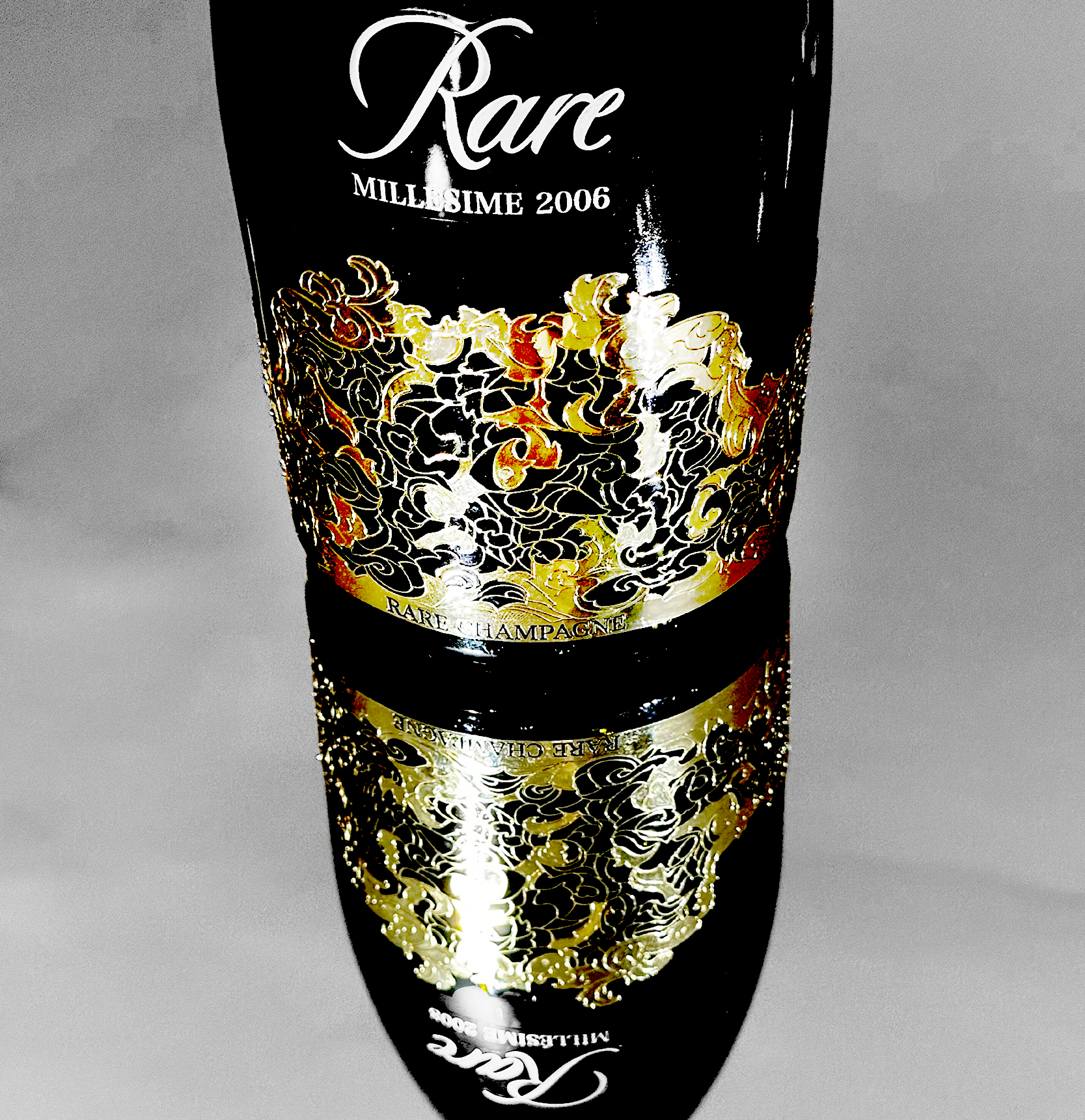
Rare Nature
The story of Rare starts not with the wine itself, but with a renowned house: Piper-Heidsieck. Its roots go back to 1785, when Florens-Louis Heidsieck founded Heidsieck & Co in Reims. According to the house’s own legend, it all began as a love story between Florens-Louis and Agathe Perthois - a romantic origin myth that Piper-Heidsieck still likes to evoke.
In the 19th century, the original family business split into three separate houses that we still recognise today: Piper-Heidsieck, Charles Heidsieck, and Heidsieck Monopole. The “Piper” in Piper-Heidsieck appears later, when the talented merchant Henri-Guillaume Piper marries into the family, and helps reposition the company. Under his name, the house gradually becomes associated with a brighter, more glamorous, almost “Hollywood” expression of Champagne.
A crucial moment for our story comes in 1885.
To celebrate the centenary of the house’s presentation of Champagne at the court of Marie Antoinette (at least in the brand’s romanticised narrative), Piper-Heidsieck creates a special Cuvée du Centenaire. The decoration for this bottle is designed by Peter Carl Fabergé, the legendary jeweler of the Russian imperial court: an intricate enameled ornament that turns the bottle into a piece of jewelry.
Because the glass of the time was too fragile to support the full metalwork on a commercial scale, the house instead produced labels that reproduced Fabergé’s design on the bottle. This motif - essentially a Champagne bottle dressed like a jewel - later inspired the visual identity of Rare. The modern metallic “tiara-skirt” wrapped around the bottle is a direct homage to that historic centenary cuvée.
Fast forward to 1976: the first vintage of Rare is born.
From the outset, it is imagined as a “jewelry cuvée” for exceptional occasions, produced only in very special years. The early bottle with its gilded lace is designed in collaboration with Van Cleef & Arpels, clearly echoing the Fabergé story. In the 1980s, the Parisian workshop Arthus-Bertrand refines the design into the now instantly recognisable golden, leafy “crown” which embraces the lower part of the bottle - at once label, ornament, and signature.
In 2018, Rare takes the final step on its identity journey and is officially carved out as a standalone brand: Rare Champagne. It becomes the third Champagne house in the EPI group, alongside Piper-Heidsieck and Charles Heidsieck. From that moment, Rare exists not just as the prestige cuvée of Piper-Heidsieck, but as its own maison with a very focused personality.
If design and history were everything, Rare would simply be a brilliant exercise in storytelling. What makes it compelling is that the philosophy in the cellar lives up to the promise of the glass.
Rare defines itself as a Champagne created "against the whims of nature."
In practice, that means two key things:
- It is always vintage.
- It is not produced in every “great” year.
Rare is not just a label for whatever the market considers a top-rated harvest. The team behind it looks for years that are not only successful. They look for the challenging and highly characterful years with seasons marked by extremes: unusual heat, sharp weather shifts, or cool, demanding conditions that nevertheless yield grapes with a very distinctive personality and long ageing potential.
That is why, for example, we will never see a Rare 2004, despite it being an excellent vintage in Champagne: it simply did not fit the philosophy of the house.
Today I have two vintages in front of me: 2006 - solar, wildly generous, and 2008 - strict, mineral, almost “immortal”. Both (like all Rare releases) are blends of Chardonnay (70%) and Pinot Noir (30%). They are highly individual, shaped by their respective growing seasons, yet the house style is crystal clear: rich, playful and bright in every sense – on the palate, on the nose, in the colour in the glass, and in the bottle design, which perfectly mirrors that elegant whirlwind of vivid emotion in the glass.
Rare Champagne is, in the most literal sense of the word, rare.

PRODUCERS IN THIS ARTICLE
> Show all wines sorted by scoreMore articles
Château Le Dôme 1997-2022
10th Sep 2026
9 tasting notes
Bordeaux 2024 Revisited
03rd Sep 2026
69 tasting notes
Château Jean Faure 2004-2023
10th Jul 2026
10 tasting notes
Bordeaux 2025 En Primeur
07th May 2026
382 tasting notes
Show all articles