23rd Dec 2025
For the past week, the TWI team has been fully immersed in the 2023 vintage — freshly bottled, freshly recovered from bottle shock, and only now ready for its first serious conclusions. After countless tastings of young wine, there comes a moment when the mind longs to drift elsewhere — into slower conversations, older bottles, and the depth of time itself. That moment arrived at the very end of the tasting week, when our team was invited to dinner at Domaine de Chevalier.
House Rules
Domaine de Chevalier is not simply one of the great names of Pessac-Léognan. It is a place with a soul.
I’ve been here many times before — for tastings, dinners, special evenings — and every visit has remained vivid in my memory. This one was no exception. Anne and Olivier Bernard are exceptional hosts.
A brief context is essential. The Bernard family has guided Domaine de Chevalier since 1983 — the very first vintage of Olivier at the helm of the estate. The 2022 vintage, marking his 40th harvest as head of the domaine, was released with a special commemorative label featuring “The Galloping Horse”, a 1941 painting by Xu Beihong. The image is no decoration: it symbolizes motion, energy, forward momentum — a perfect reflection of the estate’s journey.
Today, Domaine de Chevalier stands as a mirror of patience, work ethic, and family values — all quietly embedded in its DNA and, ultimately, in its wines.
The Rules
There are a few things one should know about dinners at Domaine de Chevalier. First, Olivier has a tradition: whenever possible, all wines opened during such evenings should end in the same digit as the current vintage. It makes blind tastings slightly easier — yet paradoxically more intriguing, as your mind starts navigating entire decades rather than isolated years. This time, a few bottles quietly broke the rule, but the spirit of the evening remained untouched. Second — and perhaps most importantly — Olivier, just like we do, truly loves old wine. Unless the dinner is dedicated exclusively to Domaine de Chevalier, tastings are almost always blind. The only transparent beginning of the evening is Champagne.
The Opening Note
That role, this time, belonged to Dom Pérignon P2 2004 — and what an opening it was. At first, the wine felt almost shy, tightly coiled, as if just awakened. But within twenty minutes it began to unfold layer by layer: generous fruit, wrapped in brioche, melted butter, gingerbread, and subtle pastry notes. A slow, deliberate awakening — and a flawless start to the evening.
A White from Deep Time
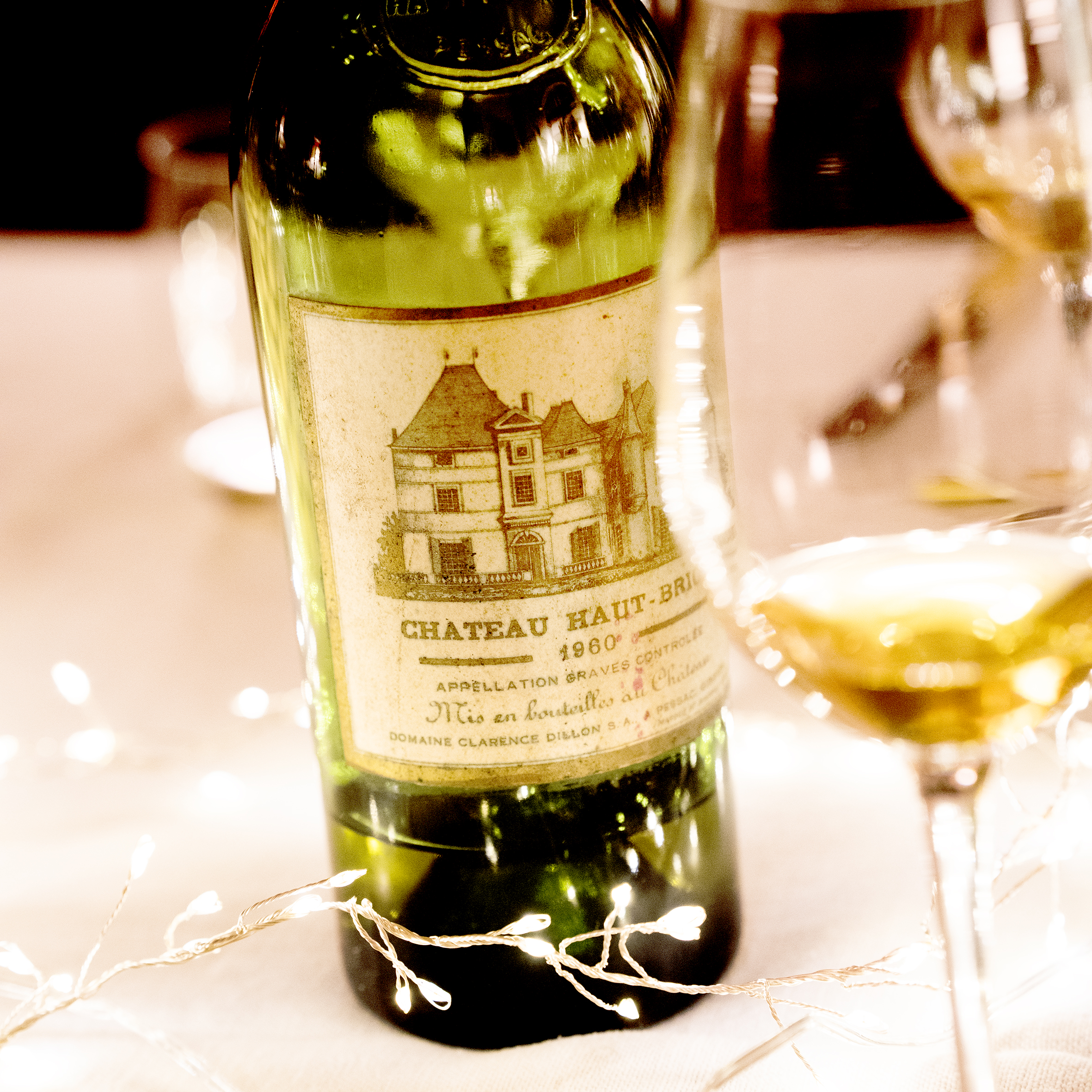
The first blind wine of the night was also the only white wine served that evening. From the moment the glass reached the table, the color told a story: deep gold, slowly shifting toward amber. A wine with serious age. A small sommelier’s oversight — serving the bottle in its sleeve rather than decanted — gave me an unexpected advantage. The bottle shape was unmistakable. Not the classical Bordeaux silhouette, but the iconic form associated with Château Haut-Brion. Haut-Brion abandoned the old Bordeaux bottle after the 1957 vintage; the modern shape appears from 1958 onward. With that detail, combined with the color, the aromatics, and the structure, I made my call: Haut-Brion Blanc, between 1958 and the early 1960s. A moment later — revelation: Haut-Brion Blanc 1960. A striking demonstration of how magnificently white wines from this region can age. Bright Sémillon on the nose, transforming on the palate into a living balance of acidity, texture, and mineral breadth.
Three Wines, One Digit
Then came the red flight — and with it, a small accident that turned into one of the most fascinating moments of the night. Earlier, while discussing the structure of the lineup, Olivier mentioned he would open two of his wines before mine. I asked for my bottle to be opened right before pouring, slightly worried about its condition. The sommelier misheard — and my bottle was opened first. As a result, we ended up tasting all three wines side by side. The only information given: All three vintages ended in the digit “5.”
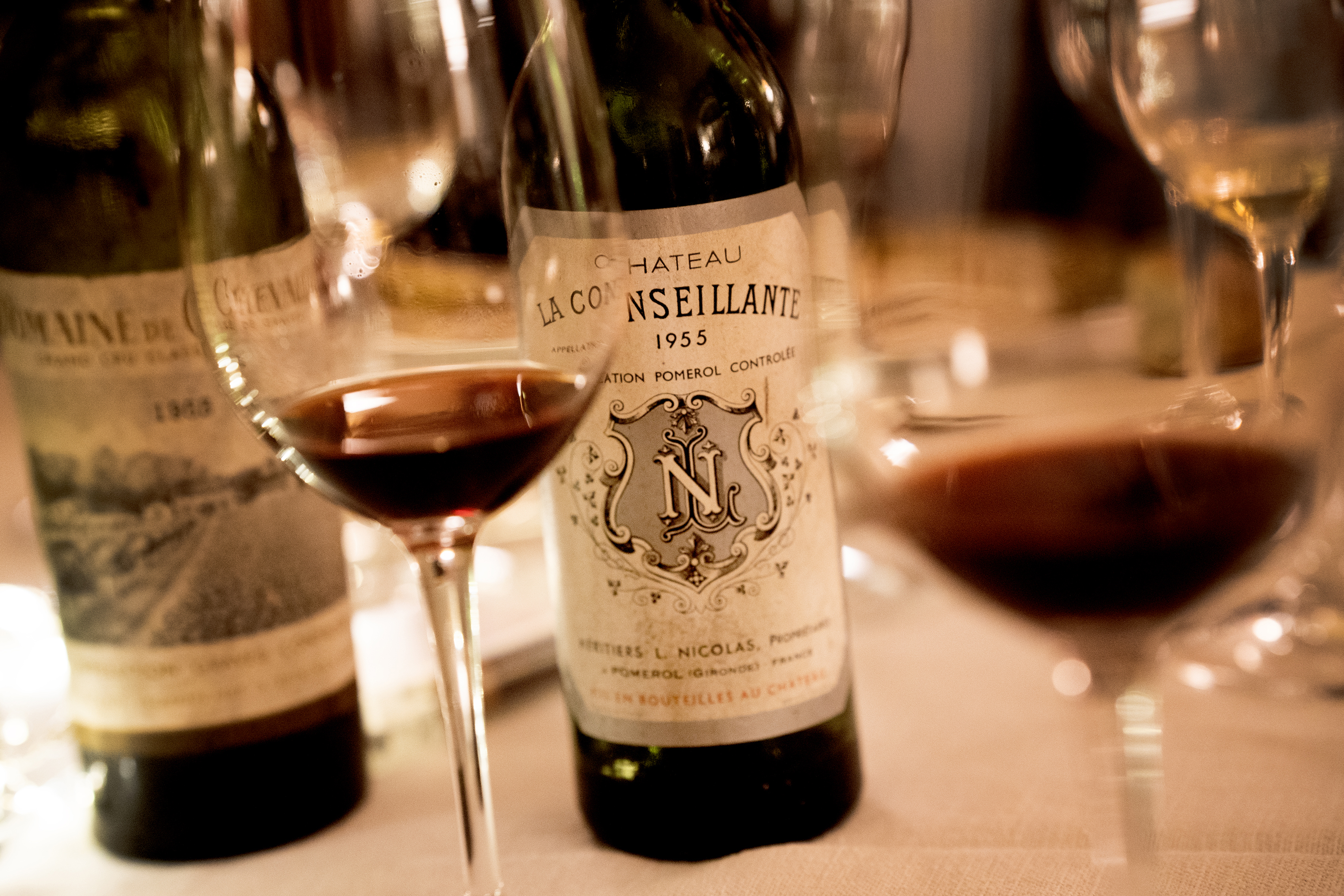
I, of course, knew what stood in my third glass. At one point, Olivier added another hint: both of his wines were from the same vintage. That led me to an almost dangerous thought — were all three from 1975? (A spoiler: mine actually was.) But that hypothesis quickly collapsed. A second guess followed. 1955. Bingo.
Two wines. Two banks. Two extraordinary estates. On one side, Domaine de Chevalier. On the other — Château La Conseillante. As if that weren’t enough, both wines turned out to be in half-bottles. And what struck all of us was how such small formats — with corks identical in size to those of standard and magnum bottles — had preserved such clarity, such tension, and such life after so many decades.
My wine represented yet another great face of Bordeaux — the Médoc. Olivier came unbelievably close and, in essence, named it outright: Château Latour 1975.
n the end, all my anxiety was in vain. Despite a less-than-perfect fill level, the wine blossomed beautifully after thirty minutes in the glass — growing rounder, deeper, more powerful, finally revealing itself in full.
Our deepest thanks go to Anne and Olivier Bernard for the warmth of that evening — for the laughter, the stories, the shared memories, and the history we discovered in our glasses.
Some dinners are remembered for their wines. Others — for their people. This one will stay for both.
- Article and Reviews by Aleksandr Fedutinov, Photography by Johan Berglund

PRODUCERS IN THIS ARTICLE
> Show all wines sorted by scoreMore articles
Bordeaux 2025 En Primeur
07th May 2026
382 tasting notes
Château Vieux Taillefer 2013 - 2025
26th Mar 2026
13 tasting notes
Château Ducru-Beaucaillou 1904-2017
12th Mar 2026
34 tasting notes
TWI Drinks Château Gruaud Larose 1988 and 1989
11th Mar 2026
2 tasting notes
Show all articles