11th Mar 2026
Gruaud Larose is one of the Médoc’s truly distinctive estates, with a rich history whose roots reach back into the 18th century. When the 1855 Classification was created, it was ranked as a Second Growth (Deuxième Grand Cru Classé) — largely thanks to an exceptional terroir. It encompasses 82 hectares, almost entirely in a single contiguous block surrounding the château, a real rarity for large properties in the Médoc. Over the 19th and 20th centuries, the estate was fragmented, but in 1935, under Cordier, it was reunited into a single domaine once again.
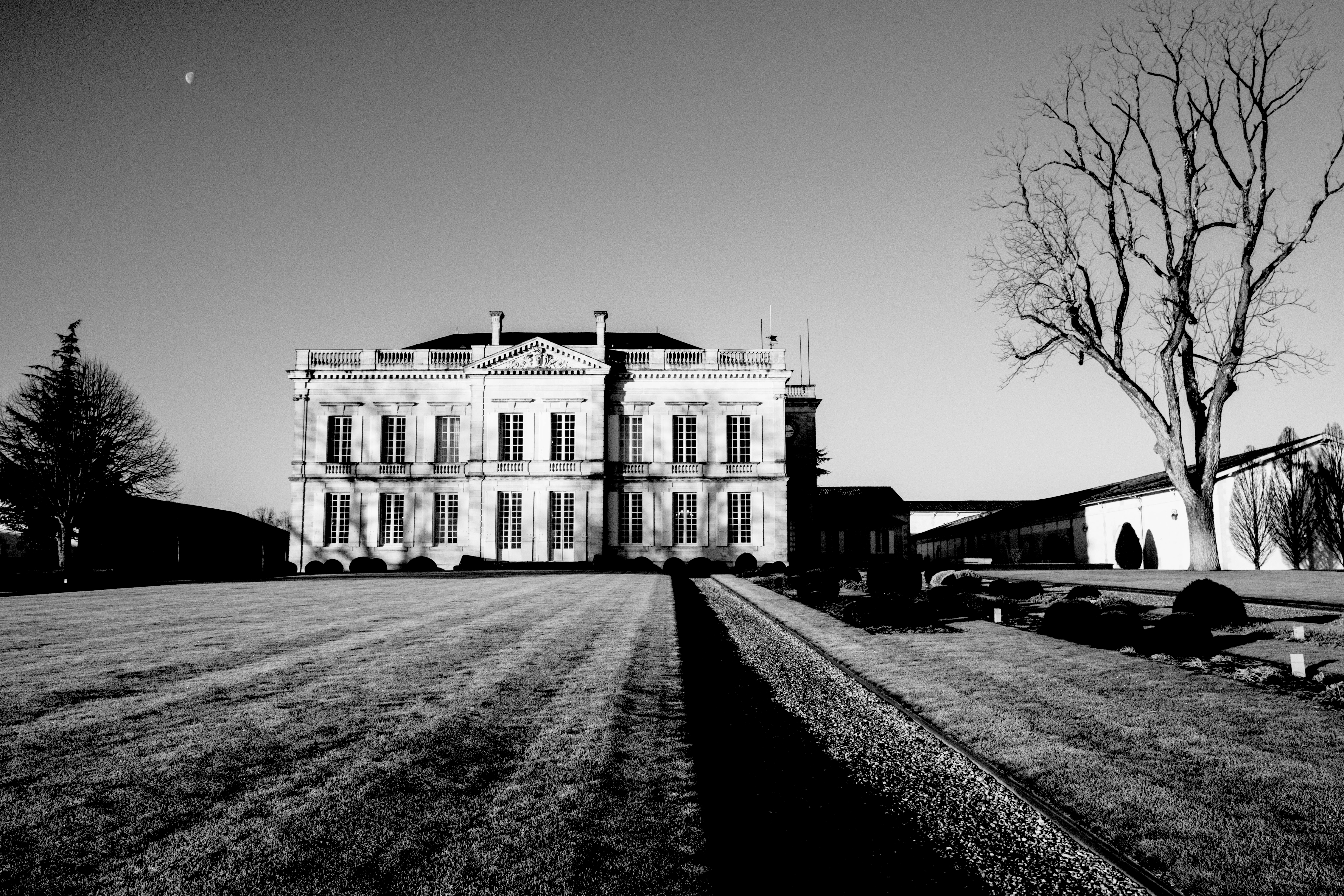
The King Has Not Left the Building
The 1980s is an intriguing chapter at Gruaud Larose. Between 1983 and 1990, according to the château’s previous commercial director Arnaud Frédéric, the estate was treated primarily as an investment: resources went into the “shop window” (the château and cellars), while the vineyard itself was largely neglected—meaning style and quality often hinged on management decisions and what happened out in the vines. All this makes it even more compelling to see how this great terroir expressed itself toward the end of that period, even despite an approach that did not always prioritize the vineyard.
1988 was a highly contrasting year at Gruaud Larose.
Winter and spring were unusually warm and very wet. Heavy rains drenched the vineyards from November through mid July before conditions turned dry (little rainfall, yet without true hydric stress). The result was berries with thick skins, rich in colour and tannin. Harvest came relatively late, running from 3 to 19 October, across all varieties within the same overall picking window.
The following vintage, 1989, unfolded with a markedly different—and outstanding—register: exceptional precocity and richness of fruit. A very hot, sunny May drove rapid growth, with the first flowers appearing as early as 20th of May in some parcels. 1989 delivered the hottest season since 1893, allowing the entire crop to be brought in by the end of September, without undue haste. In that year, the team even chose to go without Malbec, despite its long-standing place in the historic Gruaud Larose blend.

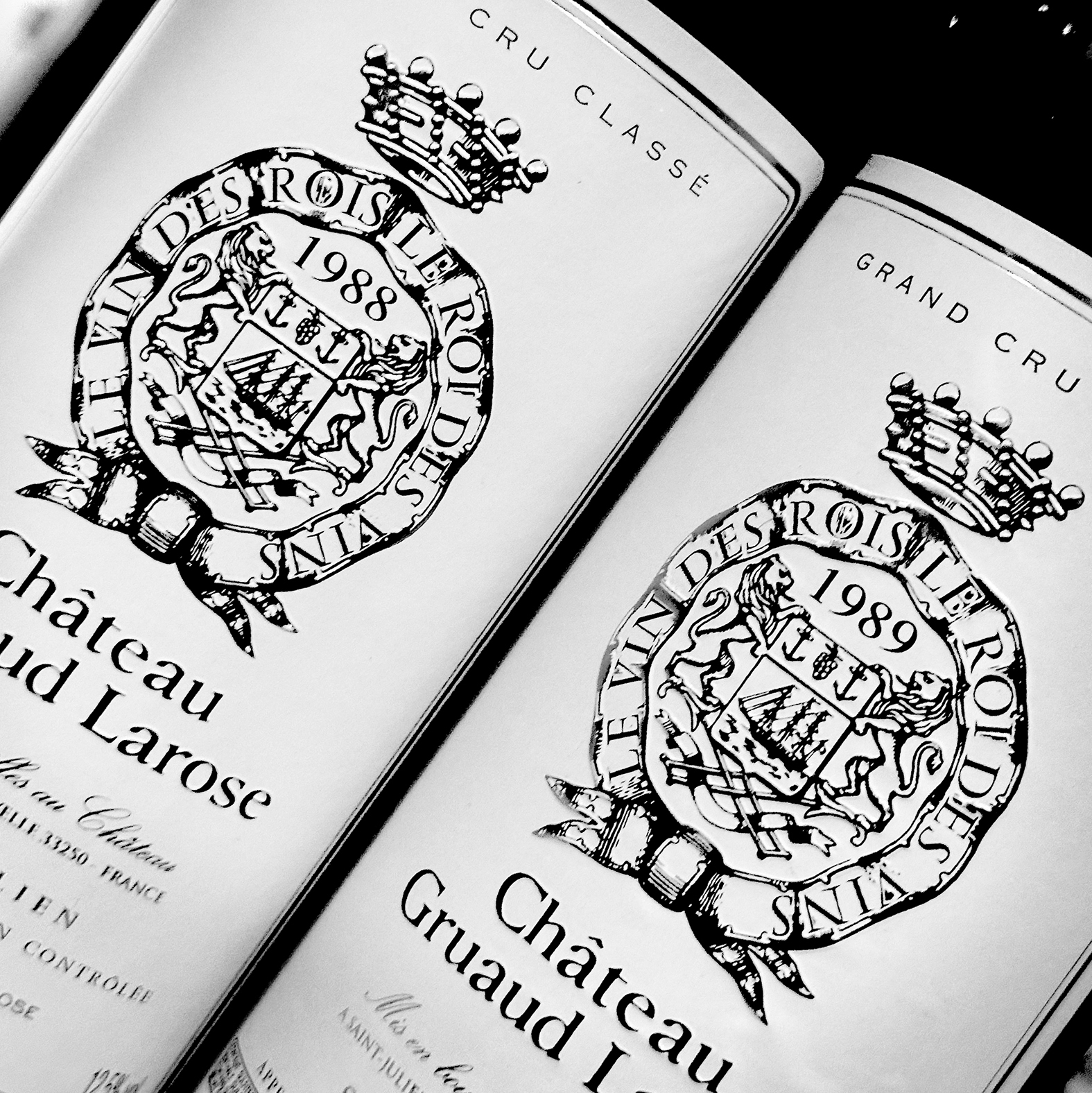
But let’s move to what I actually found in the glass, nearly four decades later.
Some tastings draw a straight line but this one traced a figure-eight.
Gruaud Larose 1988 and 1989 began at opposite ends of the loop: the 1988 opened with a deep, damp-cellar note that briefly raised the specter of cork, while the 1989 felt tight, almost withheld. And then—about half an hour in—they met at the crossing point: the 1988 shed its musty shadow, rounding out with longer, steadier balance; the 1989 unlocked into a full spectrum of red and black fruit, edged with black tea and nice range of spices. From that shared intersection, the two vintages separated again—1989 clearly the more complex wine, and the one with the longer runway ahead.
Even through difficult chapters of ownership and direction, the château did not betray its motto: "Le vin des rois, le roi des vins" ("Wine of Kings, King of Wines").
Terroir, and the quiet precision of those who work it, has carried Gruaud Larose forward, vintage after vintage, through the centuries.
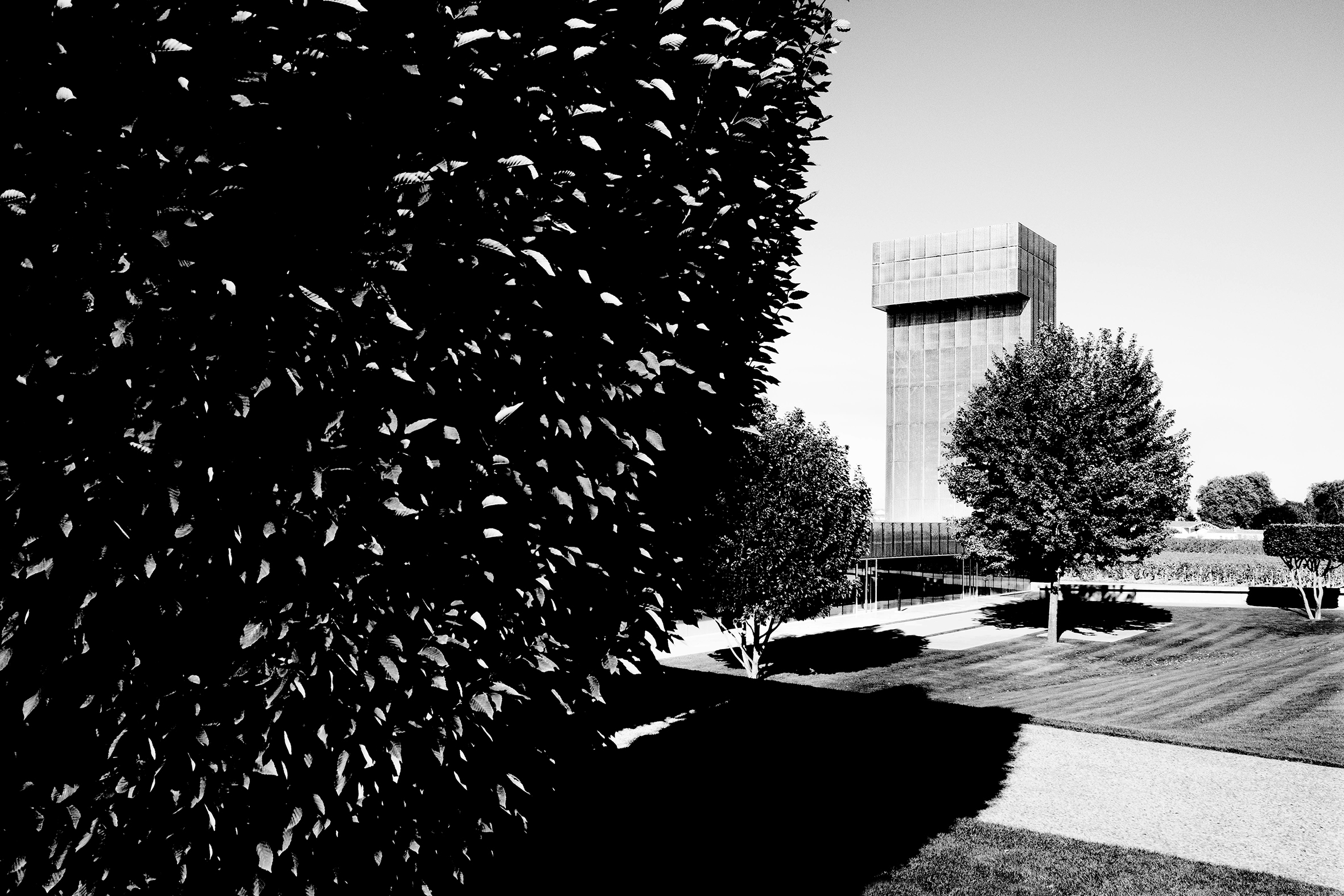
- Article, Reviews & Bottle Shot by Aleksandr Fedutinov
- Photography by Johan Berglund

PRODUCERS IN THIS ARTICLE
> Show all wines sorted by scoreMore articles
Château Le Dôme 1997-2022
10th Sep 2026
9 tasting notes

Bordeaux 2024 Revisited
03rd Sep 2026
69 tasting notes
Château Jean Faure 2004-2023
10th Jul 2026
10 tasting notes
Bordeaux 2025 En Primeur
07th May 2026
382 tasting notes
Show all articles