23rd Jun 2025
This week Chris Kissack pulls another old staple from his cellar; an older vintage of Chateau Musar which has not long celebrated its 30th birthday.
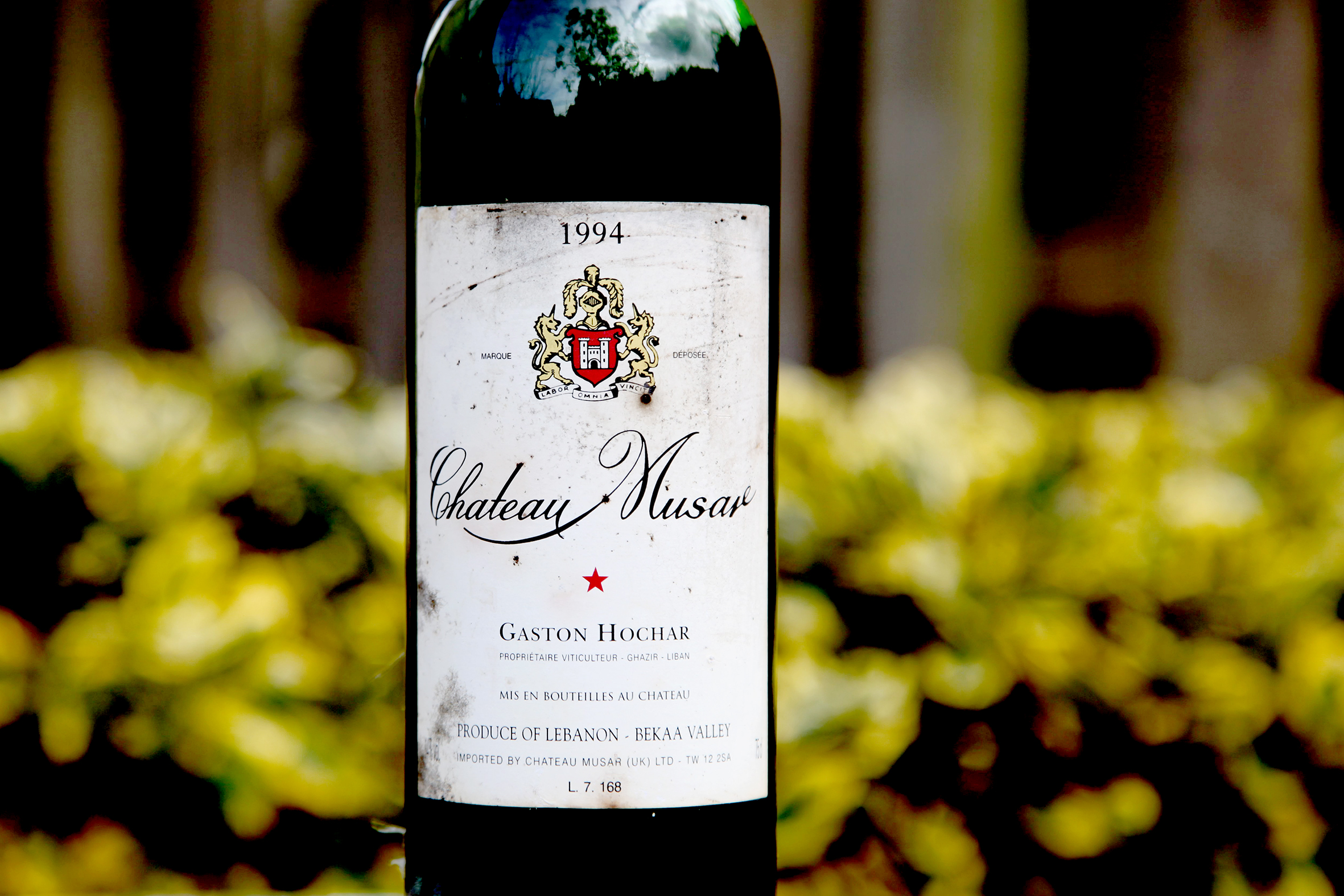
Chateau Musar 1994
I know this will come as a shock to some, but I don't spend the entirety of my imbibing time nursing a glass of primeval Pomerol or bygone Bourgueil. Sometimes I look beyond the borders of Bordeaux and the Loire Valley. Sometimes as far afield as Lebanon.
I suspect many readers will be familiar with the wines of Chateau Musar, but for those who are not, let me put it like this; there are some wines which will either seduce you or leave you cold, but whichever camp you fall in to the only way to know is to try them. Chateau Musar is one of those wines, a divisive Bordeaux-Rhône-Lebanese hybrid often marked with a trademark volatile streak, which you simply have to taste at least once in your life.
The estate's story should be enough to pique your interest.
It was founded in 1930 by Bordeaux-trained Gaston Hochar; his planting of a vineyard in Lebanon's Bekaa Valley the latest chapter in Lebanese a wine culture which can be traced back 6,000 years. This ancient wine history is reflected in Lebanon's still poorly-understood viticultural diversity, as described in a 2024 study by Carole Saliba et al of Saint Joseph University in Beirut, and published in Genes. Saliba found that of 67 distinct cultivars taken as cuttings from Lebanese gardens, home vineyards and private collections, 34 were completely unknown in national and international vine databases.
Imagine taking cuttings from vines in Bordeaux, the Rhône Valley or Burgundy and finding 34 completely unknown varieties. The wine news tickers would overheat or explode. Or possibly both.
Saliba also noted that despite this diversity, many vignerons who plant in Lebanon favour more international varieties, and this was the case with Gaston Hochar. He planted Cabernet Sauvignon, an obvious nod to his time in Bordeaux, along with Cinsaut and Carignan, two more southerly European varieties. They are all good choices; while the Bekaa Valley is further south than any vineyard in Italy or Spain, the high altitude of the vineyard - the valley sits at 1,000 metres above sea level - means that the climate is favourable to these classic Franco-Hispanic cultivars.
Of note, the Hochar family did plant some autochthonous varieties, namely Obeidah and Merwah, which are used for the estate's white wine. But that is a story for another day; for the moment, let's stick with the red.
The Chateau Musar winery is an hour by road from the vineyards, its distant location reflecting the uncertain geopolitical climate in which Gaston worked. It was only during the 1920s, as Gaston completed his studies in Bordeaux, that Lebanon began to emerge as a distinct and independent country. On returning to Lebanon he therefore sited the winery at a spot he was certain would be within Lebanon's borders when they were finally ratified.
The long drive between cellars and vines is only one of the less commonplace obstacles which must be overcome when making wine in the Bekaa Valley. The unique difficulties the Hochar family have faced have included a prolonged civil war, which lasted from 1975 until 1990, not to mention political and military subjugation by both Israel and Syria. At times the work in the vines would be made impossible by the conflict; the newly excavated cellars did at least make secure shelters for the employees at these difficult junctures.
The 1994 vintage came just a few years after the end of the civil war, bringing some sort of (relative) peace to the region. It was a season characterised by an early flowering and intense dry heat towards the end, resulting in an early harvest. Picked by local Bedouins, the fruit was transported by truck over mountain roads, and down to the winery. Here the harvest was fermented in concrete vats, then matured in mostly old French-oak barrels. After a couple of years in wood the wine was bottled without filtration, and it was released after more than three years in bottle.
Now, a total of just over thirty years from the harvest, it is just started to get into the groove in which I really enjoy Musar; to find out how much, check out my tasting note.
–
Article, Reviews and Photography by Chris Kissack

PRODUCERS IN THIS ARTICLE
> Show all wines sorted by scoreMore articles
Château Jean Faure 2004-2023
10th Jul 2026
10 tasting notes
Bordeaux 2025 En Primeur
07th May 2026
382 tasting notes
Château Vieux Taillefer 2013 - 2025
26th Mar 2026
13 tasting notes

Château Ducru-Beaucaillou 1904-2017
12th Mar 2026
34 tasting notes
Show all articles