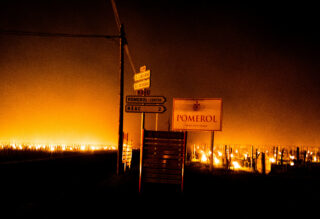
The Unrelenting Call of Charbono
Text: R.H. Drexel
Photograhy: Johan Berglund

"If you set out to make something that everyone will like, you will quickly find yourself making something that no one cares about. If you do have a point of view, and it’s singular, and you’re about serving your intent, that won’t be for everyone, but you will find your audience, and they will love you for doing what you’re doing."
-Matt Morris, Matt Morris Wines
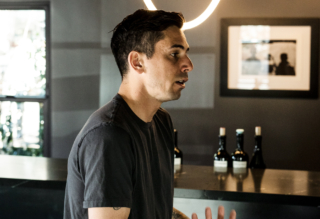
Matt Morris is on a mission. He has pinned his hopes on Charbono, an obscure red grape variety that claims only sixty-five acres of plantings in the entire United States.
"In food, people view the unknown with excitement. In wine, they view the unknown with fear," Morris tells me as we tool around Napa in his beat-up Jeep. He’s undeterred, though, having found a willing audience for his nearly opaque, aromatic, layered wines among the wine cognoscenti. Later in the day, we’ll swing by The French Laundry, a Michelin-starred restaurant in nearby Yountville, where Morris will be dropping off a couple of cases of Charbono on order.
Though his Charbonos are popular among sommeliers and the geeky wine customer set, Morris is perhaps best known for his work as a photographer and filmmaker. He counts among his clients many of Napa Valley’s top wine producers. "The funny thing about Napa is that everyone tells the same story, so it’s so hard to tell who is genuine. There are people in Napa making high-end wines together who hate each other. They’re doing it solely for money, and their story is the same as people who do it because they love it and are in love with their vineyard. Everyone is going to say, ‘We’re expressing terroir. It’s not about us.’"

Morris explains that the only way to tell the difference is to immerse oneself in the dynamics of the valley. He is now able to discern which producers are issuing a long narrative of lip service versus those who truly care and are wholly committed to their lives in wine. Morris prefers to work with genuine producers simply because of the quality of the work produced. "My work is better for the same reasons their work is better; because they really care. I’m trying the same amount. It’s not like I’m going to try less or phone it in because it’s a corporate winery or a high-score-and-cash-grab. But naturally, you feed off the energy of people who genuinely love what they do. And that’s infectious to everyone involved. You have no choice; the work is just going to be better."
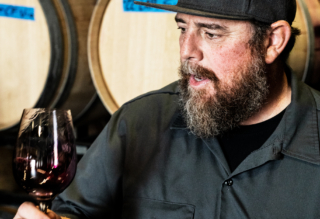
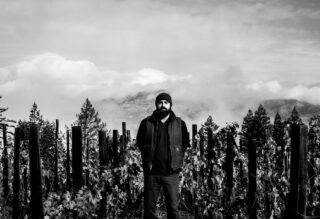
Bearded and professorial in bearing, Morris is wearing a button-down shirt and jeans. He navigates the valley floor with ease, driving between vineyard sites as we get to know each other. We have to speak loudly to hear ourselves above the din and rattle of his old car.
He fell in love with wine while he was studying film at the University of North Carolina at Chapel Hill. At the time any spending money he had went directly into the coffers of a local wine retailer. There, he’d buy mostly champagne and Napa Valley wines, which he had learned about from his father. The retailer, Todd Wielar, would stay at the shop late to answer the younger Morris’ questions. "I got lucky in that there were some good distributors working in Chapel Hill at the time, so we had access to some pretty great grower Champagnes. I could pick up a grower Champagne for 20 bucks, so I got really into those. I bought a case of Dom Ruinart from the 1970s for 60 bucks a bottle. Now it’s 500 bucks a bottle. I had this amazing Champagne education before I got priced out of it."
While at university, he tells me, "I realized one day that I was spending all of this money on wine, and I wasn’t even a real person yet. So I stopped." He stopped visiting wine message boards online, quit the mailing lists he was on, and decided instead to focus on filmmaking.
His subject became a barber shop in North Carolina in a "tiny furniture town in the middle of nowhere. There were eight buildings on main street, six were abandoned, and only two of them were open," he says. At the end of the street was a barbershop with two barbers; one had been cutting hair at that shop for 60 years, the other for 45 years. Every weekend, there was a Bluegrass jam session with about 20 guys packed into the back of the shop. The jam sessions would last for hours. Inspired, Morris made the documentary about the shop called "Pickin’ and Trimmin’" and traveled the festival circuit promoting it. Sun Valley. Telluride. Ojai. While on the festival circuit, he met Manfred Krankl, the legendary winemaker and artist behind Sine Qua Non.
"I was fascinated by Sine Qua Non and Manfred’s artwork and labels. This was before they had a website, so I emailed him and told him how much I loved his wines and labels.," he says. Morris lamented to Krankl, though, that the only way he could explore the labels was on wine auction websites, where the labels were shown in thumbnails too small to truly enjoy. He asked Krankl for scans of their labels, but Krankl, not having any handy, sent Morris leftover labels instead.
"That was super kind of them. They’re the sweetest people." Morris scanned all the labels and sent them to the Krankls. When they asked him how much he would charge to do more of them, he told them he’d gladly accept wine as payment. From there, they became acquaintances. "The wines of Sine Qua Non are just one thing that makes the Krankls interesting. We talked about everything but wine. Art, music, cars, motorcycles. They’ve always been a North Star for me, the kind of person I’d like to be. They have multiple interests. They live full, creative lives and aren’t really tied up in just one particular thing."
Morris was considering moving to Los Angeles at the time, but the competition among photographers and filmmakers there was, and remains, fierce. Instead, his thoughts turned to moving to Napa. He had made friends there over the years, filming and photographing them for fun during harvest, then gifting them his work. Morris’ work got passed around, and people began inquiring about his rates. "That’s when I realized ‘I know wine, and I know who I would want to work with.’" He moved to Napa in 2013, where he landed his first client: Realm Cellars.
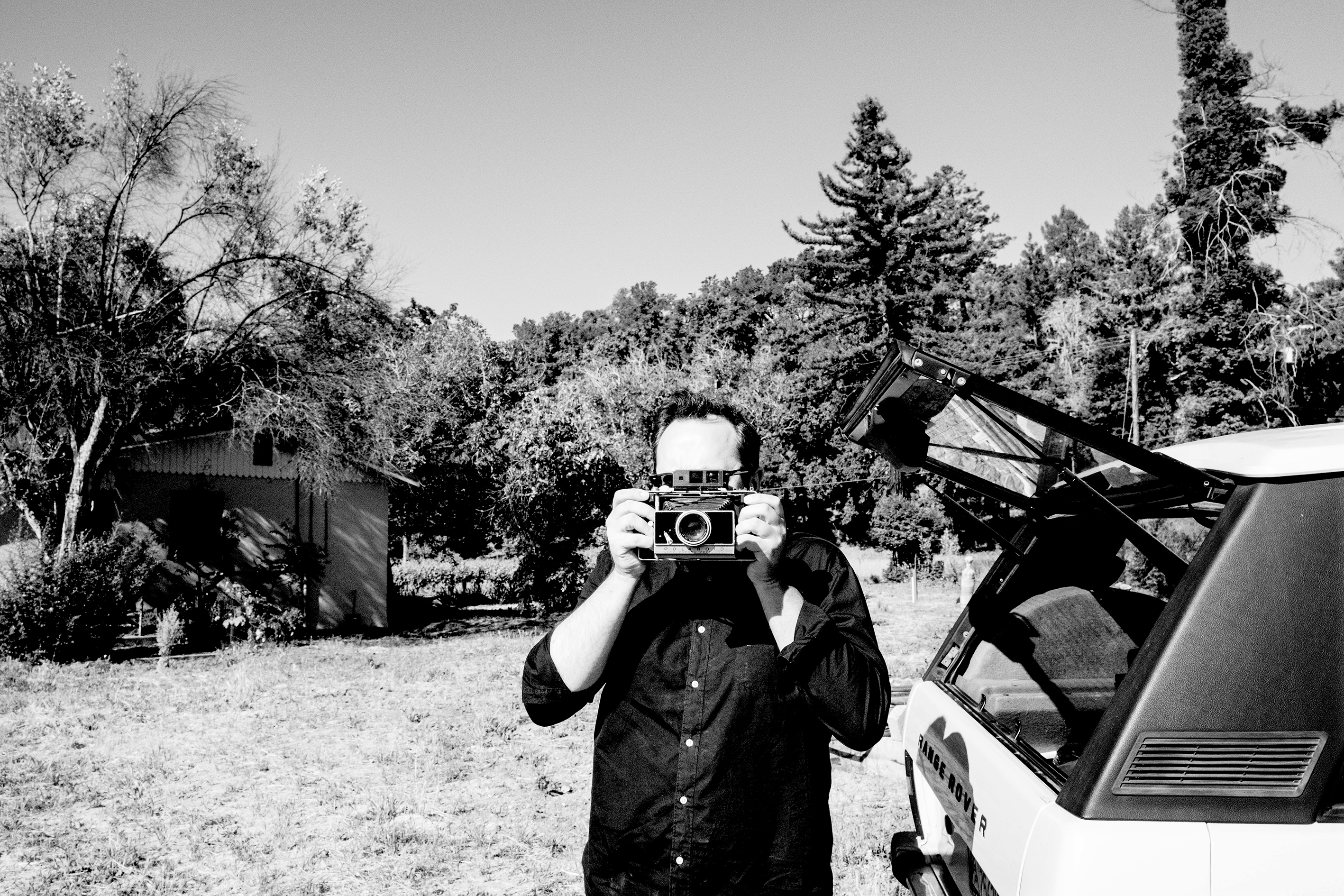
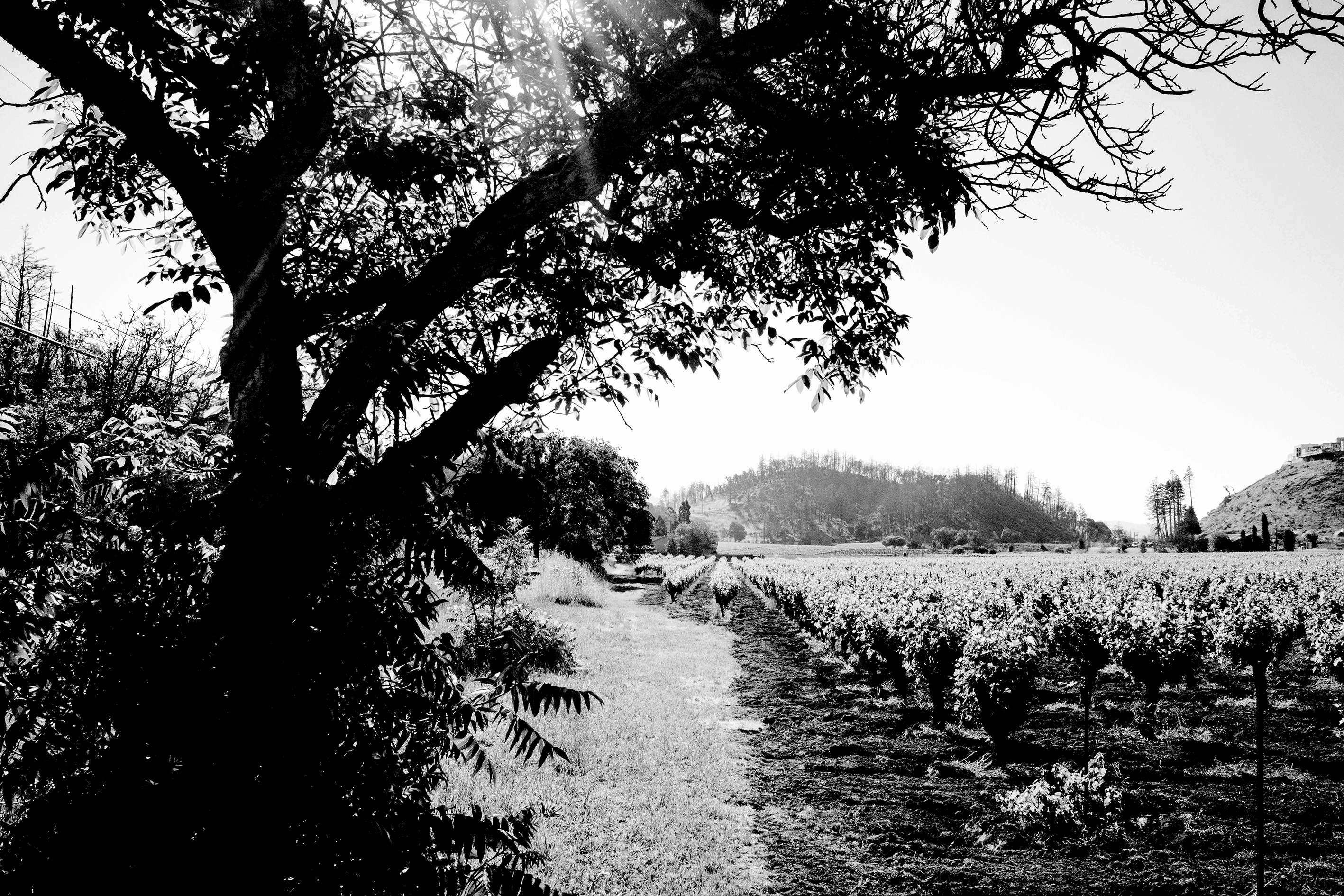
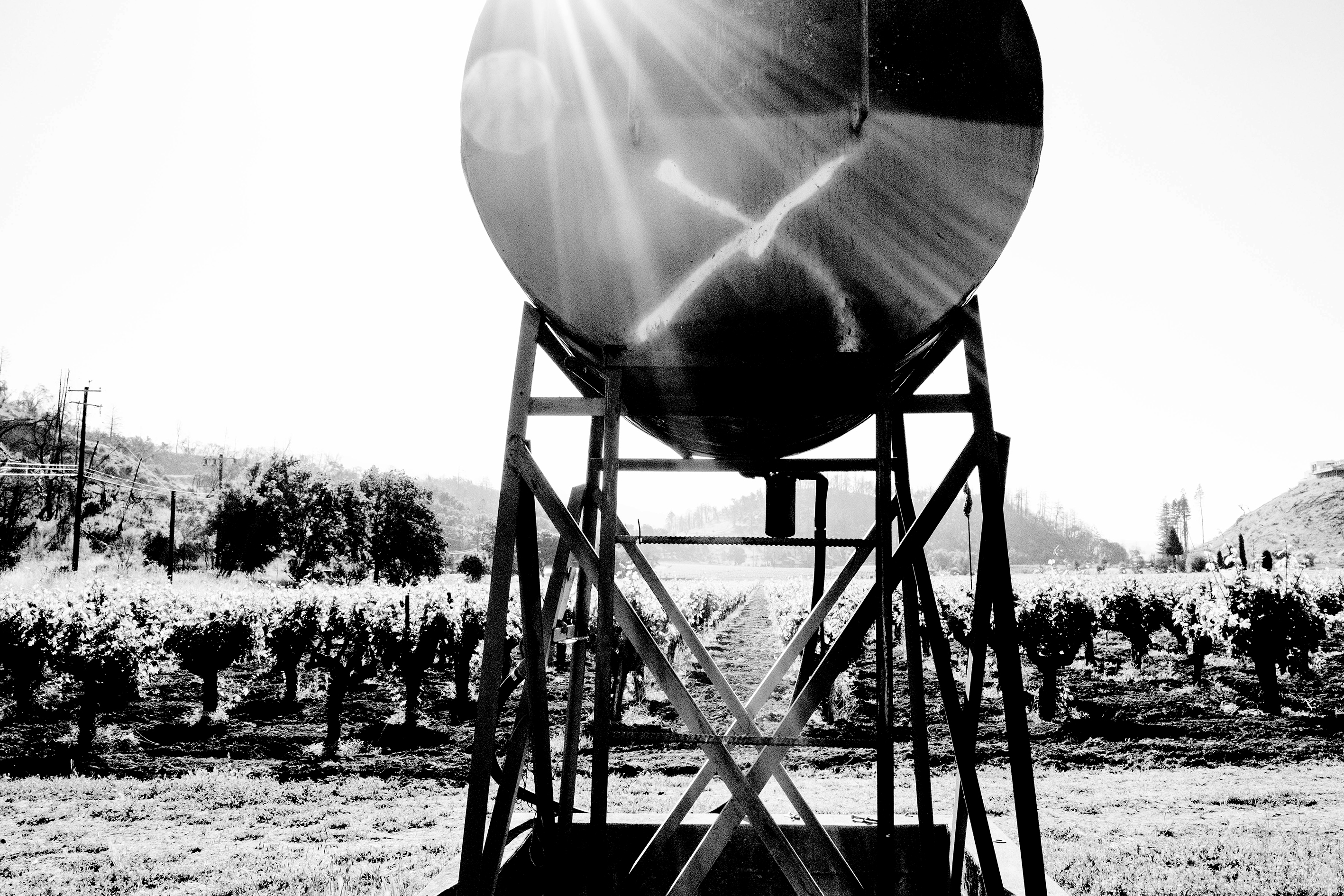
Realm Cellars was undergoing a rebrand under the creative direction of Byron Hoffmann and Alex Chrisman, and they utilized Morris to provide photography for Realm’s new website. They then retained him to work with other cult producer clients.
He credits Chrisman and Hoffmann with revolutionizing the aesthetic of the Napa Valley. At the time that Morris moved to Napa, he says, Napa wineries were realizing they had to take their websites seriously. "I joke that the standard for grape growing and wine production was really high when I moved here, but everything else was done like it was this little, tiny farmer town. The wines were amazing but if you looked at websites in the early 2000s, they were like farmer’s websites. Not well-designed, not modern."
Then, he tells me, cult Cabernet Sauvignons began to appear, and websites followed suit. "It was that single-image look. Everyone was trying to do that Screaming Eagle thing. One photo and a P.O. box. But then a shift started to happen. People were saying, ‘Show me something. Tell me something. What am I getting for my money?’ I kind of landed right during that shift."
Hoffmann and Chrisman spearheaded a trend toward transparency. If wines were going to be expensive, then wineries were going to explain to customers why. Websites became highly visual, layered, and informative. When I ask Morris if he thinks the advent of highly stylized websites may have been an overcorrection, away from the understated, he says. "Oh no! That’s exactly what I would have wanted from a consumer standpoint."
Now that Morris was living in the Napa Valley, his interest in and pursuit of Charbono deepened. His favorite wine at the time was a Robert Foley Charbono he was buying regularly for 19.00 a bottle. One day, he shared a bottle with winemaker Benoit Touquette of Realm Cellars and Touquette took a shine to Charbono, too. The two began making Charbono together in 2014, and Matt Morris Wines was born.
In 2017, Realm Cellars decided to discontinue any custom-crush work. Morris suddenly found himself without a winemaker or a place to make wine. "I thought it was over." When he shared his woes over the phone with famed consultant winemaker Francoise Peschon, she told him unequivocally, "Don’t worry. If you can’t find a place, I will be your winemaker, and I will find you a place to make wine." Morris had met Peschon years earlier through a series of serendipitous events. One day, in the mid-aughts, Morris had a bottle of 2002 Araujo Cabernet Sauvignon. It became a touchstone for him, and he took a photo of the bottle and sent it to Araujo’s info@ email address. One of the employees forwarded Morris’ photo to Araujo winemaker, Francoise Peschon. She, in turn, spontaneously donated to Morris’ Kickstarter for a short documentary he was making at the time.
When it came time for Morris to deliver some of the swag promised to donors, he decided to deliver his in person to Peschon. He showed up at Araujo without an appointment, and wasn’t allowed in to taste, much less meet Peschon. A decade later, during a harvest photo shoot for a winery client, he stayed behind to help sort fruit. While standing at the sorting table, he saw another pair of hands join in. "I looked up and I thought, ‘Holy Shit! That’s Francoise Peschon!’ So, I said to her, ‘Hey, you donated to my Kickstarter ten years ago!’ That’s how we got to know each other."
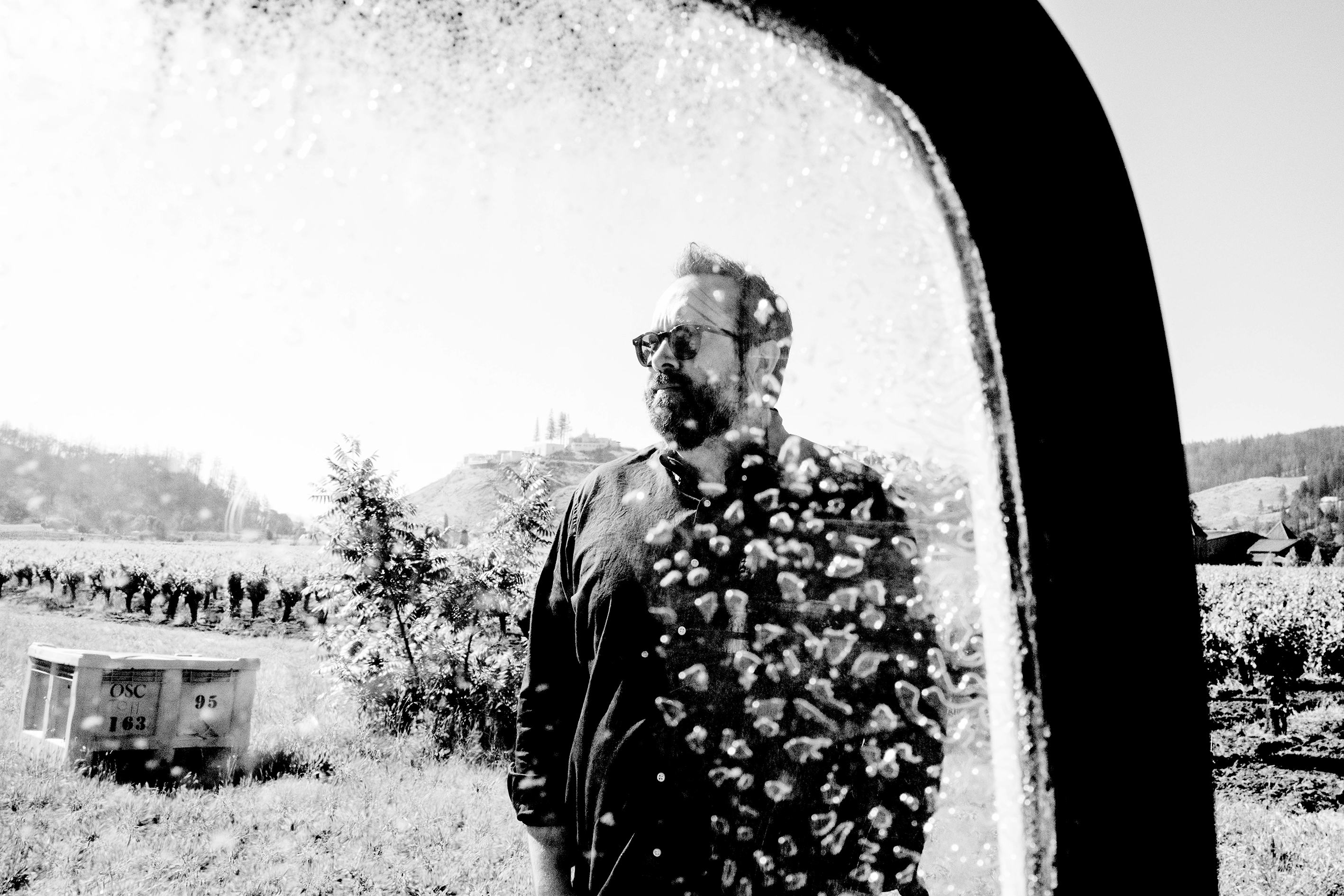
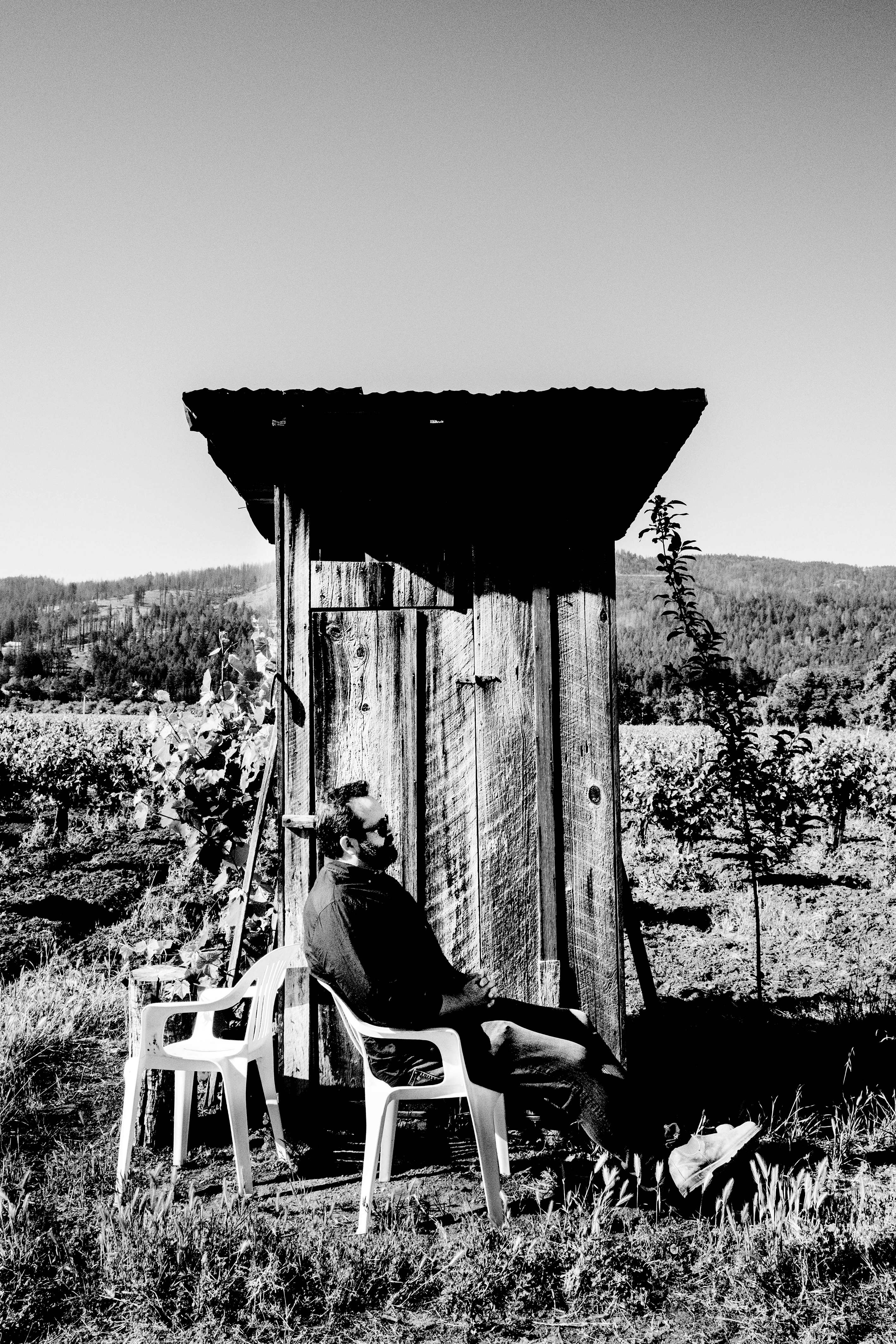
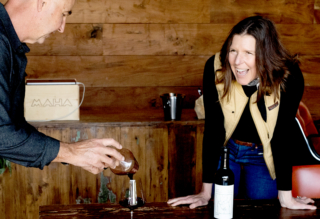
And, indeed, as promised, Peschon stepped into the winemaker role for Morris and arranged for him to make wines at Almacerro, high above the valley floor, where she is also consultant. Morris and I weave our way through circuitous mountain roads on our way to taste his Charbonos, which are also aging at Almacerro. When we arrive, we’re greeted by Almacerro winemaker Matilda Scott, bright-eyed and boisterous, with a thick Australian accent. She grabs us some glasses as Morris scans his barrels, deciding which ones we’ll taste out of. "It’s been so much fun," he says, emptying an impossibly dark Charbono from a glass thief into my wineglass. "Working with Francoise and Matilda was a natural extension of the direction I was moving in already. What I really love is Francoise’s aura as a human being. The way she makes wine is very aligned with me and my personality in general," he says. His affection for Scott is also apparent, and there’s a friendly ease between them. "There was this one day when I got to the winery to do a punch down, and Francoise was here. And, she just had her hands in a puncheon. She was just stirring the grapes with her hands, and she smiled, looked at me, and said, ‘Aren’t we lucky?’ She is such a good teacher and guide. She’s like Yoda. She wants to understand what you want to accomplish."
Morris sources his Charbono from two historic sites; Tofanelli and Shypoke. Both vineyards have been family-owned for about a century, and the gnarled Charbono vines with which Morris works are, on average, about 40 years old. He pours me his Tofanelli Charbono out of the bottle, "This is a single-vineyard Charbono. You may want to wait two to three years before you open this. Francoise stopped bringing Tofanelli to blend sessions because we don’t need to touch it. We played with Malbec, added a little in, and nothing happened. Then we added Malbec to Shypoke, and something magical happened. Tofanelli is like, ‘I don’t need it.’"
The wines Peschon and Morris make are a revelation. As someone who grew up tasting predominately Cabernet Sauvignons from the Napa Valley, it’s refreshing to observe Napa Valley terroir through the prism of another grape variety entirely. Charbono had a rich history in the Napa Valley from the late 1800s all the way up until the early 1970s. When the profile of Cabernet Sauvignon rose in the mid-70s, Charbono plantings waned in popularity and were soon torn out altogether. Today, only forty acres of Charbono remain in the Napa Valley. It can be a powerful wine, deeply colored with bold aromatics and flavors. But there’s a refinement that courses through Charbono, rendering it especially nuanced and compelling. Thematically, Charbono tends to play in the arena of deep, dark blue fruits, violets, and some distant echoes of wet earth and cedar. Texturally, it needs cellaring or decanting, but once it’s opened properly, it’s an arresting wine. The Matt Morris Charbono’s have quite a bit of structure and length. There’s no question they’re age-worthy, and I am looking forward to tasting these twenty years from now if I’m still lucky enough to be around.
In 2020, when smoke taint from wildfires ruined much of the Napa Valley’s harvest, Morris considered sourcing fruit from areas that weren’t plagued by wildfires and the subsequent threat of smoke-tainted fruit. Because Charbono plantings are so limited, he considered working with other grape varieties. He phoned up friend and winemaker Maggie Harrison (Lillian, Antica Terra) to ask her what she thought about Syrah- was it difficult to make well, what was it like, and what could be expected? And where might he source some if he needed it at this late date?
Harrison sent him to view her blocks of Syrah at Bien Nacido Vineyard and White Hawk, both on California’s Central Coast, directing him to "‘just take my fruit.’ She told me she had survivor’s guilt and insisted that I take her fruit. The Bien Nacido rows were the original rows that Manfred Krankl started with and the ones he gifted to Maggie so she could go out on her own and make ‘Lillian.’ (Maggie Harrison worked at Sine Qua Non before departing to begin her own projects.) I not only never thought I’d be making wine, but I also certainly never thought I’d be making Syrah from Bien Nacido. And this was Francoise’s first non-Bordeaux varietal wine she’d made since the 1980’s. The problem with making something like that once is that you want to do it again!" Morris texted Harrison and asked if he could source the same Syrah the following year. She agreed.
Though his namesake project takes up much of his time, Morris still maintains a robust photography business. Now that he’s in the business himself, he’s developed a profound understanding of its inner workings and the people who keep the cogs turning.
"Half the time I get an email about photography, it’s a wealthy person from some other industry. They’re buying the fruit you know they’re going to buy. They have the consulting winemaker that you know they’re going to have. And I get disappointed with that. But then there are people like Julia Van der Vink, who’s doing her own thing on Mt. Veeder. She and her boyfriend, Rob, are trying to do something special. They’re not using that checklist that says, ‘This is how you make wine in the Napa Valley.’ She just planted her vines and I know the wines are going to be great. The first time I talked to her was six years ago, and she had this dream of making wine on Mt. Veeder. And now she’s got her vineyard there. She has a real sense of purpose and place. She has a point of view."
He regards Van der Vink and others like her as the type of people who make Napa Valley what it is. "Everyone talks the talk at the beginning. You have to get into it with them to see how they behave, how they act. To me, I’m not necessarily disappointed if people are just in for money. I mean, this is Napa Valley. Anytime you’re in the epicenter of a high-end industry, there are going to be people doing it for money. That’s not surprising to me. I just get pleasantly surprised when I meet the type of people who made Napa Valley what it is. There is still a population of people here who really care about this place. Nigel Kinsman of Kinsman Eades; he’s doing powerful Napa Cabs, right? But his approach to the nuances of wine, to age-worthiness and his perspective on his sites is really special. He is that guy who is greatly passionate about Cabernet. And he has a perspective. He’s got a take. If you talk to him for five minutes, you know he’s different, and he really cares about what he’s doing."
I ask Morris if he has enough of a community around him to maintain his deep commitment to his Charbono project. After all, as a photographer, he’s often amid situations and people he patently finds uninspiring. "Napa doesn’t always want to show its personality. It wants things to be seamless. But you find your tribe. You find the people who care. You find those little pockets, and that’s what’s so fun. Those people are out there. Sometimes they’re celebrated, and sometimes they’re not. They may not be that exciting, but they’re the real deal, and if I can help tell that story, then that’s great. I’m more than happy to."
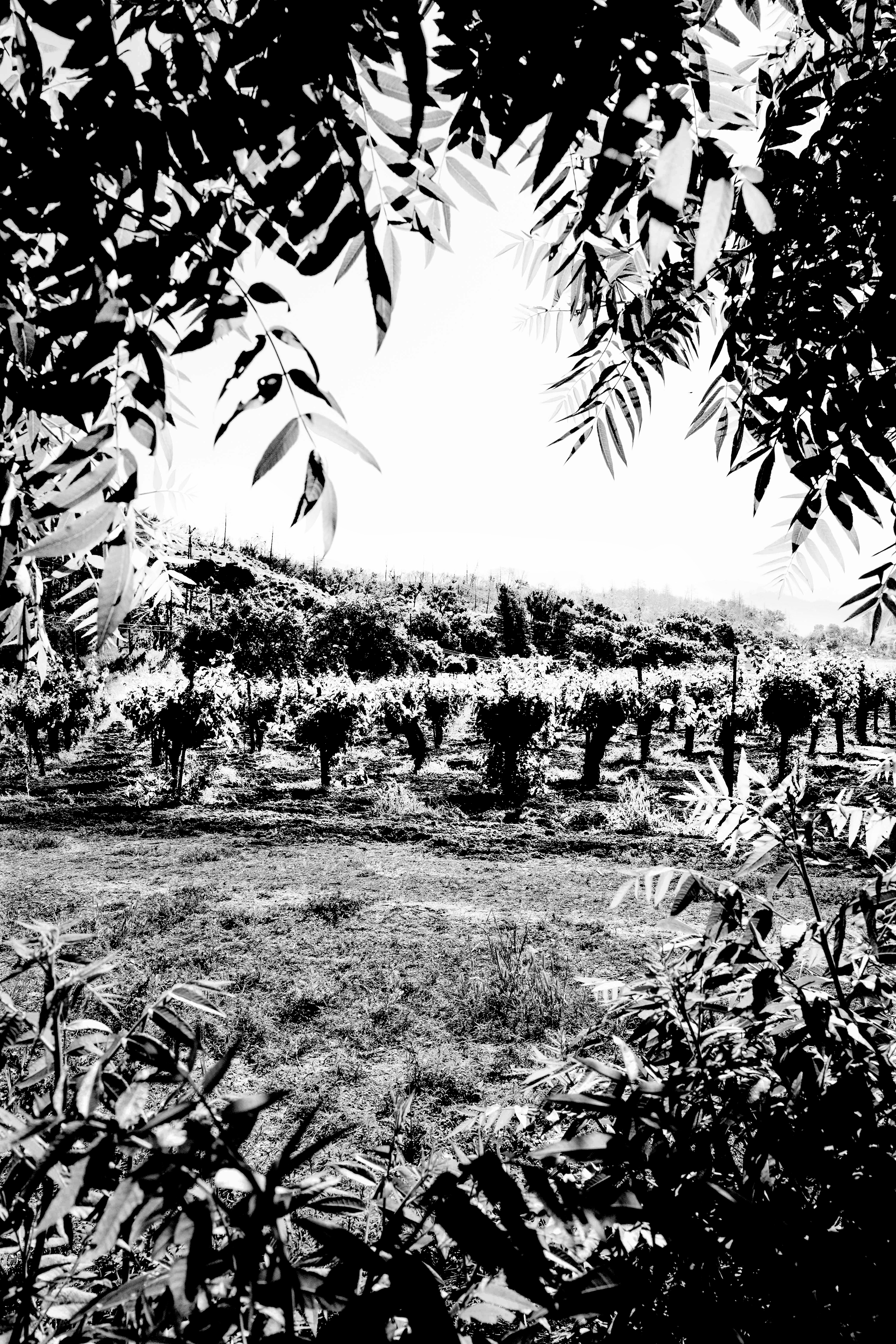
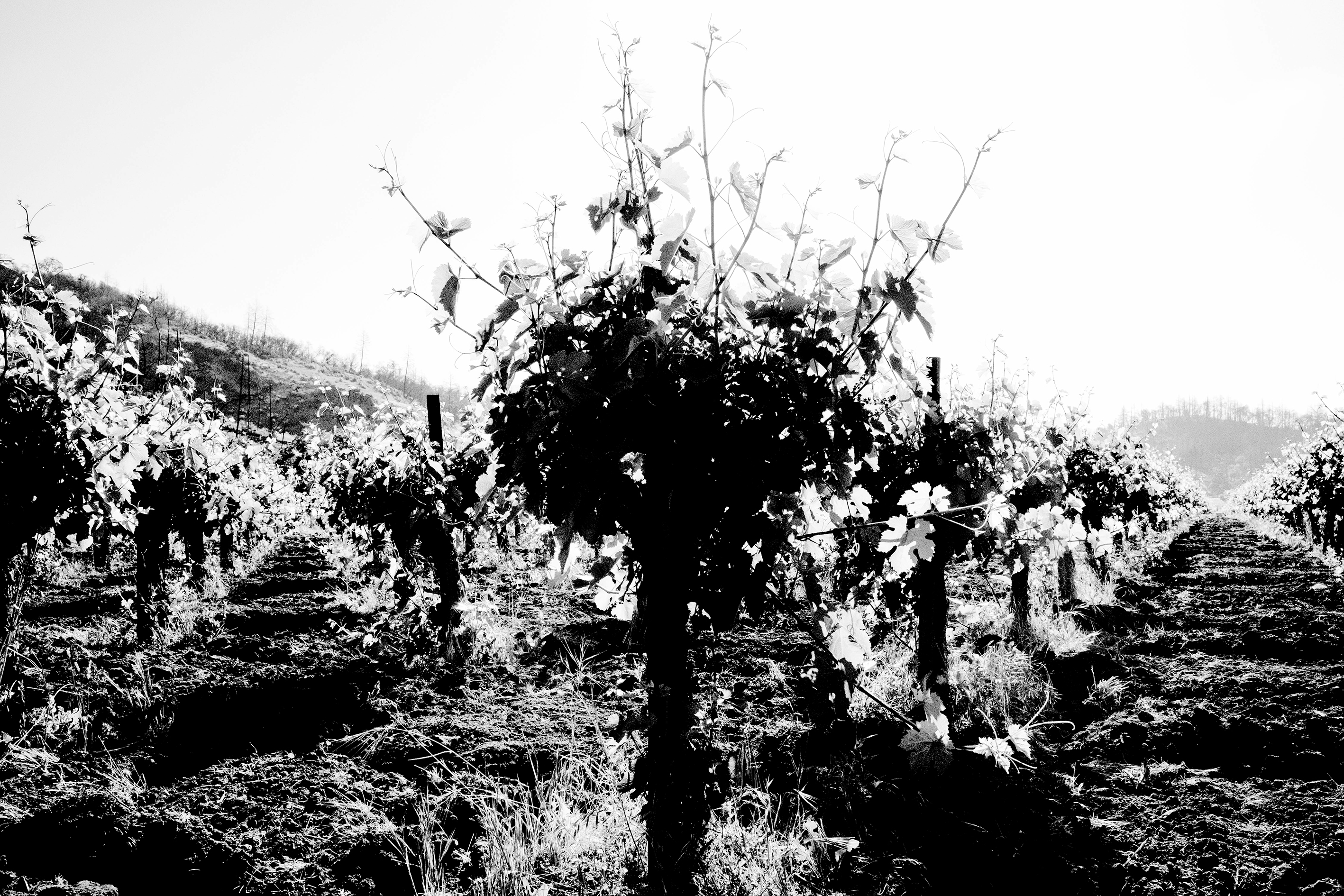
Morris is most intrigued, it would appear, by producers who "embrace the narrative of failure and struggle. Maggie Harrison is one of those winemakers, and it makes you want those wines more. It makes you love her more. When other winemakers say that every year is a perfect year…the best vintage we ever had, it rings false and hollow. If there’s a bad vintage, it’s like, ‘well, it was challenging for some, but not for us.’" The non-interventionist narrative that some winemakers espouse doesn’t resonate with Morris. "All these people love to talk about being farmers. But, just waiting for your grapes to miraculously arrive without having to do much to them… that’s not the reality of being a farmer. Massive losses, uncertainty, struggle. That’s the narrative of a farmer’s life. Do you hear that being discussed in Napa? No? I mean, they’re being forced to talk about challenges now. Like with the wildfires because they’re so visible. You can’t not talk about it. So now some wineries are having to talk about struggle, but they should have been talking about that all along."